What is meant by ‘winning the ball high’?
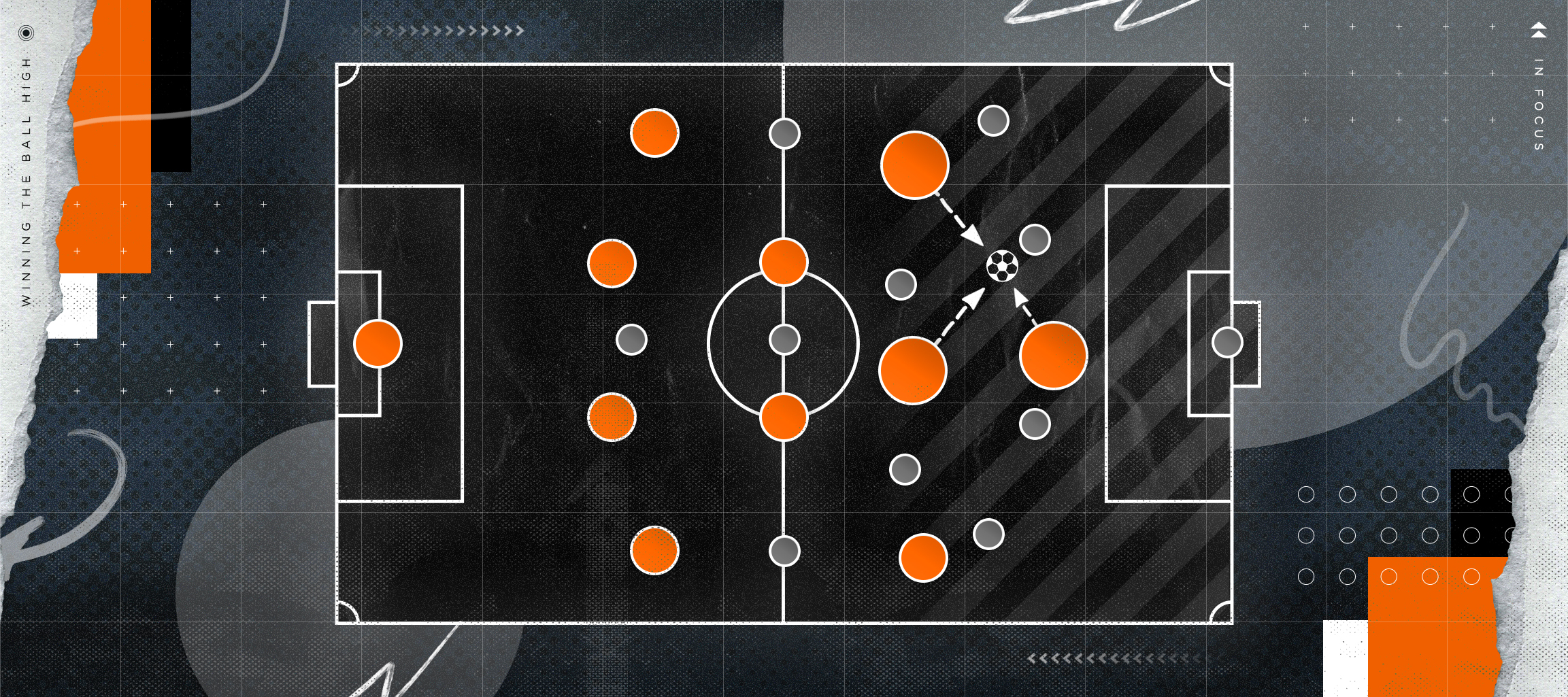
Winning the ball high refers to a strategy by which a team aims to press and regain possession as high up the pitch as possible. This is certainly in the opposition’s half of the pitch, but more commonly in the attacking third. It is a proactive out-of-possession action in which a team does not wait for the opposition to c ome to them, but instead moves aggressively towards the ball with the ambition of forcing a mistake or winning it back quickly.
When executed well, winning the ball high creates immediate attacking opportunities for the team regaining possession – particularly as it can often find the opposition’s shape stretched across the pitch and poorly positioned to react in defensive transition.
What are the advantages of winning the ball high?
Winning the ball high is one of the most effective ways for a team to create goalscoring chances. When a team presses high and wins the ball, they automatically have attacking players in advanced positions – and the opposition will often have defenders spread across the pitch as a legacy of their shape in build-up. This can create a numerical advantage in attacking areas, and reduces the time the opposition’s defensive line and goalkeeper have to reorganise after losing the ball. As a result, teams that win the ball high consistently create more and quicker chances to score.
Even if winning the ball high doesn’t always lead to goalscoring chances, it can have other benefits. Teams winning the ball in advanced areas can secure possession and control the tempo of the game, spending more time in the opposition half and forcing their opponents into defending for long periods. Showing an ability to win the ball high in any given game can also work to increase the pressure on an opponent’s build-up play. In doing so, a team that wins the ball high can force the opposition into adapting their in-possession tactics, which in turn can create more opportunities for turnovers elsewhere – and limit the threat the opposition can carry at the other end of the pitch.
Overall, winning the ball high can significantly enhance a team’s attacking potential while minimising the risk of conceding goals.
Click the links below for two Coaches’ Voice sessions designed to develop a team’s ability to win the ball high...
Session 1: High pressure to win possession
Session 2: Counter-attacks – Regains in the final third
What are the different ways of winning the ball high?
There are a number of different ways of winning the ball high, involving successful pressure on different players in the opposition back line.
Pressing the goalkeeper: when the opposition goalkeeper has possession, a high-pressing team will send a player to close them down immediately. This can force the goalkeeper into playing a quick pass or taking a risk with their distribution. A mistake here can lead to the pressing team winning the ball high and creating an immediate chance in a dangerous area.
Pressing a centre-back: jumping to press an opposition centre-back as they are about to receive possession, whether they are facing their own goal or opening out to receive on the half-turn, can force a mistake. Winning the ball high and in such a central area can often lead to an excellent goalscoring chance.
Pressing a full-back: an opposition full-back receiving the ball under aggressive pressure from a winger or midfielder can often result in a team winning the ball high, albeit in a less dangerous wide area. However, winning the ball in a situation like this can give the team a chance to play in a direct cross or attack the byline for a cutback into the penalty area. Full-backs under pressure can also play longer or riskier passes, which can be intercepted or lead to a turnover.
Pressing a central midfielder: many teams that look to build up from deep will look to use their central midfielders, who are generally more comfortable in possession than centre-backs. Here, they will either drop into the back line to receive, or be found by a longer pass from the goalkeeper after the centre-backs have split to create a passing line. In either situation, teams aiming to win the ball high will apply aggressive pressure to the central midfielder; the rewards in the case of a turnover are high, but a failed press against players who are better in possession does come with additional risk.
In the video below, Richard Walker, then the lead professional development phase coach at Stoke City, uses the Coaches’ Voice tactics board to explain the key principles that underpin his coaching of pressing from the front in a 4-2-3-1 formation to win the ball high.
What attributes do players need to win the ball high effectively?
Winning the ball high comes with a range of physical and tactical requirements, from both individuals and the team.
Pressing intensity and aggression: winning the ball high requires players who are willing to close down opponents and put them under serious pressure. This is not about fouling; it is about closing distance quickly, blocking passes and forcing the opposition into uncomfortable positions. Players who lack the mindset to press with intensity will not close down the opposition effectively.
Workrate and stamina: a team’s commitment to wanting to win the ball high requires constant movement and effort. Players must be able to press repeatedly without tiring, which across the course of whole matches can represent intense physical and mental demands. Attackers who are prone to tiring will struggle in a team that wants to win the ball high consistently.
Tactical discipline and co-ordination: successful pressing to win the ball high works only when players press together. Players need to understand their teammates’ movements, show good tactical discipline (such as when to press and when to drop) and press in a co-ordinated way so the pitch is compressed, options are removed and opposition players become more likely to make mistakes. If a player presses in isolation or their teammates are not co-ordinated in support, gaps are too easily left for the opposition to exploit.
Good reading of the game: winning the ball high is easier when a team understands the opposition’s passing patterns and can anticipate where the ball is going. Individual players who can read the game and position themselves to intercept are more effective than players who rely on speed and intensity alone, although this becomes more effective still within units and teams that are well coached and structured.
In the video below, Richard Walker explains how the key principles of pressing to win the ball high remain the same regardless of formation. In this example, he presents how his team would press from the front in a 3-5-2 shape.
What are the key principles when pressing to win the ball high?
Some of the key principles associated with winning the ball high are listed below.
Close down quickly: the moment an opposition player receives the ball in deep build-up play, the nearest pressing player should move towards them at pace. Closing down quickly reduces the time an opponent has to make a pass or take a touch, increasing the chances of a team winning the ball high. Closing them down too slowly makes it easier for them to find an easy pass.
Remove passing options: any attacker closing down the player on the ball should position their body so as to block the easiest and most obvious passing lanes. This puts the opponent under more pressure, which should force them to play backwards or to the side – or take greater risks with a forward pass and increase the chances of making a mistake and turning the ball over.
Win the first contact: pressing an opponent before they receive the ball gives an out-of-possession attacker an opportunity to steal possession by winning the first contact. If not, they can still put enough pressure on the receiver’s first touch to force a mistake or poor control – this could in turn lead to an interception from a teammate who is positioned to anticipate the potential regain.
What are the key principles after winning the ball high?
Play forward immediately: after winning the ball high, teams should resist the temptation to pass backwards or sideways. The opposition will likely be out of position, so a forward pass can create an immediate chance. Teams that play forward after winning the ball high are more likely to convert more chances.
Support the ball-carrier: as the ball-carrier moves forward, attacking teammates should provide passing options and support. Moving together and maintaining a good counter-attacking shape, with good numbers, can prevent the opposition from counter-pressing to regain the ball quickly.
Tempo and directness: after winning the ball high, a team should look to move the ball quickly as well as forward. Slowing down play allows the opposition to reorganise and lessens the chance of an effective counter-attack. Quick, direct passes and intelligent movement are key to taking advantage of a disorganised opposition that has just lost possession.
Good decision-making: for all of this, if the situation after winning the ball high is not immediately advantageous for the counter-attacking team, they should look to secure possession and get into a good attacking shape. Being able to make the right decision according to the situation ahead of them is key to any team.
What is a good tactical practice to develop players’ ability to win the ball high?
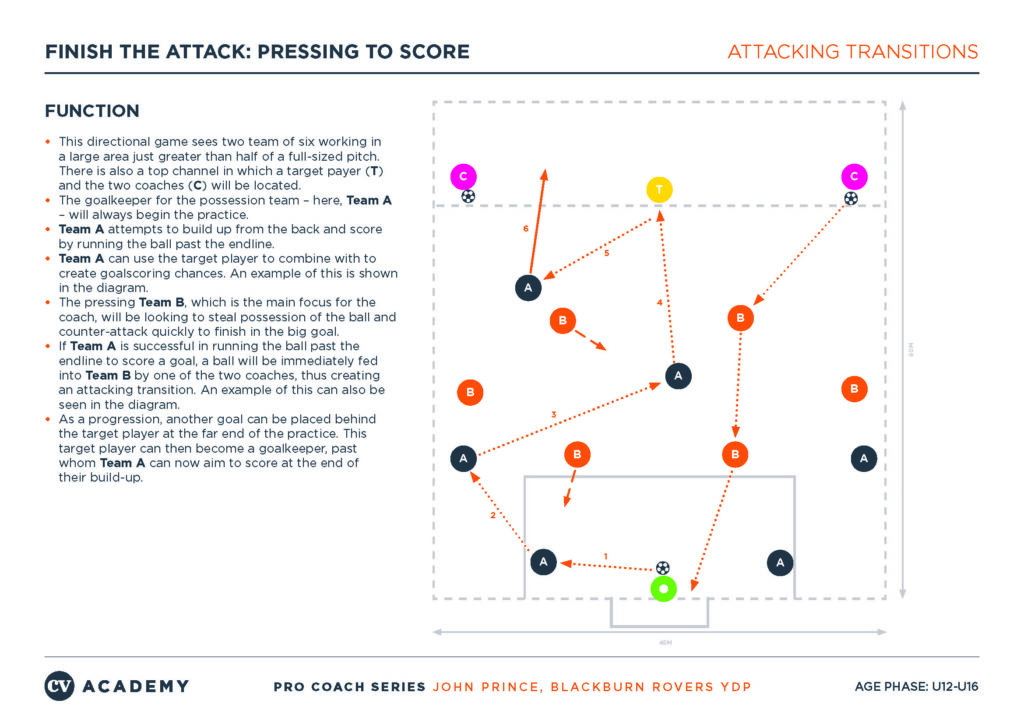
The video below features a 6v6 practice delivered by John Prince, then the senior youth development phase coach at Blackburn Rovers. One team must try to play out from the back and run the ball over a target endline, while the out-of-possession team – which is the coach’s main focus – should press, win the ball and attack quickly to score in a full-sized goal. Details of the practice set-up can be found below the video.
What is a good 11v11 practice to develop players’ ability to win the ball high?
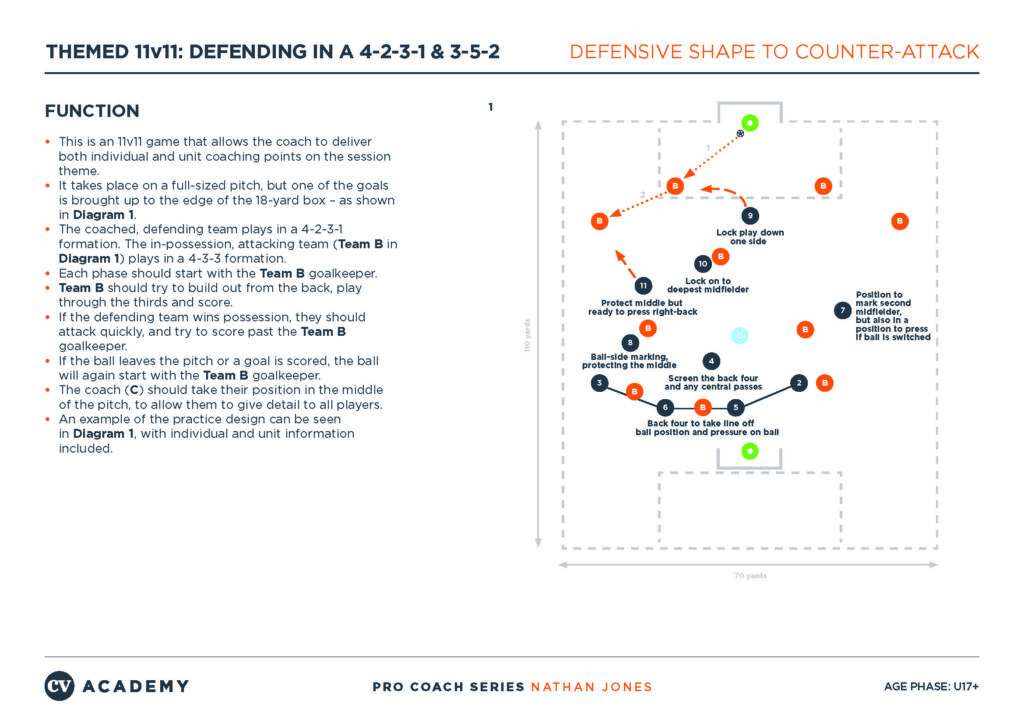
The video below features an 11v11 practice delivered by Nathan Jones to a group of Bournemouth Under-21 players. In the practice, Jones sets up an out-of-possession team to press high and aggressively from a 4-2-3-1 formation, focusing on the individual and unit responsibilities in an attempt to win the ball high. Details of the practice set-up can be found below the video.