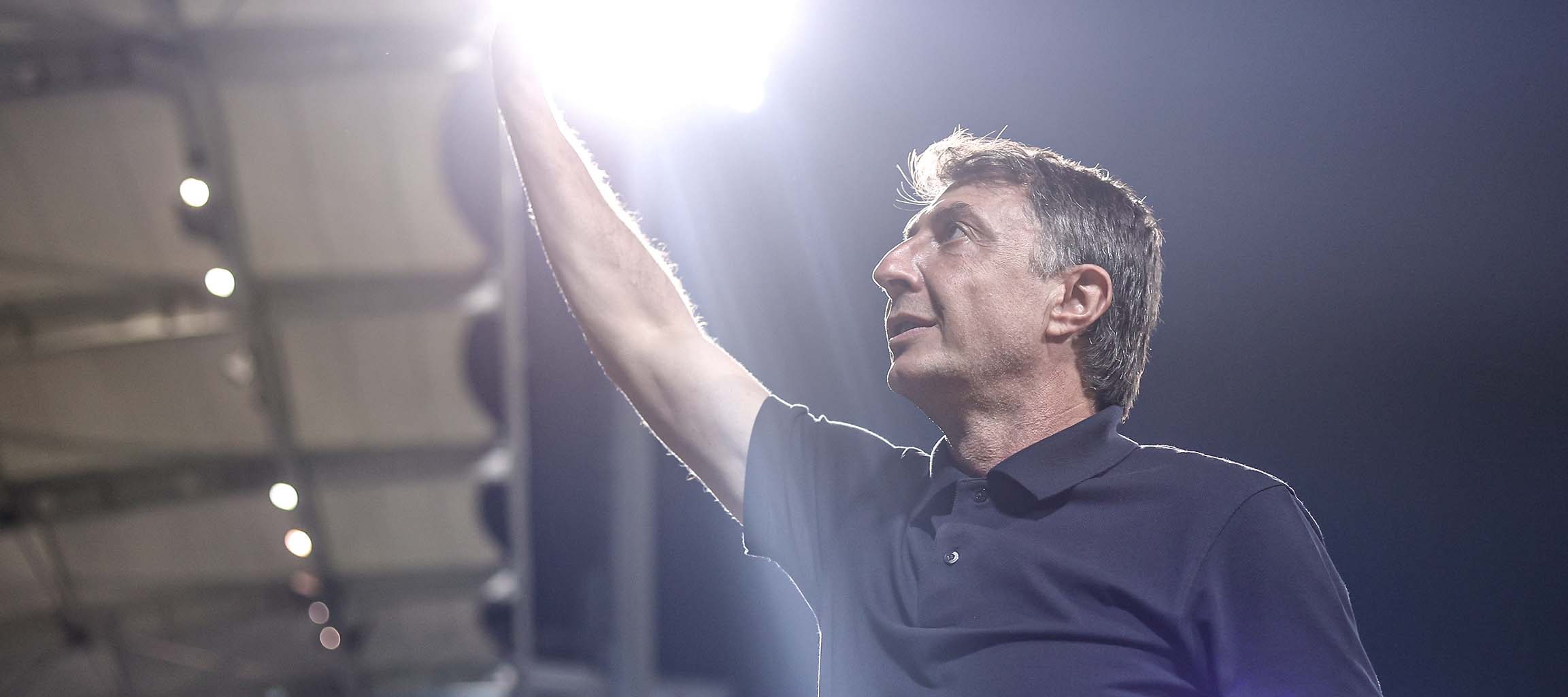
Shota Arveladze
Player, 1990-2008; Manager, 2010-
You have to dream of something unbelievable.
A proper dream. A dream that might even scare some people. What is the point of dreaming of buying a car? Almost anyone can have a car. Or visiting another country? Or having money? No, you should dream of something that not everyone can achieve.
You should imagine yourself in a room with a group of people, telling them about your dream. They need to think: “This guy is a little mad.” But then you realise it may not be so mad after all. Because only you will know you are on the right track, and that your dream can become reality.
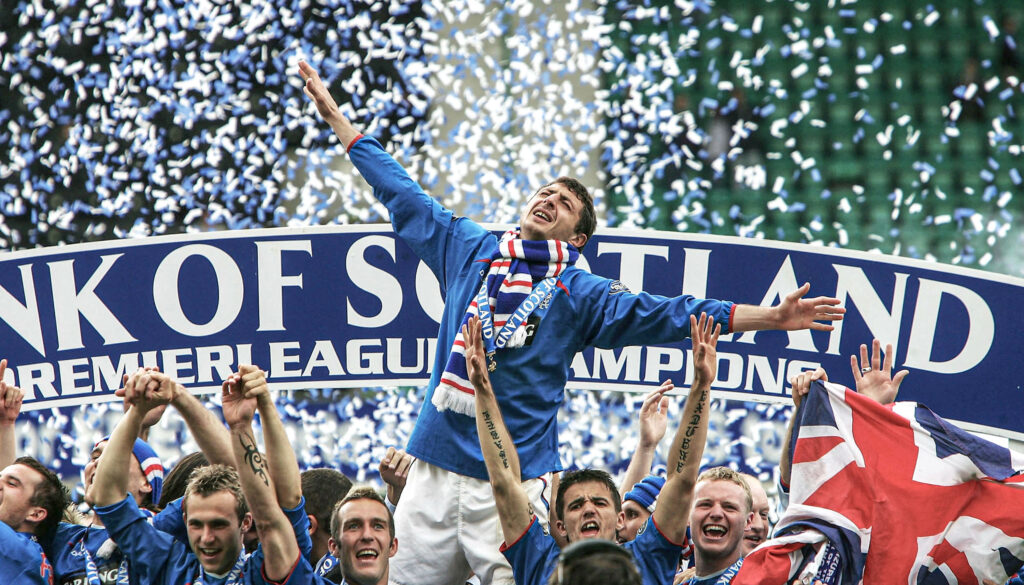
My older brother, Revaz, my twin brother Archil and I dreamed of playing football for a living. We wanted to reach the highest level and play alongside the sport’s biggest names. Fortunately, we all managed to make it into professional football.
It was a dream that began very early for us. We had a healthy and peaceful childhood, despite growing up in Georgia’s capital city, Tbilisi, in the 1970s, when it was still part of the Soviet Union. Our parents did a lot for our upbringing, and worked hard to make sure we were happy.
The wider context of where we grew up was always there, but as a child you don’t fully understand what is going on around you. All we wanted was to go to school, play football with our friends and spend the summer on the Black Sea coast.
“Now, if you had the quality, you could simply go. There were no more borders to our dreams”
In the late 1970s and early 1980s, Dinamo Tbilisi were one of the strongest clubs in Europe. They knocked Liverpool out of the European Cup in 1979 and won the European Cup Winners’ Cup in 1981. Our dream was to play for Dinamo, and my brothers and I managed to make that dream come true. By the early 1990s, however, the Soviet Union had collapsed and everything changed.
The most important thing for Georgia was to gain independence. It was something we had fought for over many years. Georgia has always had its own identity. It is a Christian country with a unique culture, language and alphabet, all of which we are very proud.
Independence brought new dreams for all of us. Before, we had wanted to play for the national team and for Dinamo, but we could not even imagine a career in other parts of Europe.
In the days of the Eastern Bloc, players such as the great Hungarian Ferenc Puskás had to flee their countries to further their career. By the early 1990s, though, that was no longer necessary. Now, if you had the quality, you could simply go. There were no more borders to our dreams.
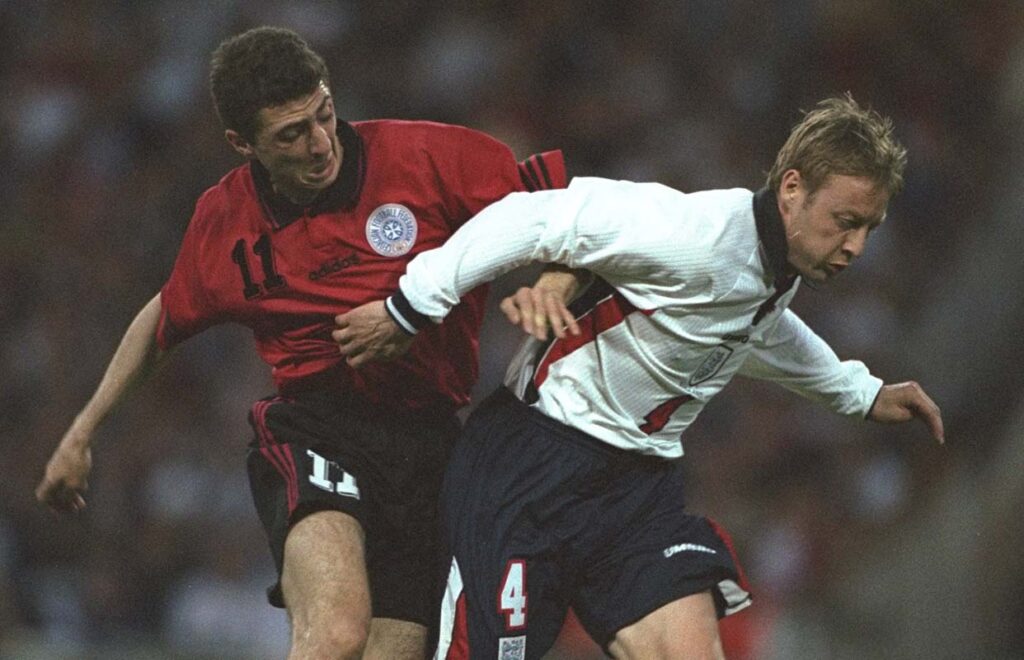
My first experience abroad was in Turkey, at Trabzonspor, between 1993 and 1997. My brother Archil was my teammate there, and we had some memorable moments. Among these was a game against Deportivo La Coruña in the 1995 Cup Winners’ Cup. They had a great team, with players like Bebeto, Fran and Txiki Begiristain.
At the end of that season, Archil and I received an offer from Deportivo. However, my brother suffered a serious knee injury and we couldn’t go. I refused to go alone, because I wanted to stay by his side during his recovery.
“Cruyff was someone you could talk to about anything. He had a unique clarity about life and always found the simplest way”
Then, in 1997, I had the opportunity to join Ajax. It was incredible to be part of such a rich football culture during my time in the Netherlands, training alongside great players such as Michael Laudrup, Zlatan Ibrahimovic, Jari Litmanen, Edwin van der Sar, and Ronald and Frank de Boer.
Sometimes we bumped into Johan Cruyff at the club and got to chat with him. Figures like Cruyff have a huge impact on everyone around them. There is no greater power than the power of art, which you could see with the way geniuses like Cruyff, Diego Maradona and Pelé managed to make people happy.
Cruyff was someone you could talk to about anything. He had a unique clarity about life, and always found the simplest way. Whereas others might need 33 steps, he would sort it out in three. That is rare, because not everyone can see football or life in that way.
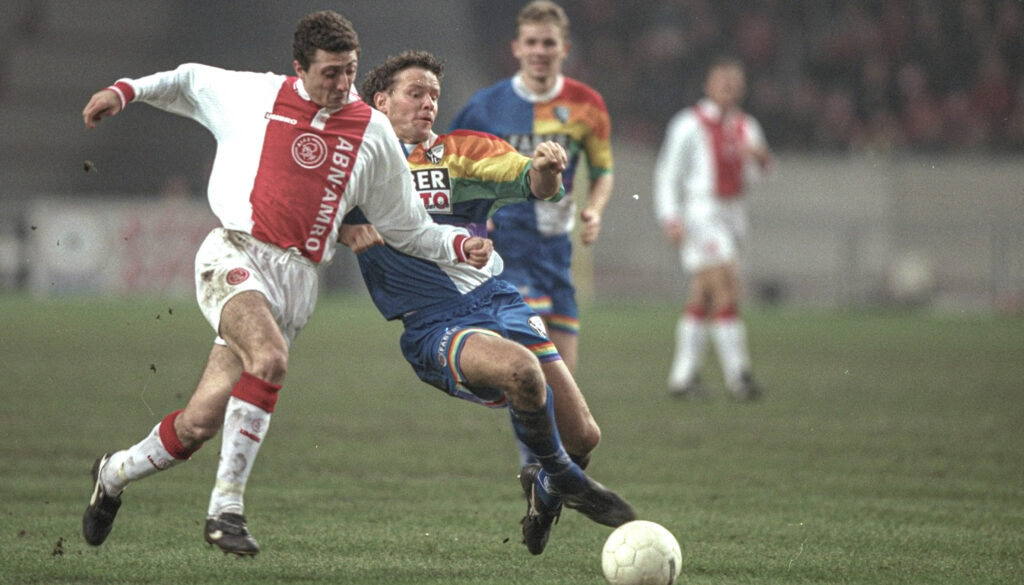
With my own playing career, I am most proud of two things: my instinct for scoring goals, and my understanding of the game. My teammates were crucial to every goal I scored, but I believe my instinct also played an important part.
And I always tried to listen to and learn from my coaches. At Ajax, for example, communication was very clear. There was no shouting or extra training sessions after a defeat. The coaches took responsibility, and guided the players on how to improve.
At that time I wasn’t thinking about becoming a manager. That idea came later, at Levante in Spain, during the 2007/08 season – my last as a player. At the end of that season, I even received an offer to take charge of the Georgian national team, but turned it down due to a lack of experience.
“Van Gaal had a huge influence on me”
Instead, my journey as a manager began at AZ Alkmaar, as Louis van Gaal’s assistant. It was time to learn, and it proved to be the right choice.
Van Gaal had a huge influence on me. He was excellent at everything, particularly at conveying his ideas clearly. For him, training was much more than just getting physically fit to play 90 minutes. Training served to shape and educate the player. Louis is a master at that.
After he left, I stayed at the club as an assistant to two other great managers, Ronald Koeman and Dick Advocaat, who had been my manager at Rangers. I learnt a great deal from both of them.
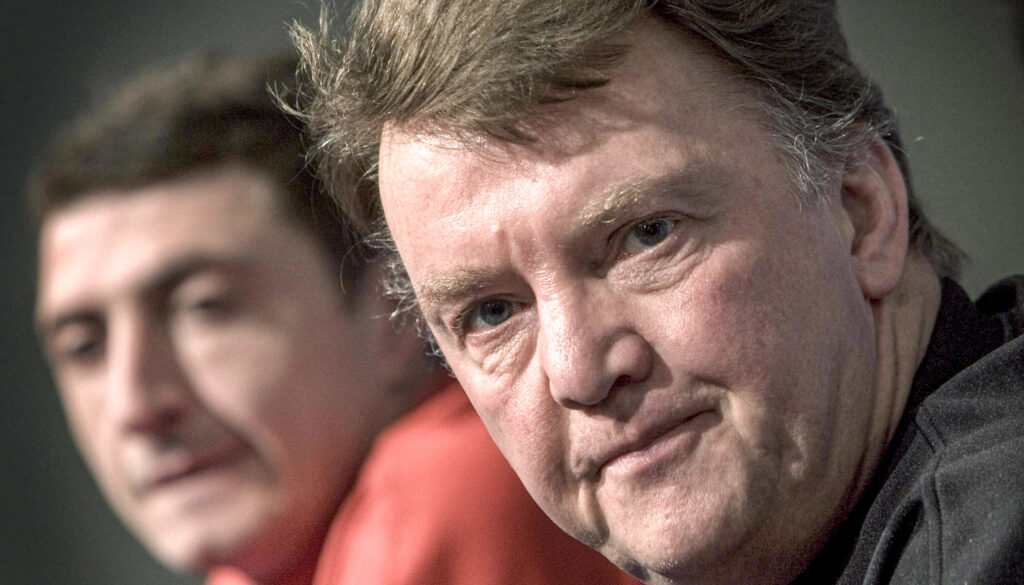
I never had any issues with demanding managers. In fact, it was quite the opposite. With Advocaat, for example, I had an excellent relationship both as his player and then as assistant coach.
Koeman has a different leadership style. He is calmer, but equally effective. His success in different leagues proves this.
These experiences prepared me to follow my own path. I went to Turkey and took charge of Kayserispor. From the outset, I knew I wanted to build attacking teams, because I have always believed that without attacking you don’t get good results.
“Not always having the time you need is one of the difficulties of a coaching career”
I am proud of the work I did at Kayserispor and, later, at Kasimpasa and Trabzonspor – also in Turkish football. People often don’t understand a club’s specific context. In Turkey, for example, if you’re not Galatasaray, Fenerbahçe or Besiktas, finishing fourth in the league is almost like winning the title.
My next job was at Maccabi Tel Aviv in Israel, in 2016/17. We took the team to the Europa League group stage – only the third time that had happened in the club’s history. However, being second in the domestic league meant my tenure was cut short. Not always having the time you need is one of the difficulties of a coaching career.
Fortunately that was not the case in my next challenge, at Pakhtakor Tashkent in Uzbekistan, where I spent three years. You need time to understand the language, culture and surroundings. During that period we won five domestic trophies, including two league-and-cup doubles in consecutive seasons, 2018/19 and 2019/20.
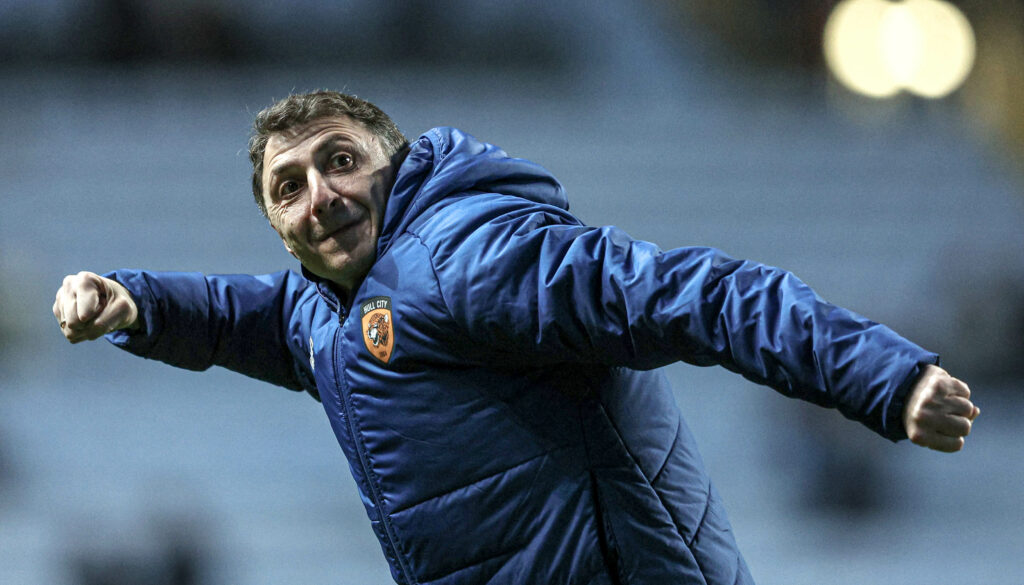
I am also proud of my subsequent coaching experience at Hull City, and grateful to the club for giving me the opportunity to work in England. I was appointed during the 2021/22 season to prevent the club’s relegation from the Championship – a goal we achieved comfortably.
My most recent experiences were back in Turkey, at Fatih Karagümrük in 2023/24 and at Kasimpasa in 2025. Now, I look forward to the next chapters of my journey.
As a manager, it is essential to find enjoyment in the daily routine, otherwise it becomes a very difficult job because of the pressure. Over time I have learned to value the process and never stop dreaming, regardless of what others say.

Shota Arveladze