
PREMIER League, AUGUST 31 2026
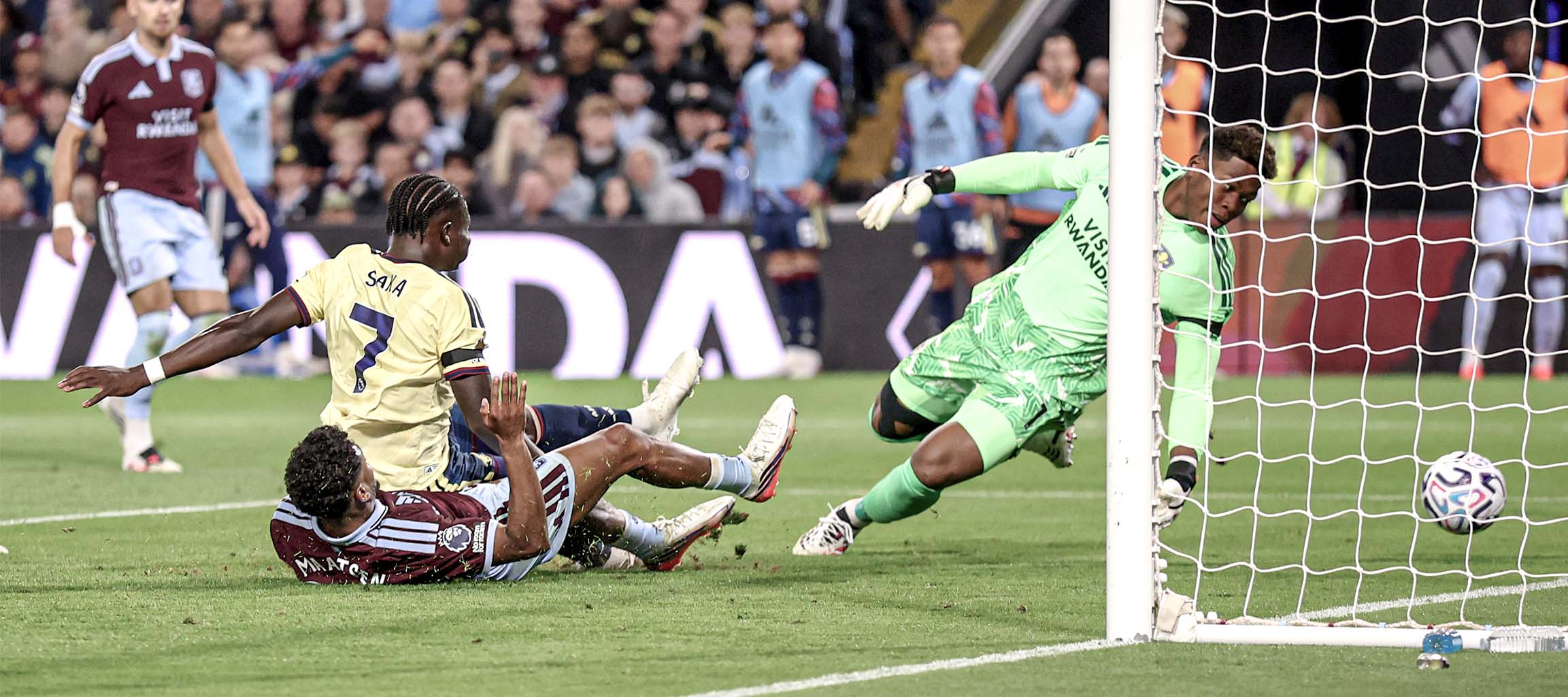
Saka (52)
Bukayo Saka’s second-half goal was enough to give champions Arsenal a second win from two games as they begin the defence of their Premier League title, while leaving Aston Villa searching for their first point of the season. Unai Emery is having to rebuild his team after losing the spine of the Europa League winners – a situation writ large when Arsenal replaced the injured Cristhian Mosquera with their recent £55m signing from Villa, Ezri Konsa. Nonetheless, the home side bounced back from their opening-game thrashing at Brighton to stay in the game here, despite struggling to create anything against Mikel Arteta’s well drilled team. In fact, Villa failed to have a shot on target in a home Premier League game for the first time since they were relegated in 2016.
How the managers saw it
“Today, the best news we can have or feel is how we competed,” said Emery. “We lost but we were competing. We showed this is the way that we should build the team in the next weeks, months and years.”
“It was a squad victory and everybody that was involved in the game in any capacity made a difference for us,” said Arteta. “That’s a big message for all of us because with the depth that we have and with the quality that we have, if you really make that count, that’s going to be a massive boost for us.”
Below, our UEFA-licensed coaches have picked out the tactical highlights from this encounter at Villa Park…
 12214326853107111436334149781729
7/0
SHOTS / ON TARGET
6/2
41%
POSSESSION
59%
22
ATTACKS INTO AREA
22
0.54
EXPECTED GOALS (XG)
0.89
Arsenal’s press
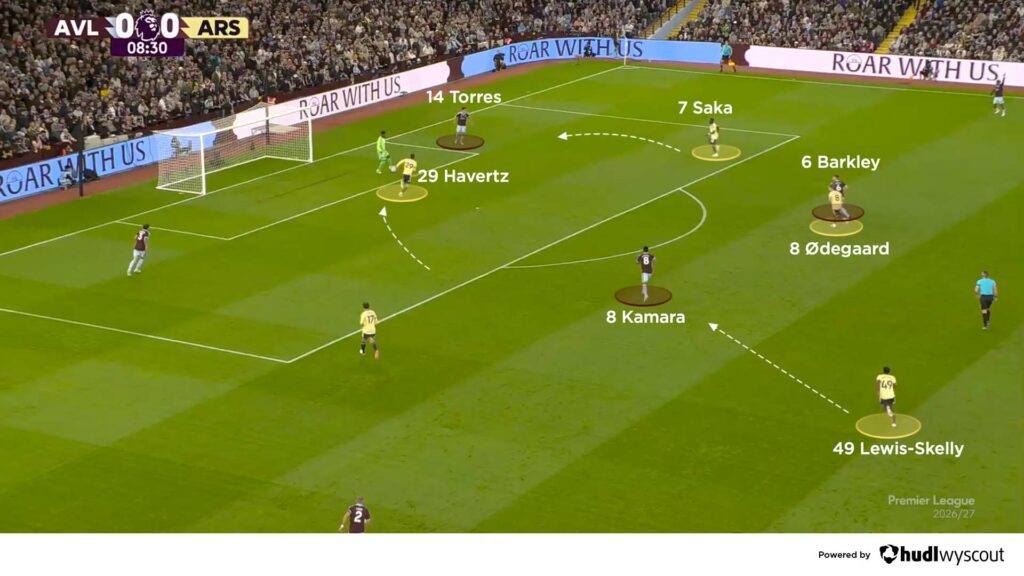
Arsenal started the game on the front foot with their targeted pressing structure, pouncing on high regain opportunities from Villa goal-kick restarts and in general play. As shown below, Kai Havertz arced his pressing run to force play towards Pau Torres. Saka did the same from a narrowed position on the right, keeping Ian Maatsen in his cover shadow to prevent him from receiving and breaking the press. While Villa looked to support their build-up with a double pivot of Boubacar Kamara and Ross Barkley, Martin Ødegaard often started in a more central position to split the two before sliding across to Barkley’s side as play was dictated this way. As this happened, Myles Lewis-Skelly jumped from his deeper central position to close the distance to Kamara, to be able to make contact with him should Torres try to find the diagonal pass to escape pressure. As a consequence of Arsenal restricting Villa’s first and second-line options, when Torres did try to force a pass inside into Barkley (below), Ødegaard was able to be aggressive and intercept, giving Arsenal a dangerous attacking moment in the opening stages.
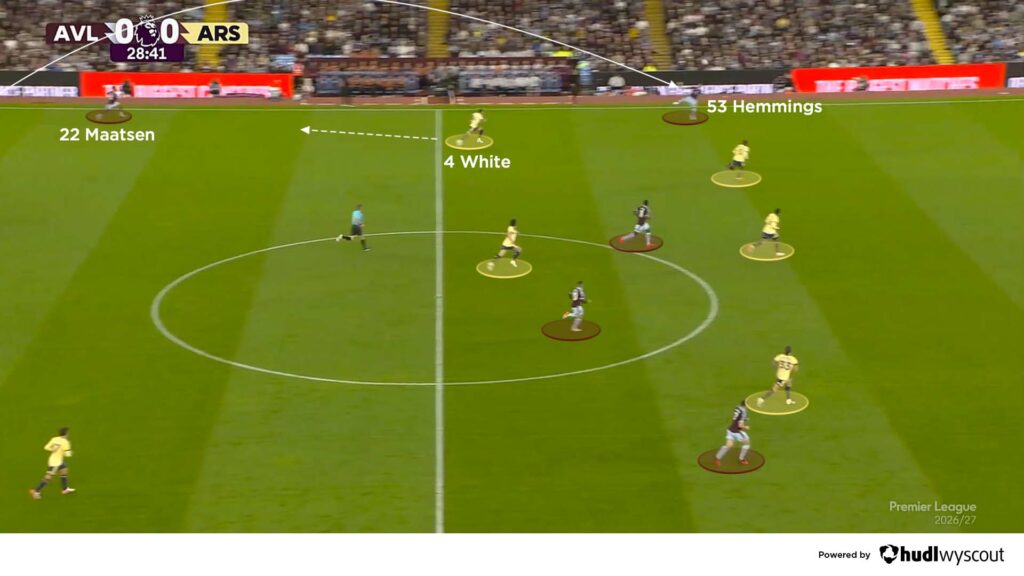
Villa, however, quickly recognised the opportunities to exploit Arsenal’s structure on the last line. With Saka being aggressive in his press on Torres, Ben White had to take up a higher position to be able to apply pressure to Ian Maatsen should the ball be played into him. This left space in behind White for George Hemmings to take up a position high and wide on the last line. In these moments, new Villa goalkeeper Zion Suzuki was able to demonstrate a high level of quality with his distribution to drive the ball into these areas, bypassing Arsenal’s aggressive pressing structure and exploiting the space higher up the pitch to create momentary 4v4 attacking situations (below).
Villa’s switches and counters
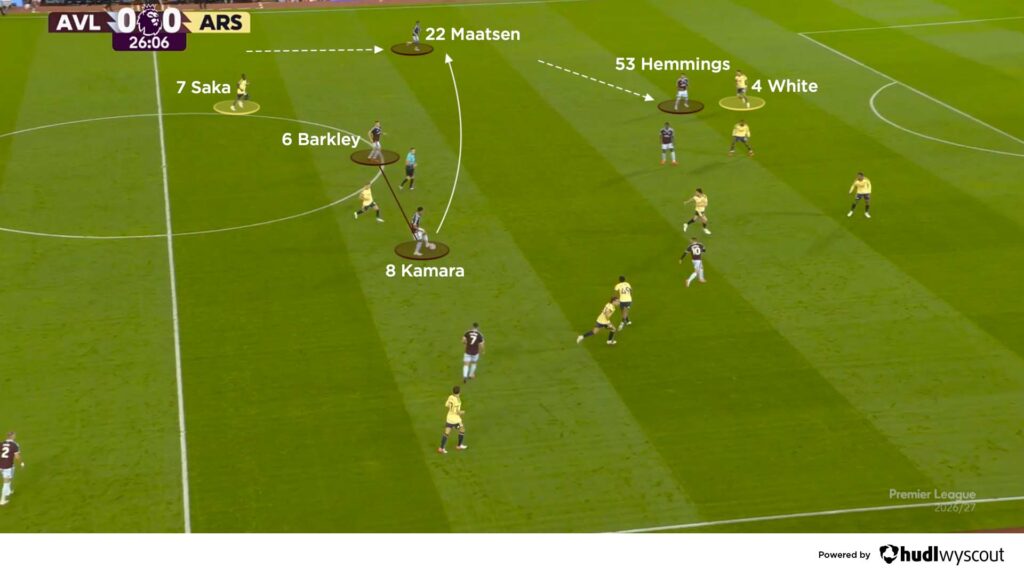
Similarly, some of Villa’s best attacking moments in the first half came from exploiting space behind Saka. Following a quick combination on the right to draw Arsenal’s press to play through it, Villa found themselves with the opportunity to switch play to the left through Barkley and Kamara (below). To maximise space on the opposite side, Maatsen advanced wide on to the last line, while Hemmings pushed inside to occupy White. Upon receiving the ball, Maatsen was able to drive forward aggressively towards the box to cross or shoot, while Arsenal’s back line retreated and tried to delay the attack.
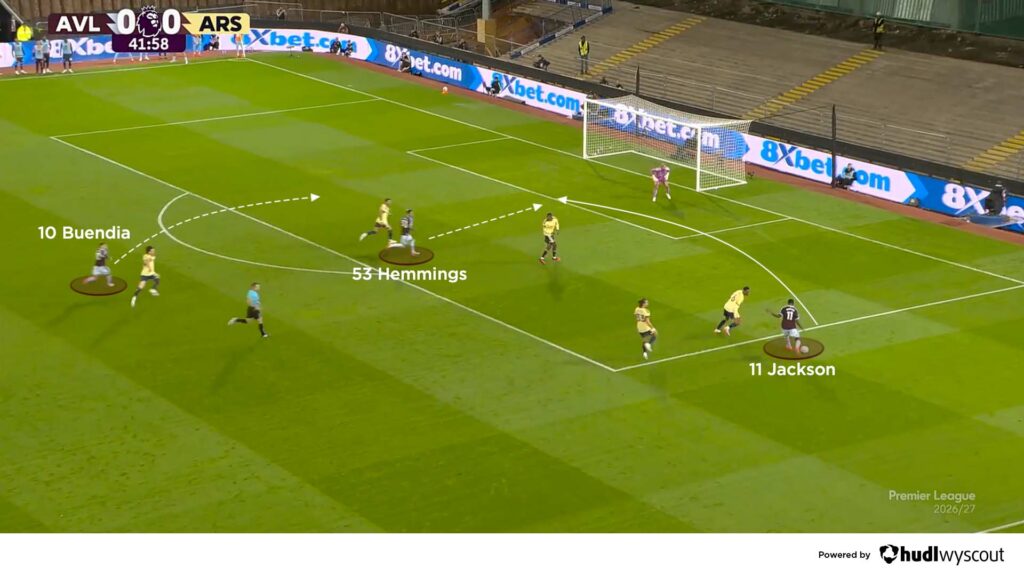
Villa also carried a threat on the counter-attack, primarily utilising the pace of new signing Nicolas Jackson in transition. When Villa regained in deeper areas, Jackson adjusted his position to make runs into the space outside Arsenal’s back three build-up structure, so Emery’s side could play forwards quickly. On the occasions that Jackson was found successfully, Hemmings and Buendia were the supporting runners in central areas, arriving from deeper positions to combine and create, or attack crosses from Jackson (below).
Arsenal’s patience to break through
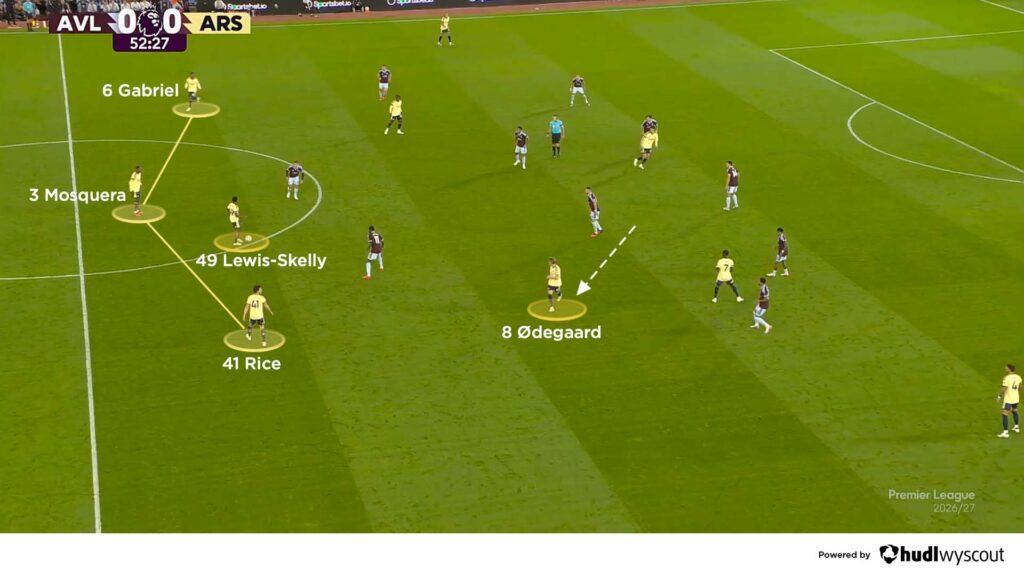
Arsenal had to be patient in possession, as Villa deployed a compact 4-4-2 structure that restricted central progression. Villa’s structure also carried the flexibility for wide midfielders to drop and match the height of Arsenal’s full-backs as they advanced into higher positions on the last line, temporarily becoming a 5-3-2 in those moments. Arsenal operated with a 3-1 base in their build-up, with Declan Rice often dropping to create a back three alongside Mosquera and Gabriel, while Lewis-Skelly retained his central position as a single pivot. Ahead, Arsenal kept three attacking midfielders behind Kai Havertz, while maintaining full width with wide players on either side. Saka and White on the right, and Riccardo Calafiori and Eberechi Eze on the left, were fluid, often rotating between occupying the half-space and a wide position in this structure. As an alternative adjustment, Ødegaard drifted from a central position out to either side (below) to overload and progress possession in wider areas.
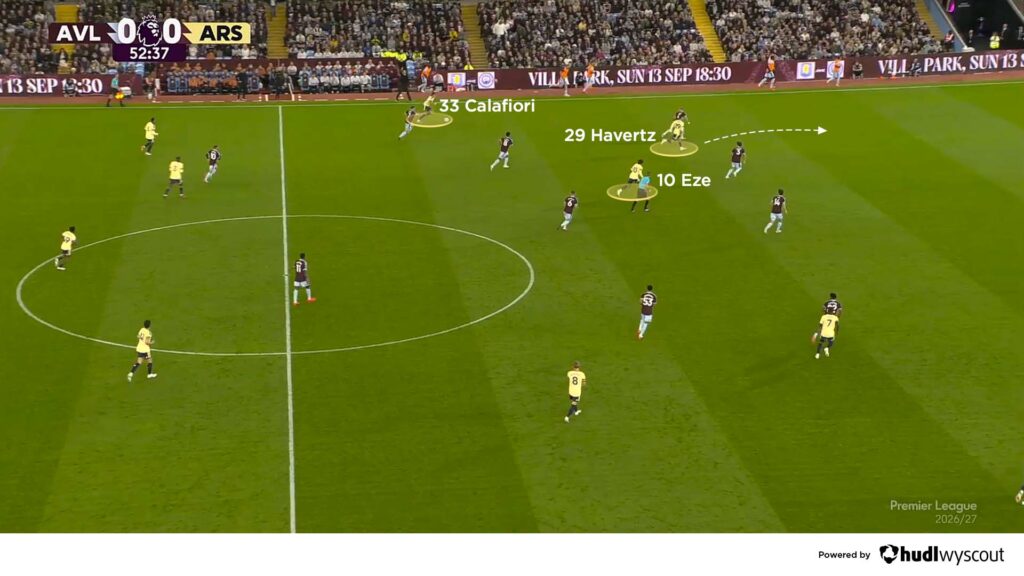
Arsenal had joy progressing in wider areas having attracted Villa’s structure to one side, before switching to exploit space on the other. Arteta’s team was then consistently able to create and threaten through runs into the half-spaces between Villa’s full-back and centre-back. An attacking midfielder mostly made these runs, but Havertz also did so on occasion when drifting across the last line, particularly against Villa’s higher defensive line before they dropped into a low block. Arsenal could then play directly in behind Villa’s back line when it was available, but also create through two and three-player combinations, as they did for their goal.
Ultimately, it was Arsenal’s patience to play around Villa and retain the ball, before recognising moments to penetrate and exploit the space they had created that led to their breakthrough. Although early days, it bodes well for their ability to win tight games as they aim to retain the league title for the first time since 1935. Villa, meanwhile, will have to show patience of their own, as Emery attempts to mould another competitive team amid a major turnover of players.
To learn more about football tactics and gain insights from coaches at the top of the game, visit Coaches’ Voice Academy