
PREMIER League, DECEMBER 21 2025
Rogers (45, 57)
Cunha (45+3)
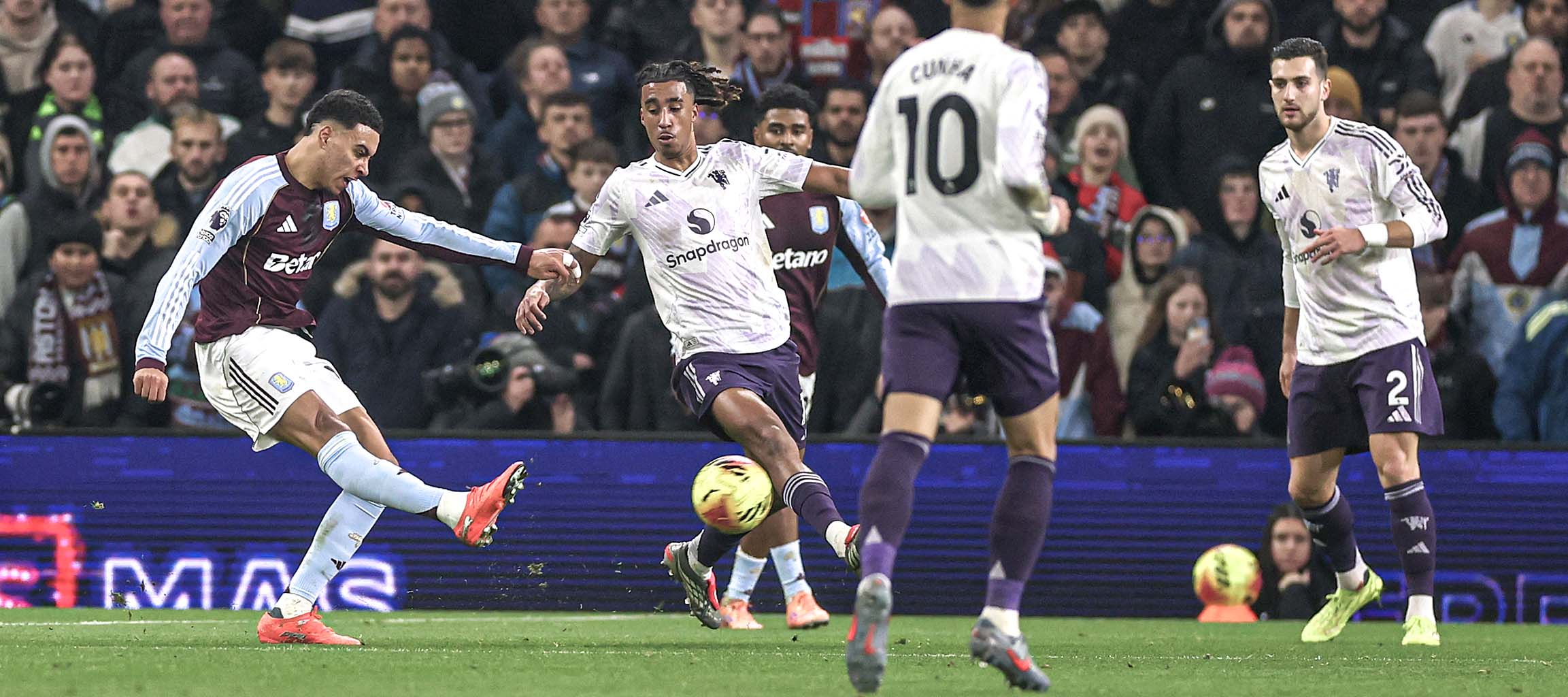
Aston Villa kept themselves in the conversation around the Premier League title race with this pre-Christmas win against Manchester United. The visitors pushed Villa for much of the game, only to be floored by two excellent Morgan Rogers finishes. Matheus Cunha had hit back for United to deservedly draw them level at half-time, but Unai Emery’s team and Rogers were not to be denied.
How the managers saw it
“The result was fantastic, and this is the most important thing,” said Emery. “Then how we compete as well was fantastic because Manchester United faced us with their qualities, their ideas as well. We competed fantastically. We struggled, it was a tough match, but our momentum in 90 minutes showed our qualities through different players. Emiliano Martínez saved with fantastic actions and Morgan Rogers played brilliantly, scoring goals, but overall we did a fantastic job tactically and in our game plan.”
“We were the better team today,” said Ruben Amorim. “We were unlucky, even with the injury of Bruno [Fernandes], but, during the game, even without him, we were the better team. We blocked the transitions quite well and they did really well. We did a very good job that no one is going to remember tomorrow because what matters is the result.”
Below, our UEFA-licensed coaches have picked out the key tactical points from the game…
 232234227244478113115262322581373010
11/4
SHOTS / ON TARGET
16/6
44%
POSSESSION
56%
14
ATTACKS INTO AREA
32
1.91
EXPECTED GOALS (XG)
1.73
United’s high press
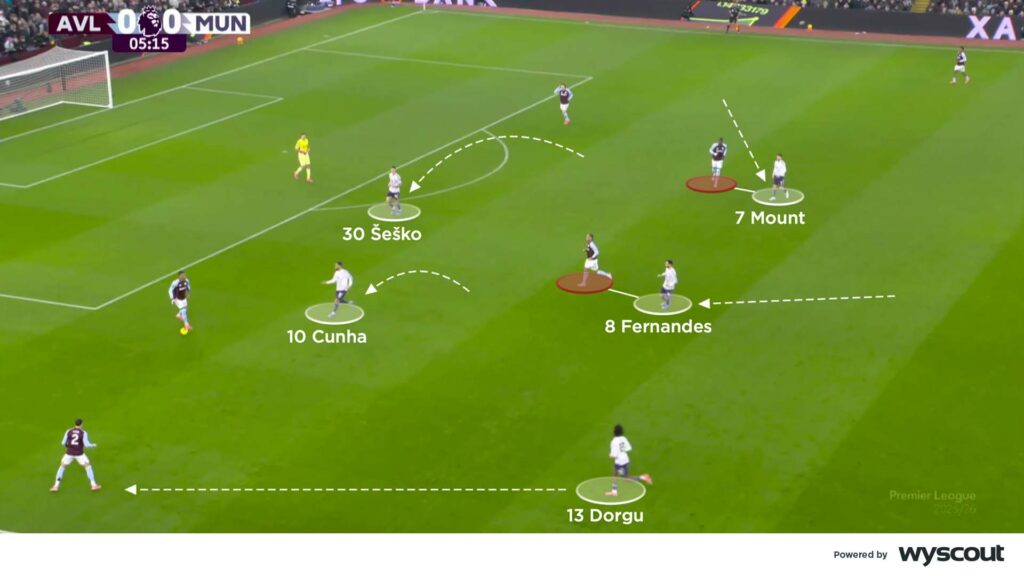
Manchester United’s high press was effective, especially when they forced play to their left. Centre-forward Benjamin Šeško initially shifted his positioning to his right to encourage play towards United’s left. Cunha then jumped out of midfield to press any passes to Ezri Konsa, with Mason Mount narrowing to join Bruno Fernandes in marking Villa’s double pivot. Both of United’s wing-backs then jumped all the way to Villa’s full-backs (below), with Luke Shaw and Leny Yoro ready to cover against John McGinn and Rogers.
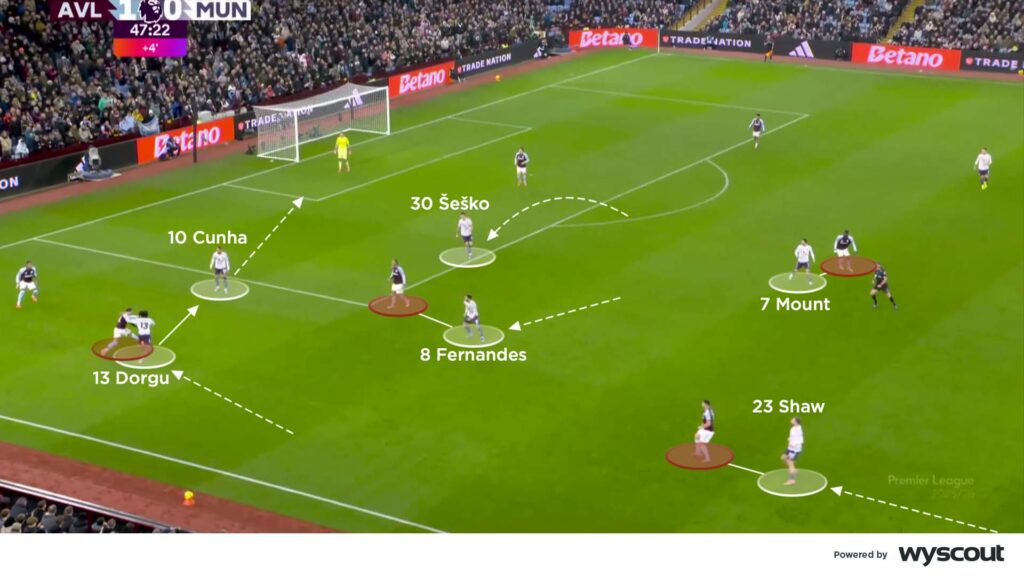
Although Villa played over the press a few times, United got their reward shortly before half-time. Patrick Dorgu, Fernandes and Cunha trapped Villa on United’s left, with Shaw aggressively supporting the press from centre-back. Dorgu nicked the ball from Matty Cash (below), and it fell kindly for Cunha to equalise moments after Villa had taken the lead. United’s aggressive press continued into the second half, with some good regains, while they also limited a lot of Villa’s shorter build-up.
Villa playing into Watkins
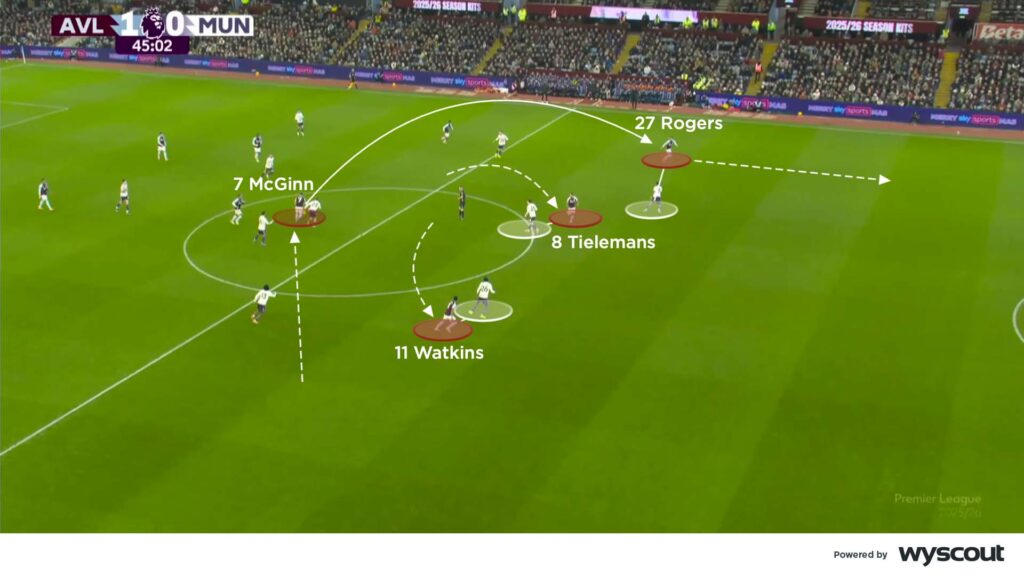
Villa looked longer – mostly on their left – to escape United’s high pressing, especially when Šeško’s attempts to lock play the other way were unsuccessful. With United then committed to player-oriented marking, Rogers and McGinn provided as much width as possible to stretch United’s three centre-backs. Both of United’s wing-backs being relatively high to support the press also helped to increase the distances between the away team’s defenders. This created room for Ollie Watkins to run beyond and also secure the first ball played into him, with Youri Tielemans the next central runner forward, flanked by McGinn and Rogers (below).

Rogers’ clinical finishing was crucial, while his 1v1 play against Yoro led to the goals that secured Villa’s victory. Around him, McGinn dropped into midfield at times and dragged Shaw with him, as Tielemans moved the other way, adapting around Watkins’ movements away from the ball. As a result, United’s back line found itself spread in moments where Villa played forward directly (below). Rogers took advantage just before half-time by cutting inside and unleashing a superb effort into the far top corner. He then punished United a second time when he landed on the second phase of a cross, again beating Yoro to find the far corner.
Manchester United’s attacking shape
Amorim adapted his attacking shape against Villa’s 4-4-2 mid-block, using just a single pivot in Manuel Ugarte ahead of the three centre-backs. Fernandes moved higher as Mount and Cunha attacked the inside channels, positioned slightly wider than United’s two number 10s have typically been in Amorim’s 3-4-2-1 shape. Whenever Villa’s wide midfielders worked back (below), they formed a congested back line that limited the crossing of United’s wing-backs. United then looked to play back inside into the inside channels, with Šeško making clever runs beyond as the single centre-forward, forcing Villa’s goalkeeper into a smart save.
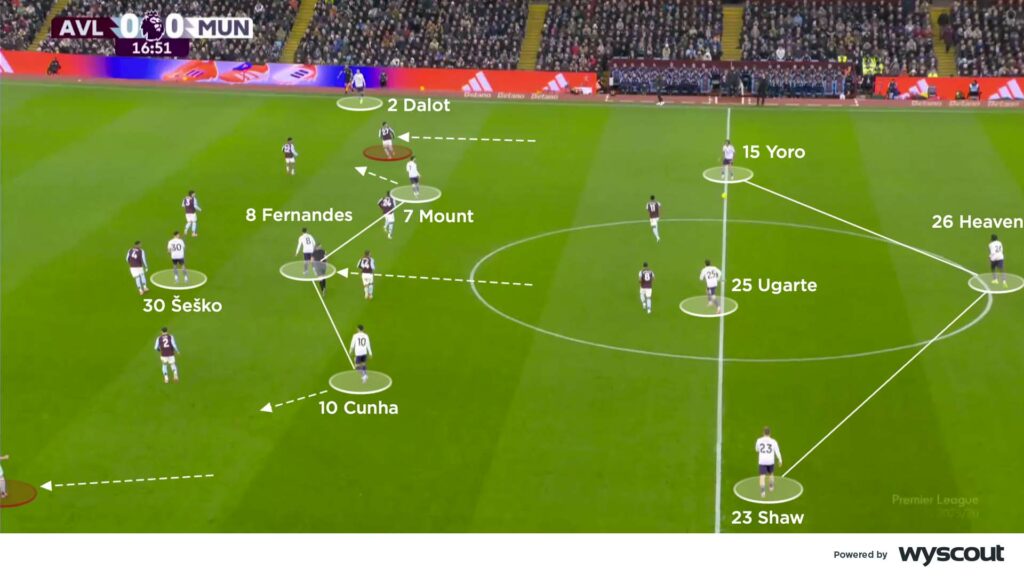
United’s attacking shape also meant they could quickly and effectively counter-press with their central midfield. Their central four were often positioned within reasonable distance of each other when attacking, so they could collapse and place immediate pressure on the ball whenever Villa regained it (below). Not only did that limit how well Villa could counter-attack, it also gave United an option to create attacks of their own, especially when looking to quickly feed Mount and Cunha to combine with the wing-backs.

Amorim replaced an injured Fernandes with Lisandro Martínez at half-time, with the latter playing as a single pivot as Ugarte pushed higher for the second half. United continued to build well via their central numbers – Mount especially found clever pockets of space within the right inside channel (below), with Rogers and Ian Maatsen sometimes disorganised defensively for Villa. United’s better wide play, via switches or quick combinations, found their wing-backs to provide crosses. Indeed, Cunha missed a big chance to equalise for a second time, from a Dorgu cross in the 66th minute.
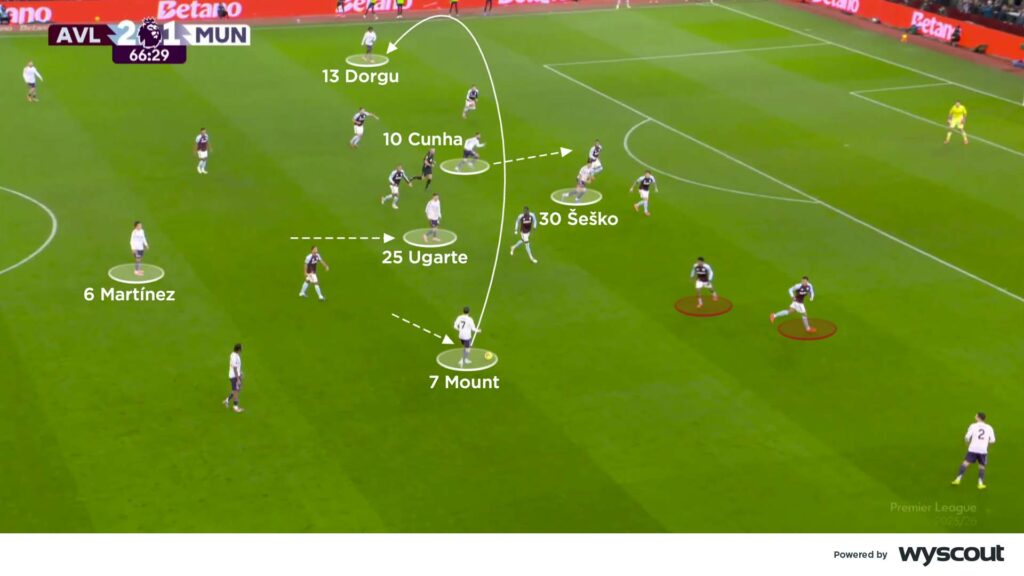
Although the end of the game was quite transitional, United were unable to find a killer touch in the final third, despite some promising, progressive play against Villa’s block. The result was that United came away ruing their inability to turn a promising performance into points, while Villa’s win left them just three points behind leaders Arsenal at Christmas.
To learn more about football tactics and gain insights from coaches at the top of the game, visit CV Academy