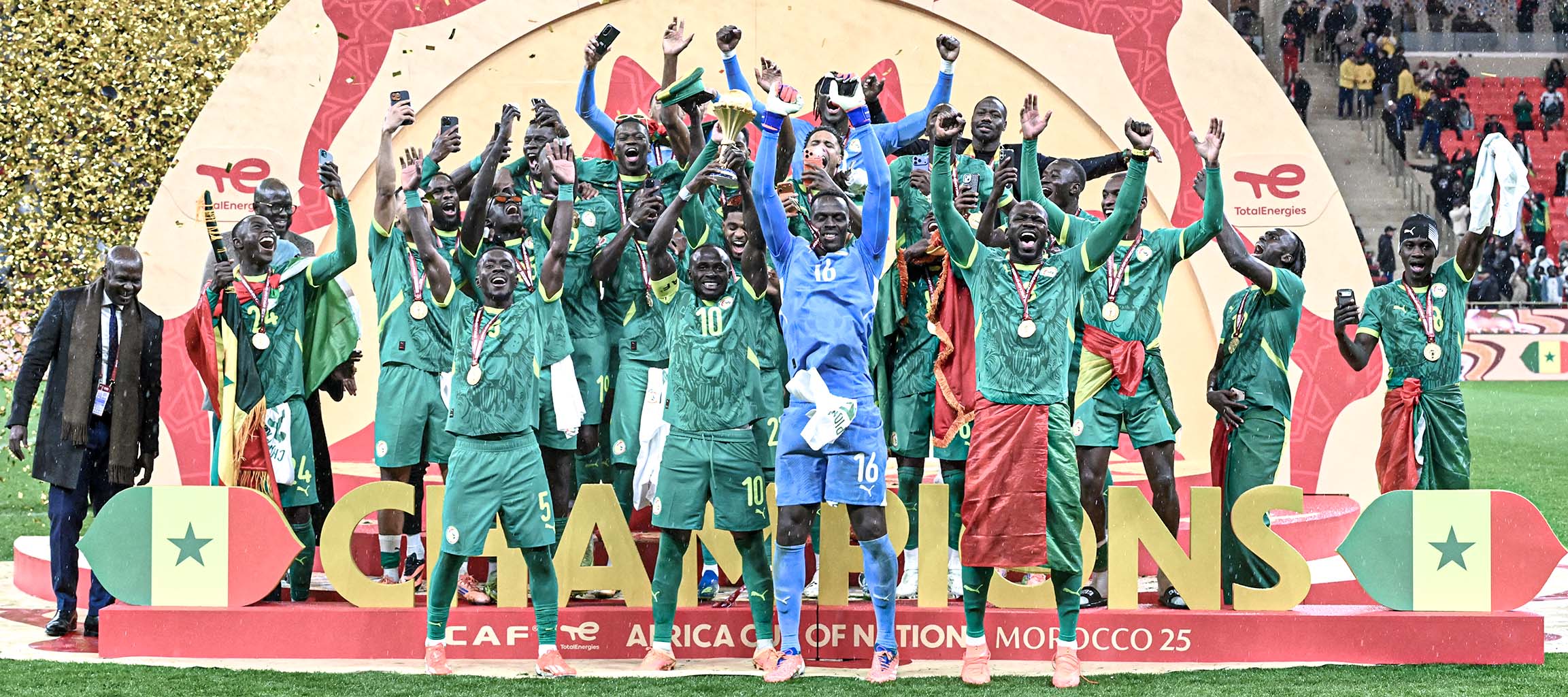

AFRICA CUP OF NATIONS FINAL, JANUARY 18 2026
Pape Gueye (94 ET)
Senegal beat hosts Morocco with an extra-time winner from Pape Gueye to win a drama-filled Africa Cup of Nations final. It came after Senegal head coach Pape Thiaw had ushered most of his team into the dressing room when Morocco were awarded a controversial penalty in the last minute of normal time. That in itself had followed a late Ismaila Sarr goal for Senegal being chalked off when Abdoulaye Seck was penalised for a slight push on Achraf Hakimi. When play finally resumed for Morocco’s penalty after a lengthy delay, Brahim Díaz sent a weak Panenka effort straight into the grateful hands of Édouard Mendy. Pape Gueye then thundered home the winner early in extra-time to give his country a second continental title, following their 2022 success.
How the managers saw it
“In hindsight, I really regret telling my players to leave the field,” said Thiaw. “I apologise for that – apologies to football. After reflecting, I brought them back. We all know what happens in the heat of the moment. Sometimes you wonder: ‘Did that penalty really exist?’ Because right before, we scored a goal that was disallowed. Now, we accept the referee’s mistakes – it happens. We shouldn’t have done it, but what’s done is done.”
“The image we’ve given of Africa is shameful,” said Walid Regragui. “A coach who asks his players to leave the field… What Pape did does not honour Africa. He had already started in the [pre-match] press conference. He wasn’t classy. But he is a champion, so he can say whatever he wants. We stopped the match in the eyes of the world for 10 minutes. That didn’t help Brahim. That doesn’t excuse Brahim for the way he hit the penalty. He hit it like that and we have to accept it. We were one minute from being African champions. That’s football. It’s often cruel. We missed what for some was the opportunity of a lifetime.”
 125192245268111013125253102411172320
13/7
SHOTS / ON TARGET
20/4
51%
POSSESSION
49%
19
ATTACKS INTO AREA
32
1.93
EXPECTED GOALS (XG)
2.82
Senegal solving Morocco’s mid-block
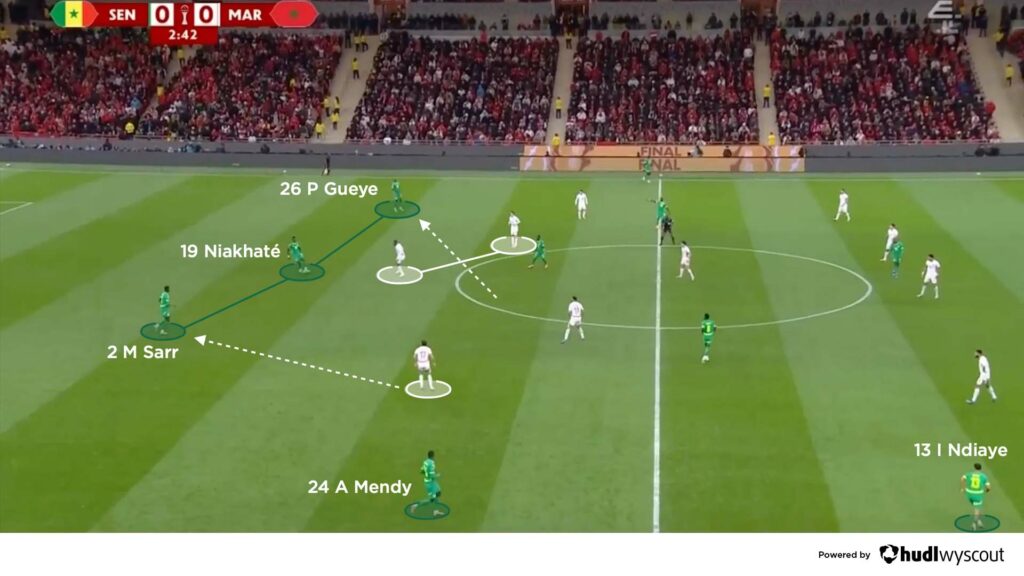
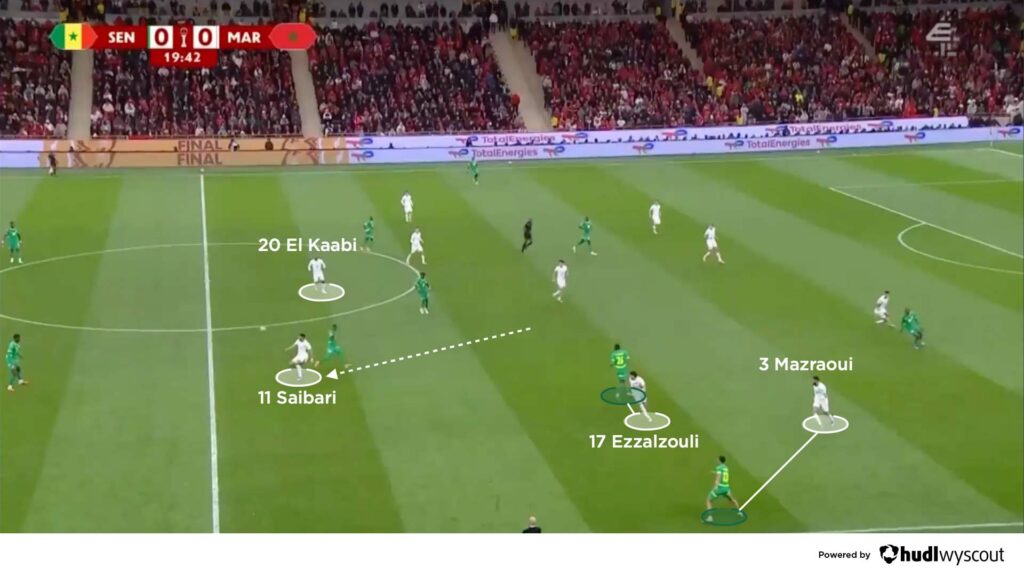
Senegal converted to a back three in possession, with one of their midfielders dropping to join the back line. Initially Pape Gueye dropped to the left of the two centre-backs (below), but as the first half progressed Idrissa Gueye dropped to split them. Morocco utilised a mid-block, initially defending the middle third of the pitch in a 4-4-2. However, in response to coming up against a back three, Morocco’s front line shifted, with left winger Abde Ezzalzouli jumping to press (also below). Whenever Senegal played around or through this jump, they progressed forward via their right side.
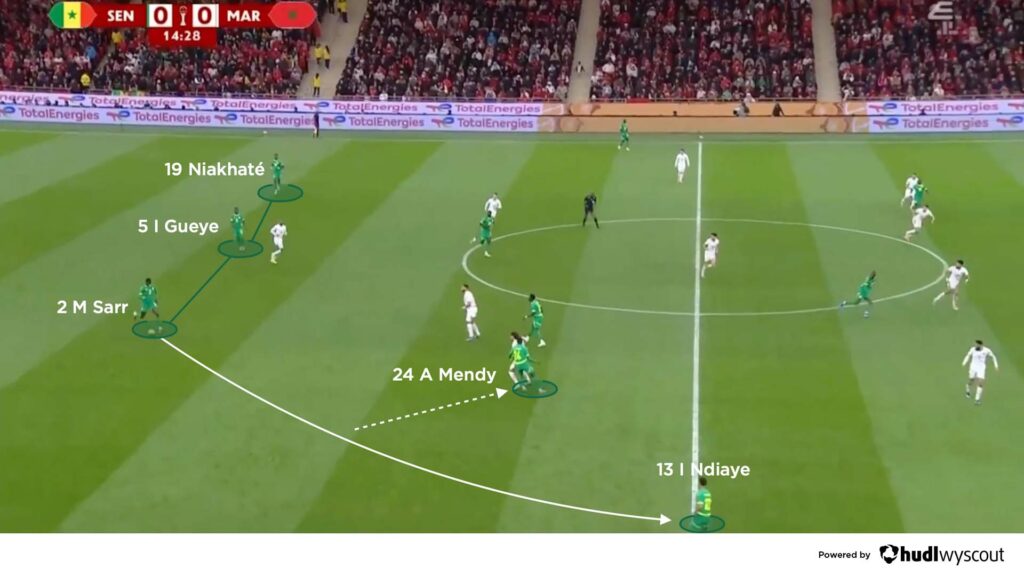
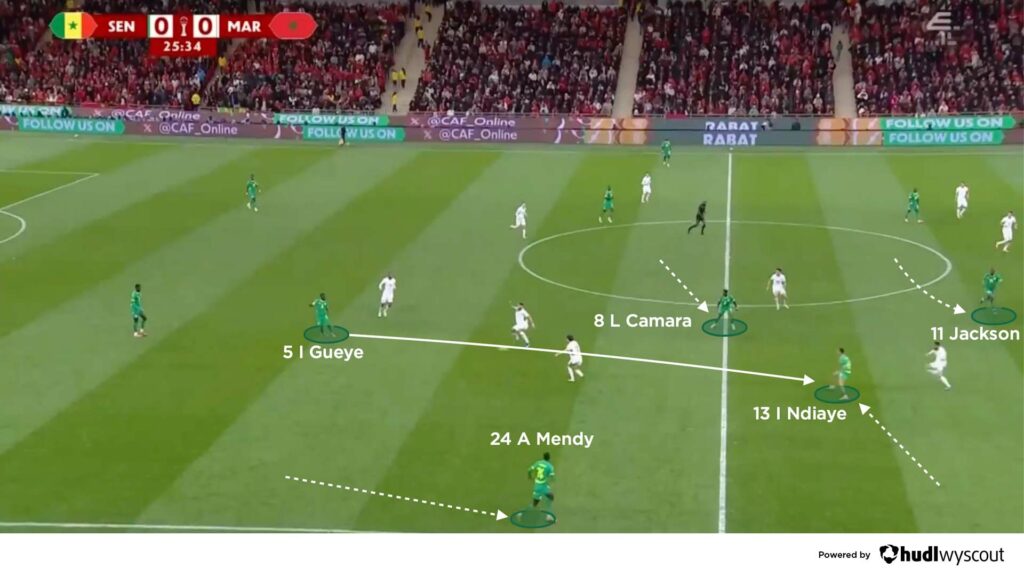
To limit Ezzalzouli jumping out from midfield, Senegal right-back Antoine Mendy pushed high but stayed narrow to free access into winger Iliman Ndiaye (below). With Morocco then placing less pressure on Senegal’s back three, Thiaw’s team could build with more patience and possession, finding ways to penetrate Morocco’s mid-block.
Morocco eventually responded, shifting their shape defensively to a 4-1-4-1 and creating two main counter-attacking moments. Left-sided number eight Ismael Saibari jumped from midfield, working alongside centre-forward Ayoub El Kaabi as he pressed. Ezzalzouli then tracked back to a much deeper defensive position, with left-back Noussair Mazraoui ready on the front foot to press the dropping Ndiaye (below).
Senegal’s right side reacted by having right-back Mendy hold the width. His direct opponent Ezzalzouli defended slightly wider, as Saibari continued to jump out of midfield for Morocco. But with Ndiaye now rolling inside, the closest Senegal midfielder supporting and Nicolas Jackson stretching beyond (below), Senegal found ways to play through or over Morocco’s block. A quick switch from Jackson later found the narrowed Ndiaye running in behind, but he couldn’t finish Senegal’s best moment of the first half.
Morocco’s second-half response
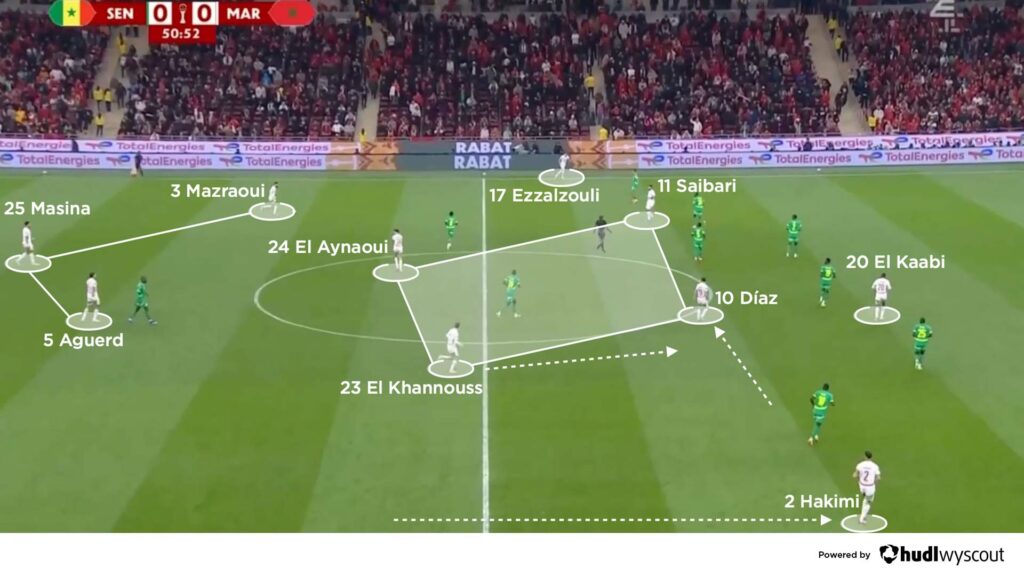
Morocco started strong in the second half, pushing lots of bodies forward to take their respective man-markers deeper into Senegal’s half. Right-back Achraf Hakimi pushed high very early, with midfielder Bilal El Khannouss dropping out to support the build alongside a converted back three if needed. He would then rejoin midfield, working around Díaz, who started as the right winger but moved well inside. Ezzalzouli held the width on the left, with Saibari supporting inside (below). Morocco’s quick passing tempo allowed them to progress forward with good numbers.
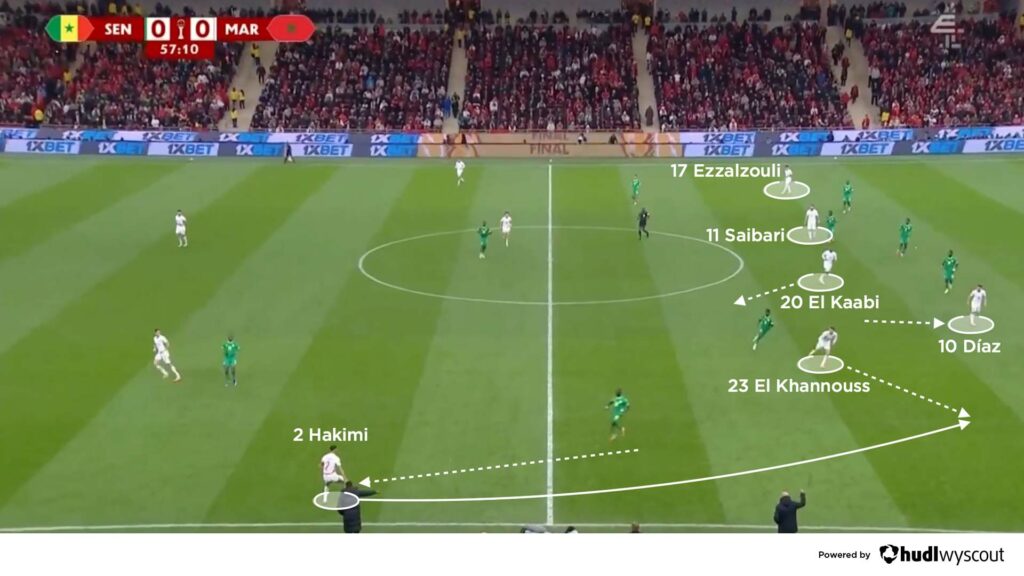
Centre-forward El Kaabi dropped to help link between the lines, as one of Morocco’s central players made runs back to the right side – especially whenever Hakimi dropped to support the back line of three. This drew one of Senegal’s midfielders out of line, as they were unable to cover all of Morocco’s numbers, giving the home side joy in playing around on their right (below). Their best chance in open play duly came from this side, when El Khannouss crossed superbly for El Kaabi.
Extra-time
After the chaotic ending to normal time, the aggressive pressing of Senegal’s forwards helped create counter-attacking opportunities in extra-time. Sadio Mané and Ibrahim Mbaye (on for Iliman Ndiaye) supported Cherif Ndiaye (on for Jackson) as Senegal looked to exploit space on the outside of Morocco’s converted back three, not least space left vacant by Hakimi’s advances. Powerful running and incisive forward passing from central midfield also helped Senegal exploit in transition (below), with Pape Gueye scoring a superb effort after driving forward.
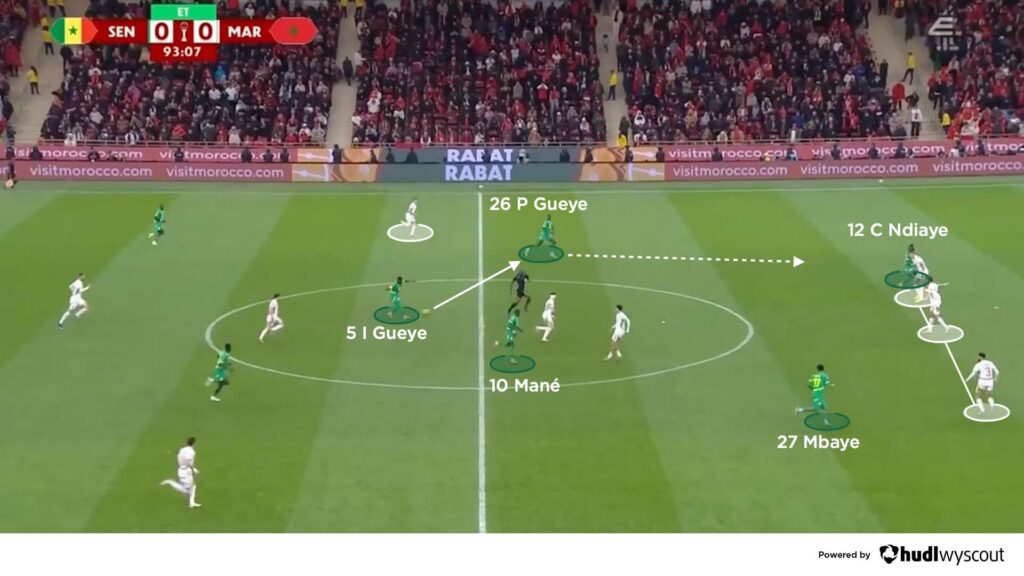
Senegal then converted into a back five to deal with the maximum width provided by Morocco’s attack, and central numbers between the lines. Idrissa Gueye and Pape Gueye screened as much central access as possible, often forcing the ball around, where Ismail Jakobs (on for El Hadji Malick Diouf) and Ismaïla Sarr (on for Lamine Camara) defended the wide areas, with an extra centre-back in cover when needed. The front three still attempted to apply pressure where possible (below), looking to force Morocco’s back line into reverse and limit central access.
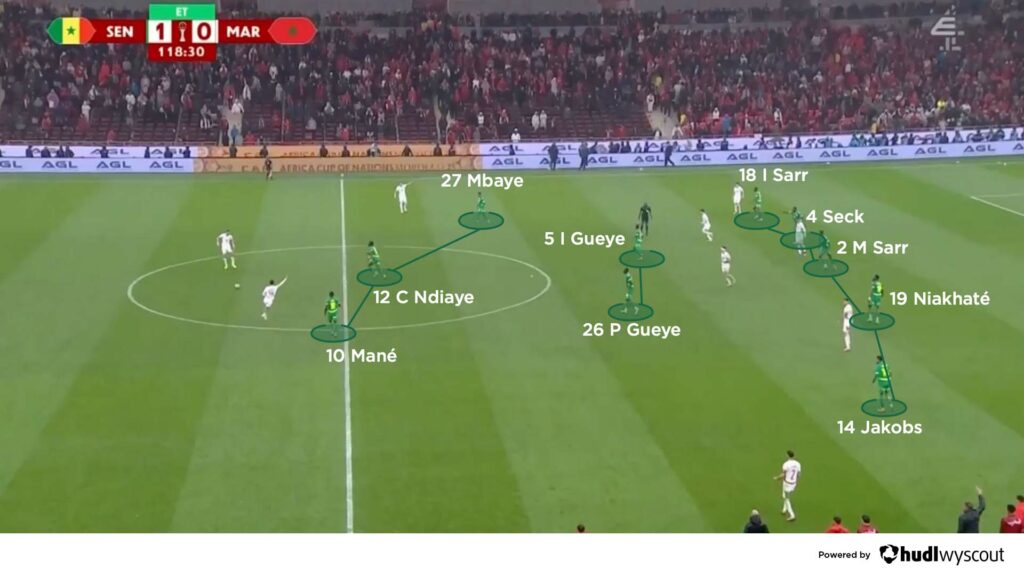
All of which was enough for Senegal to see out the victory in a closely fought final between Africa’s two best national teams. It was a game that will certainly be remembered and talked about for years to come, although unfortunately not purely for footballing reasons.
To learn more about football tactics and gain insights from coaches at the top of the game, visit CV Academy