Chris Hogg
Northampton Town, 2026-
Nobody will ever tell me what I can’t do.
When I was 26, I had a severe knee injury playing for Inverness in the Scottish Premier League. I had no structures left in my knee and the manager, former England captain Terry Butcher, said it was one of the worst injuries he or his physios had ever seen.
The specialists told me there wasn’t much that could be done. They would fix it, but I was told I wouldn’t get back to playing at any decent level.
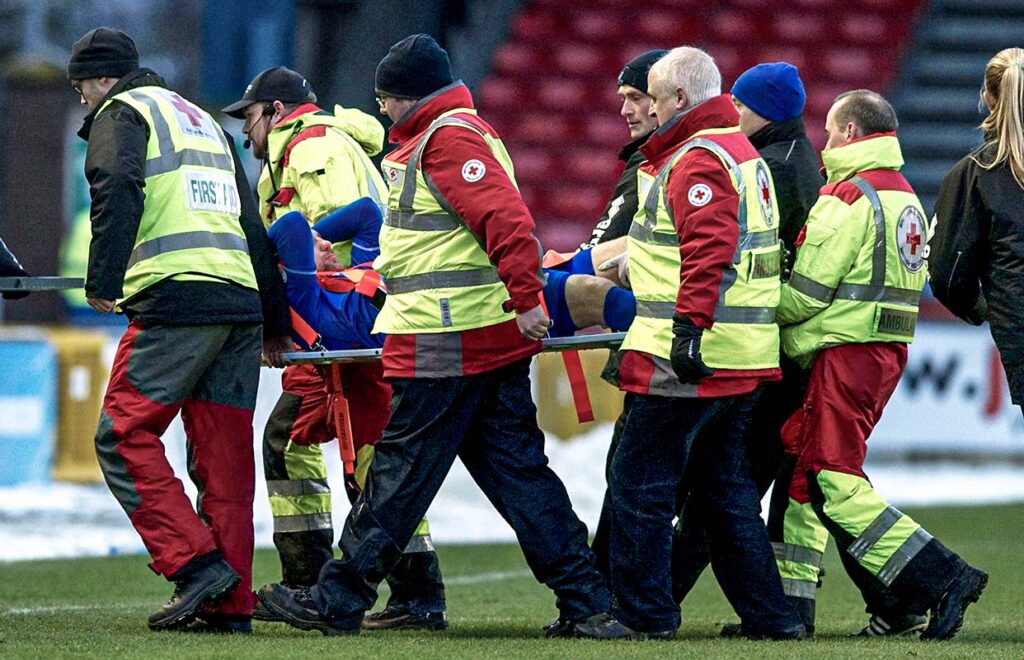
It was a period of my life where I worked out how mentally strong you have to be. How pretty much anything in life is possible if you have the right framework and mindset. Because I did manage to get back to playing in Scotland’s Premier League.
From that day forward, nobody was ever going to tell me what I could or couldn’t do. I will always push boundaries in terms of wanting to compete and try to be the best I can.
I’m a boy from Middlesbrough who comes from a hard-working family, and have been competing all my life. I was the only one in our family who was sporty, and from an early age I was competing in another sport, as a junior BMX champion. Then, when I got into football, my identity as a player was always tied to results and trying to win.
“I learned about the masks that you have to put on, depending on the players and ages you are working with”
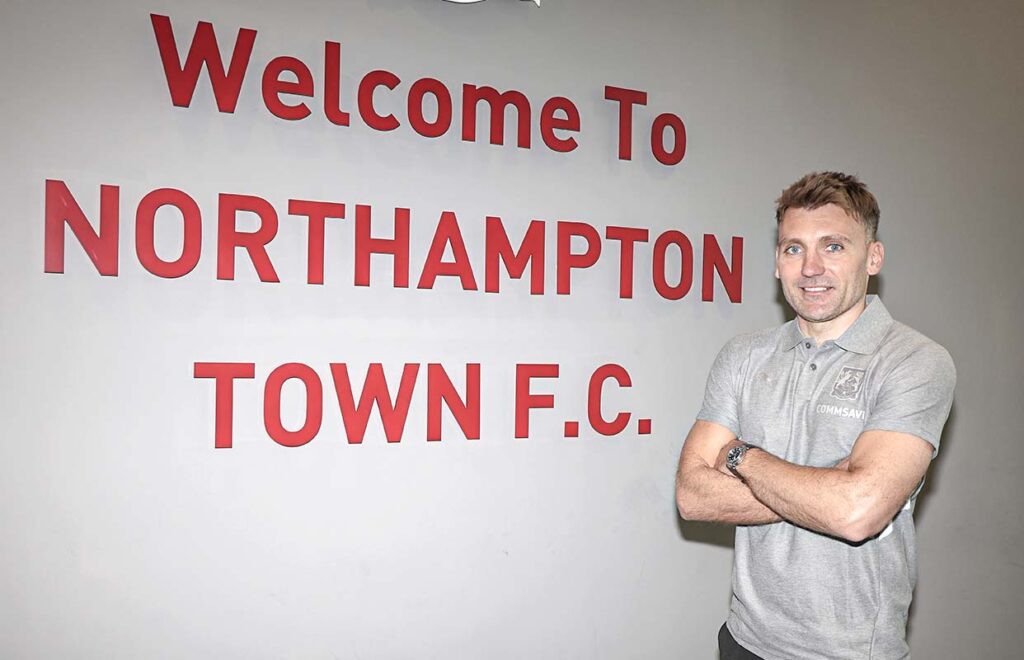
Now I am proud to be manager of Northampton Town, in my first role as a first-team manager. I have been coaching for nearly two decades though, including recent spells as assistant manager in the Championship with Bristol City and Norwich City. I actually began coaching at 22 years old, during my playing days, which was something I thought really helped me as a player. Some supporters who saw me play might not agree with that, mind you!
But I was always a person who gravitated towards leadership roles and helping people, including as a captain in my playing days. That was why I started coaching at 22. And it was always in the back of my mind that, when I had to stop playing, I would move into coaching and develop my craft to the best of my ability.
When I retired as a player in 2013 I went back to Ipswich Town, where I had started out as a young professional. I went into the academy as a coach and was head of foundation for a little while, before progressing up to the Under-21s.
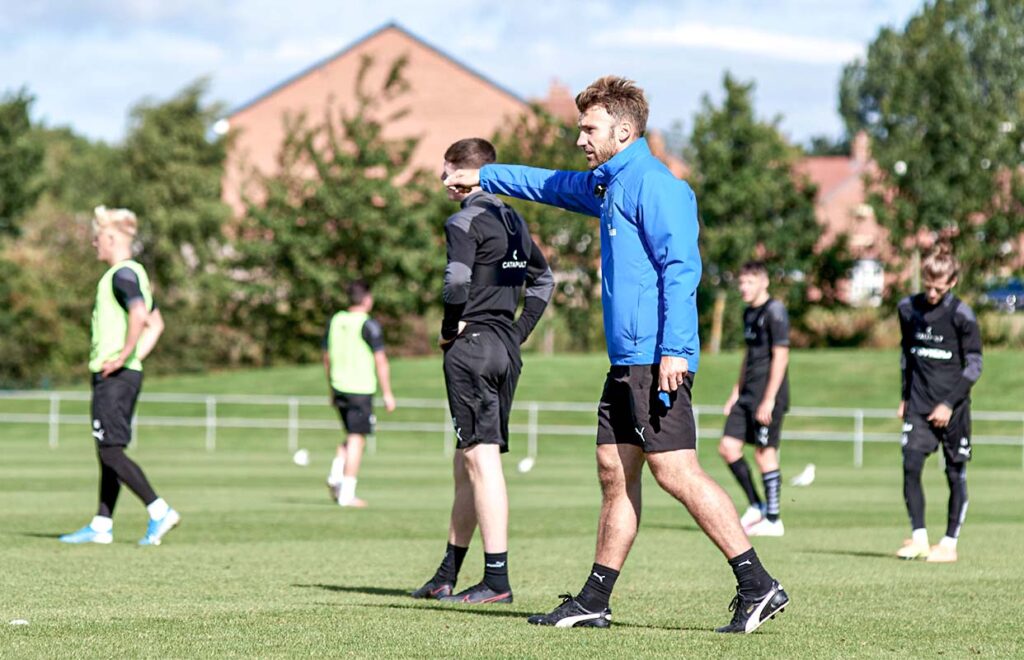
During that time I coached every day – sometimes all the age groups within one day, from Under-7 all the way up to Under-21. It accelerated my journey, adding lots of layers and texture to how I coach and treat people. For example, I learned about the masks that you have to put on, depending on the players and ages you are working with.
My old manager from my youth team days, Bryan Klug, was head of coaching at that time. He was hugely influential from the start. “You have to learn the craft,” he told me. “Working with these different age groups will help you to do that.” It was a little bit scary to begin with, but Bryan helped me to map out what my coaching future might look like.
Sure enough, over the course of that seven-year period at Ipswich I had a wide range of experiences, from Under-7s all the way through to first-team level. Then I progressed to Newcastle United, to manage the Under-23 team. It was an unbelievable club to be a part of, and a club I didn’t really want to leave. But I got a phone call from a good friend of mine who asked me to go and help him. That is when I went to work in League One, as assistant head coach of MK Dons.
“Speaking to people after the game, and hearing how much it meant to them, was really special”
Myself and Liam Manning were a partnership that worked – friends working together, to try to be successful. Together we progressed on to Oxford United, Bristol City and Norwich City – but we were always aware that, when the time was right, I was going to try to find my own way and be in charge of my own decisions.
As a manager, I want to win things. I was lucky enough to win the League Cup when I was playing for Hibs in Scotland, which is something that will live with me forever. Subsequently, as part of a management staff, I’ve reached the playoffs in both League One and the Championship, without quite being able to go all the way. Getting tangible success as a manager, in terms of promotion or a trophy, is a big motivator.
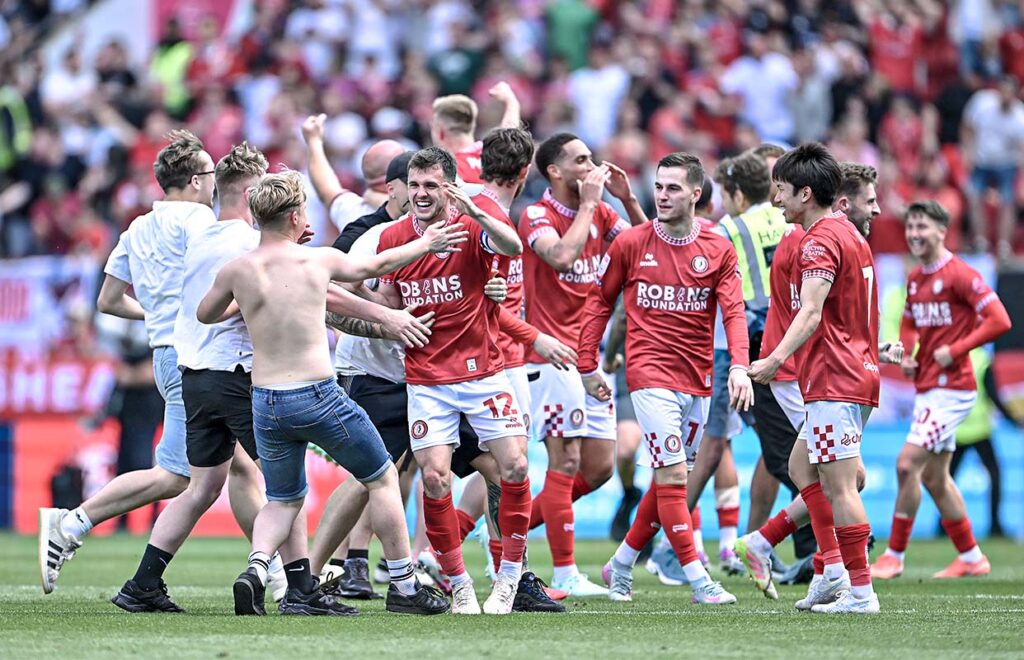
As is giving people meaning and purpose. When we got into the playoffs at Bristol City, I remember looking around, hearing the roar go up, and seeing families in the stands and everyone jumping over each other in celebration. Fans on the pitch, young kids running on, saying: “I can’t believe this is happening!” Speaking to people after the game, and hearing how much it meant to them, was really special. Although we weren’t able to go that extra step in the playoffs, it is a motivation for me to make sure that we achieve things at Northampton.
To achieve anything, you need good leadership – lifting people up and giving them the strength, belief and courage to fulfil their potential. That is an everyday process, and my style of leadership is trying to empower the people I work with, while role-modelling behaviours.
I don’t want to control. Instead, I try to give people autonomy and want them to bring their best self, every day, to help make me better. And in turn I will bring the best version of myself to help them improve and develop. Within that, everyone has to be accountable for what they do and say, and consistency of communication is key.
Authenticity is also really important to me, which goes back to my values. I want my kids to grow up to be good people, so I try to treat everyone with respect and work with integrity. It makes me think of Tony Mowbray, who was one of my idols growing up. I went on to play under him and he is a man of huge humility. For me, humility isn’t about thinking any less of yourself – it is more about putting other people first.
“Football is in danger of losing its essence. We have to do something about that”
And a big driver for me is inspiring people to achieve greater things in their lives. When I first retired as a player, it was tough because I had to reframe what my meaning was in the world. Players’ identities are so often tied up with performance and results. How do you help them realise that football is what they do and not who they are? That is something I believe is hugely important.
I do think that, in a way, football is in danger of losing its essence. We have to do something about that. It is a corporate machine in many ways, but for me, football is a working-class game. Its origins are rooted in giving people joy and a release from the stresses of life. So I want to work in a way where people at the football club come in and enjoy every day.
I want my teams to be the protagonists with the ball. I grew up wanting the ball, being influenced by the Middlesbrough team of the 1990s, with the talents of Juninho, Fabrizio Ravanelli and Emerson, and Bryan Robson as manager. Without knowing it at the time, that influenced me in terms of bringing different nationalities together. That can bring joy to a team, but also the freedom, flexibility and fluidity of how you get your best players on the ball and allow them to express themselves.
More recently, Pep Guardiola has been hugely influential in terms of positional play and other things he has brought to the game. He is a genius – the best ever, in my opinion. I spent a lot of time in Spain when I first retired from playing, going there to watch games and styles as I developed my methodology.
And my father-in-law, George Burley – an ex-Premier League manager with Ipswich Town – has been an unbelievable help and aid to me. Even when I don’t speak football with him, he will drop a little bit of gold into the conversation. A man of his experience will say something that you hadn’t thought of before, and I am very lucky to have people like him around me, influencing me daily, as I begin my managerial journey.
I want to try to maximise what we can achieve, and give people some joy in what we do. To be the best we can.

Chris Hogg