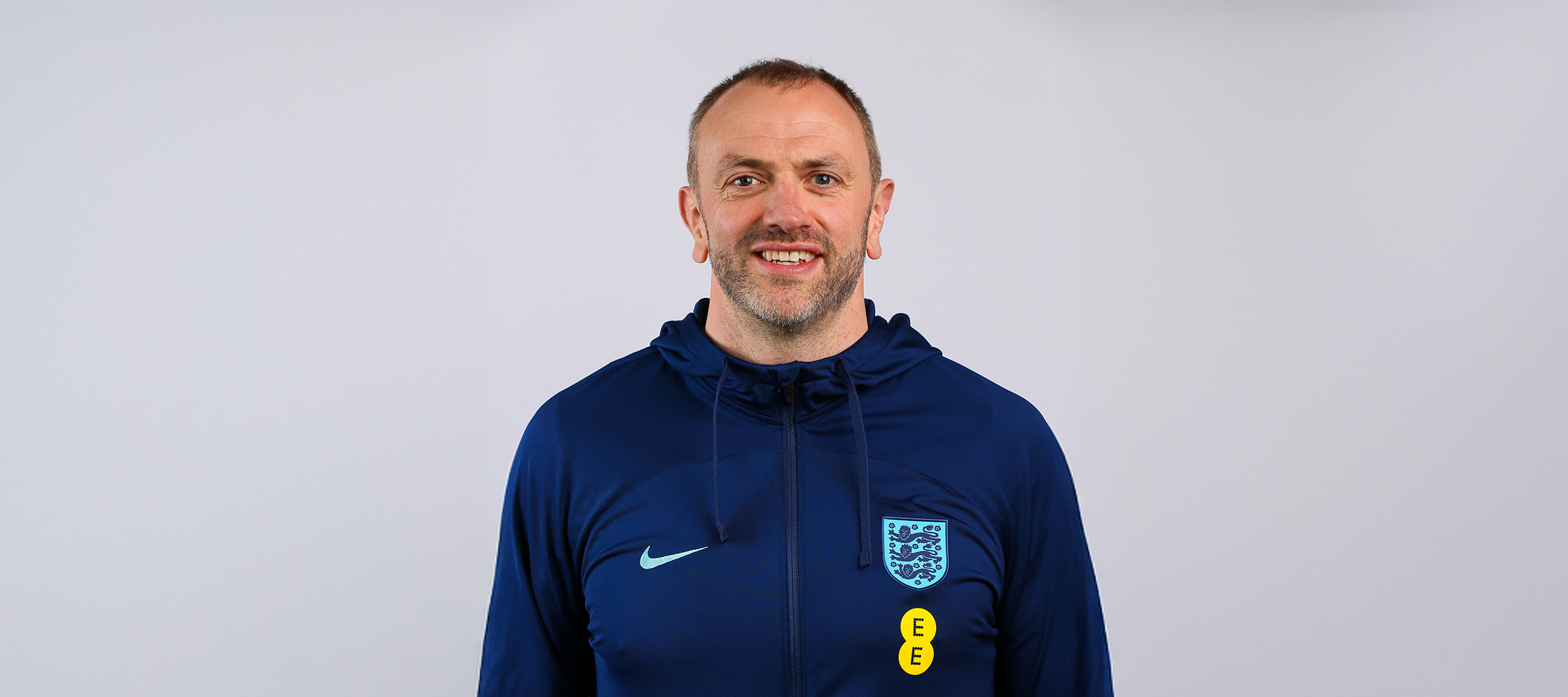
Dan Clements
Head of coach development, Football Association, 2023-
If you are passionate about coaching and coach development, there is no better job in world football than being head of coach development for the Football Association.
Especially if you love football like I do. Football has always been my passion, even if I wasn’t a very good footballer.
As the FA’s head of coach development, I am ultimately responsible for ensuring we have a fit-for-purpose coach development landscape across English football.
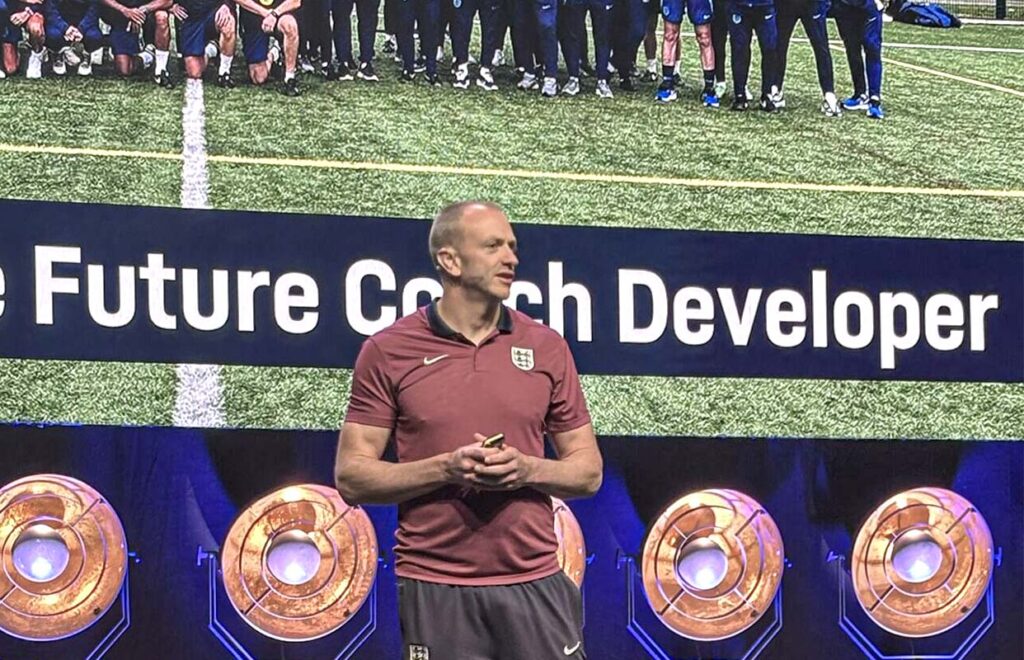
Qualifications are part of that, but it is also about ongoing learning and development. The big question is: ‘How can we make sure that we have a future-focused, modern coach-development system that meets the demands of coaches in the modern game, regardless of where they are coaching?’
Coach development has been pretty rigid for 25 years, whereas learning and development across all sectors is changing at a rapid pace. That is not just about technology; it’s also about people’s learning habits. It’s about people’s time, because we are all really time-poor now. With a rigid system, it is quite hard for people to access the learning they need at the speed they need it.
There has been a culture of football coaching that is heavily focused on qualifications. They are really important and at the core of what we do, but as we know the landscape has changed significantly and learning is available in many formats and many places. We want to shift the narrative towards ongoing development and lifelong learning. Qualifications will clearly be a part of that, but they are not the only aspect available.
“As society changes, it is even harder for coaches across all contexts to meet the needs of individual players”
One of the key challenges is meeting the needs of the coach. There is always a tension between wants and needs. If you get the balance right between them, the coach is motivated to engage. If it tips one way or the other, the system is never right.
You have to listen to coaches, which is why we are doing a lot of research – including a longitudinal project around wants and needs, to find out what coaches are struggling with and what will help them be better coaches. For example, sometimes we might think it’s about the curriculum and football ‘detail’, but you can have coaches sharing with us: “I could just do with some help managing 25 excitable kids on a Saturday morning.”
Something that is coming through loud and clear is meeting the needs of the individual, because as society changes it is even harder for coaches across all contexts to meet the needs of individual players. Differentiation is hard across any field – consider the experience and struggles that education has had with this over many years. But we are hearing that coaches want help with helping players to improve, whether that improvement is psychological, social or skill development. That is why we are modernising our qualifications to focus on that.
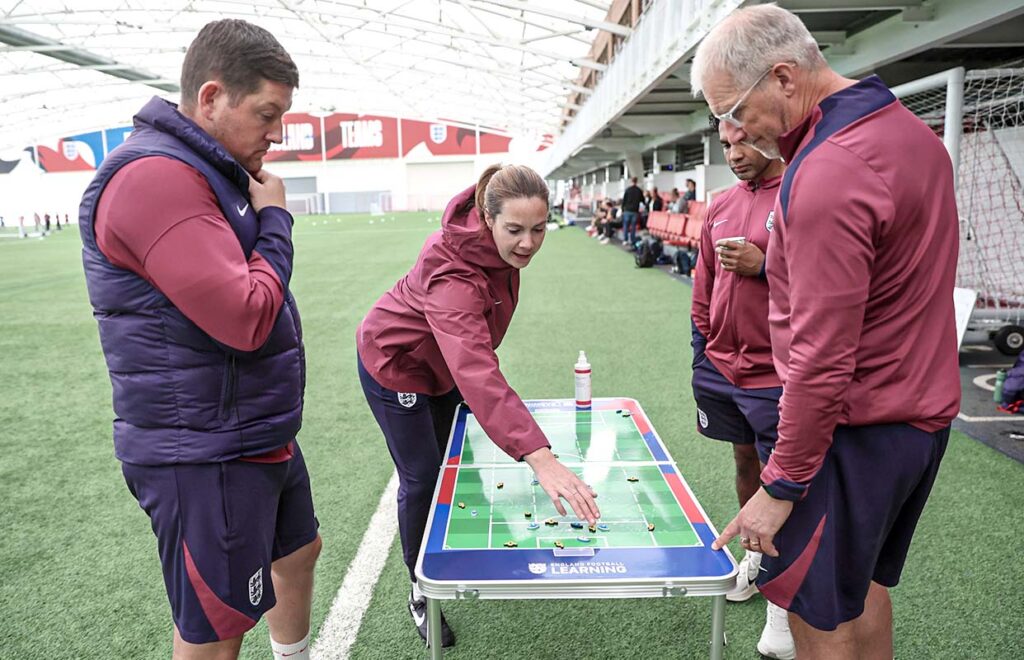
We are updating curriculum content and introducing new qualifications. For example, we have applied to deliver the UEFA B Youth programme for coaches working with young talented players, because coaches have told us they need support to improve their coaching practice in that space.
At the same time, with England Football Learning we are focused on how qualifications are delivered. We want rigorous learning programmes that are practical-focused, helping coaches to perform on the grass and in their roles, rather than having lots of theorists who might struggle to apply what they know into action.
The balance between online and face-to-face learning is often positioned wrong. It’s not either/or – it’s about the right balance between the two. Online delivery should support action. Since COVID, we have learned how we can use our tech systems to support learning and interactions.
“From an early age it taught me about discipline, routine and the pursuit of improvement”
That includes bringing in some of the principles of flipped learning. So if we are introducing a concept or an idea, prior to getting together on a course for a day, face-to-face, we can use technology to share reading and videos beforehand. That means we can share content for coaches to think about and have thoughts that they can bring along to the face-to-face delivery. They are then well placed to engage and work collaboratively with their peers.
At introductory level, the feedback is that the current delivery format is positively favourable. As you go through the coach development pathway, you have to spend more time on it. It’s like anything, isn’t it? If you want to get better as a player, you have to invest in it. If you want to get better as a coach, you have to do more development. Ultimately, a lot of that is going to be face to face, because you have to work with an expert to help you improve.
In my own coaching career I have moved through youth and coach development roles in several sports, including hockey, rugby league and rugby union. Coach development is an area that has long fascinated me. Whether it is youth development, success on the scoreboard or generating lifelong participation, the one constant is always the coach. The coach is the one who can capture that motivation to be whatever you want to be.
My journey in sport started in the pool, where I spent much of my childhood as a competitive swimmer. Training was intense – often 10 sessions a week – and from an early age it taught me about discipline, routine and the pursuit of improvement.
When my swimming career began to wind down, I found my way into rugby league through a chance conversation. It was a sport I’d grown up watching with my dad, a lifelong Wigan Warriors fan, so I decided to give it a try. That decision led to several years of coaching in rugby league, working across youth development and eventually coaching at international level. During that time, a mentor encouraged me to think about whether I wanted to remain solely in frontline coaching or move towards supporting and developing the wider performance system. That advice stayed with me, and helped shape the direction I took.
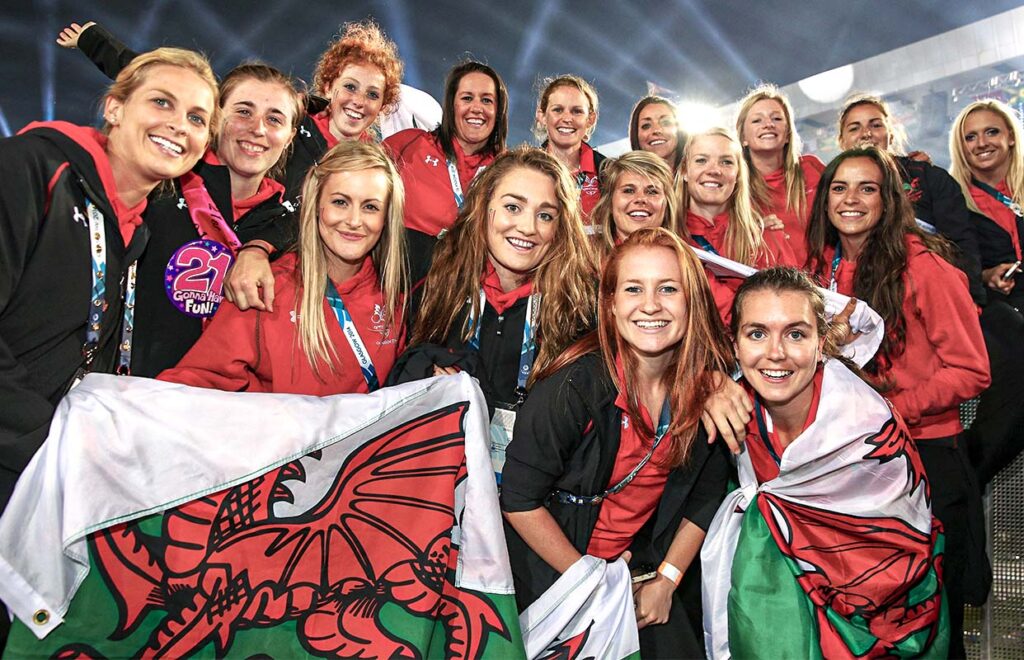
Over time I became increasingly interested in how strong systems, environments and pathways help people perform at their best. That interest led me into a performance director role in hockey, where – despite not having played the sport – I was able to focus on building structures and processes to support athletes and coaches. The highlights of that experience were three Commonwealth Games, and seeing the success of the players progressing on to the Olympic Games.
“Not every player wants to be an England international. Some just want to play with their mates”
After this period I joined the Welsh Rugby Union as elite coach development manager. I found real value and purpose working to support and develop national team coaches on an individual basis, while also strengthening coaching across the domestic game.
Throughout my career I have been fortunate to work with good people in different sports, and I remain motivated by helping create environments where players and coaches can progress and achieve their potential. I have had the privilege to work with a number of elite coaches across a variety of sports as a coach, as I truly believe that coaches need coaches. I enjoy playing a small part in every individual’s journey.
Now at the FA, part of my job is to consider coaches at the grassroots level. I always come back to capturing player motivation as being vital to their role; helping young people to fall in love with the game. Players engage with the game for a number of reasons. It might be technical, tactical, social – whatever it is, it is the coach’s job to create the experience. Not every player wants to be an England international. Some just want to play with their mates and play the game for years to come, and that is fine.
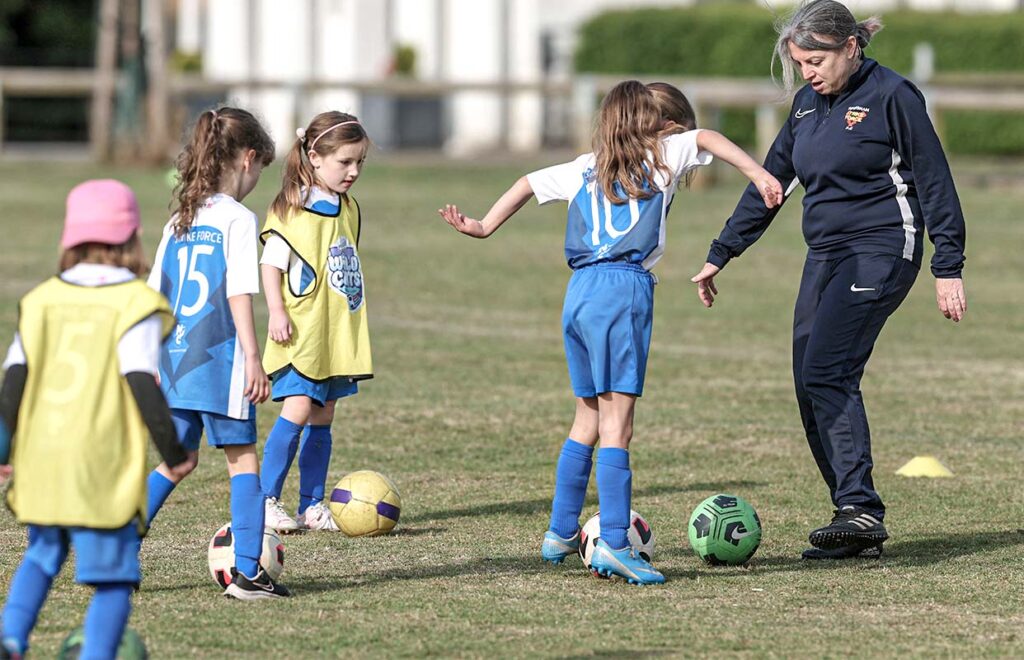
As for the coaches themselves, it is so important that we light the spark for lifelong learning. If a coach has a desire for learning, they will seek it out. They will read, watch and be curious.
We’ve got to encourage people to seek other spaces for learning. They might think: “Right, I’ve done my UEFA C. Next is the UEFA B.” That might well be the case, but there is also a whole CPD menu beyond formal qualifications. It can include learning in areas they are currently struggling with in their coaching practice – things they don’t have to go and do a course for.
Coaches can access learning in so many places now – including through their phones and laptops – at the speed of need. There is great learning available through England’s county FAs, through England Football Learning, Coaches’ Voice, and our partners across the professional game, including the Premier League and Women’s Super League.
“Fewer players means more touches, more interactions, more game actions”
This is something that has to be clear within any touch points the FA have with individual coaches. We have to highlight the great work that is going on. To try to keep coaches wanting more opportunities to learn, and understand that learning means changing something in your behaviour. If you don’t change anything, it’s just been a nice conversation.
The upcoming game format changes for youth football in England – including a new 3v3 entry format for Under-7s – give us a huge opportunity in coach development. Fewer players means more touches, more interactions, more game actions. It gives us endless possibilities to help coaches understand how to get the most out of their players. We understand that change is hard, but we are committed to supporting people through that.
We are also developing specialist pathways, including supporting the growth of the women’s game, increasing the number of female coaches and creating mentoring and placement opportunities. As part of that we have increased the number of female coach developers so that support can be more bespoke and individual.
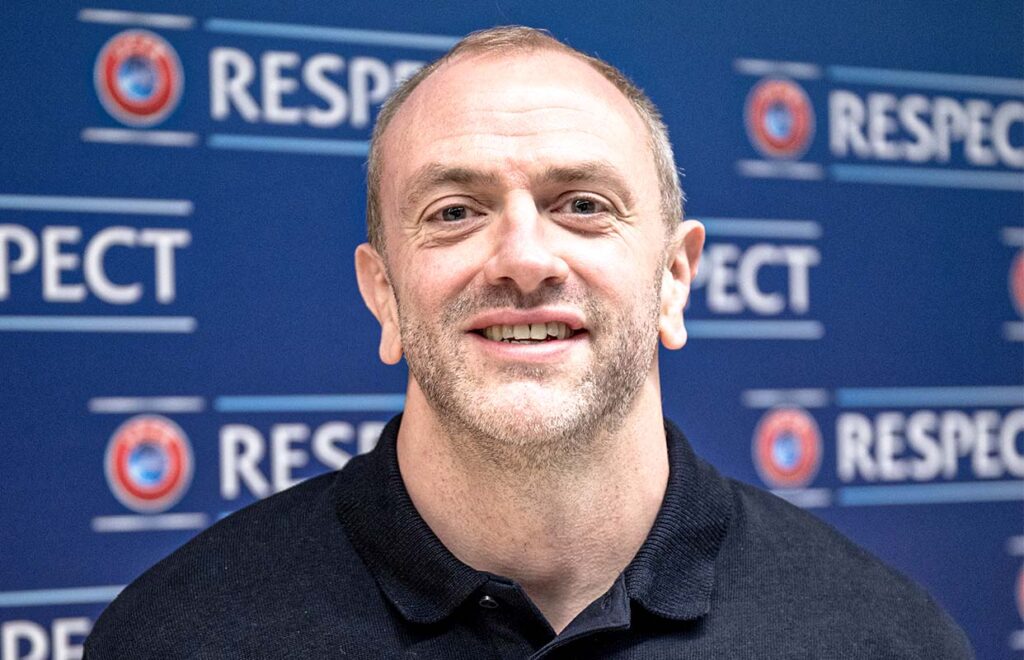
Refreshing our talent ID qualifications is also something we are focused on, because the game has moved on. With the growth of the women’s game and innovations across football, it is our job to keep iterating.
From my experience across various sports, I can say that football is unique because of the sheer number of coaches and the maturity of its education system. Where football can learn from other sports, though, is ongoing learning. In other sports, qualifications aren’t always the driver for coach education.
It comes back to that point about modernising our approach and recognising learning in a consistent way over a significant period of time. That is going to be the game-changer within football coaching.

Dan Clements