What is meant by ‘attacking in the final third’?
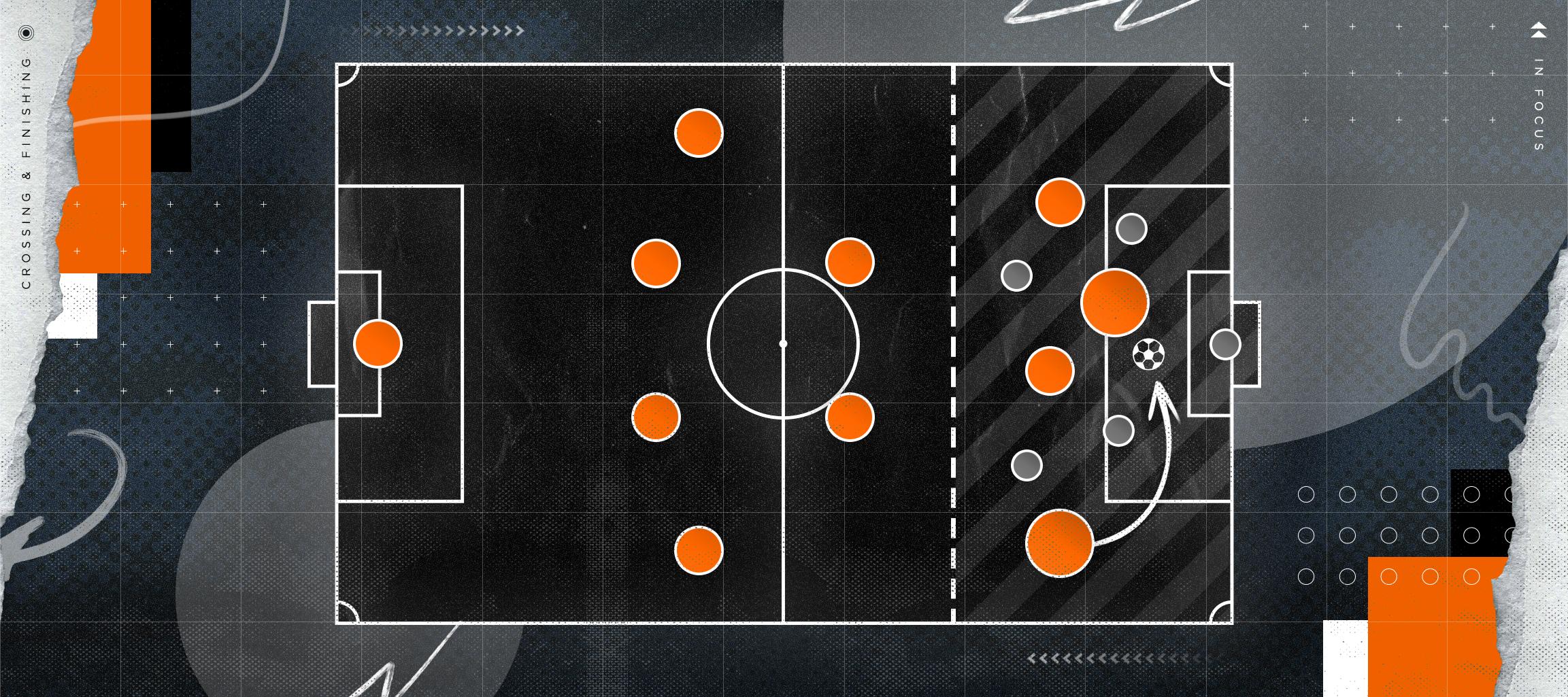
Football coaches divide a pitch into particular areas, zones and spaces, for the purpose of breaking the game down into coachable phases and patterns of play. One common and simple method involves splitting the entire pitch into equal thirds. Within this, the ‘final third’ is the part of the pitch that includes the opposition’s goal and therefore represents the key third for attacking play.
What is meant by ‘crossing and finishing’?
Crossing and finishing is a specific method of attacking the opposition’s goal. The crossing aspect involves a player delivering a ball into the opponents’ penalty area, usually played from a wide area in what is the final third of the pitch for the attacking team, as with the example below from Fulham against Aston Villa. Some crosses can also be delivered from the inside channels – or half-spaces as they are also known – as well as just within the sides of the opposition’s penalty area.
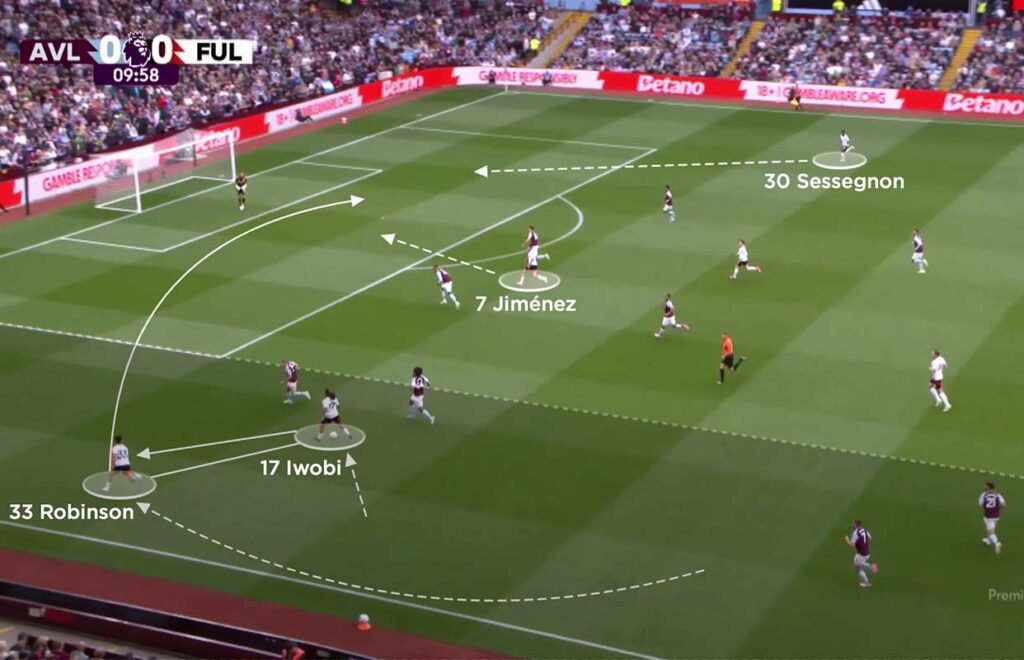
The aim with these crosses is to provide a goalscoring, or a ‘finishing’, opportunity for a teammate – finishing being the final action of an attack, as an attempt to score a goal. A finish can be applied directly to a cross, usually within one or two touches, and can be a shot, such as a volley, or it can be a header, depending on the detail of the cross.
Why is crossing and finishing important?
The majority of teams focus on defending the middle of the pitch when they are out of possession, limiting access through the centre. Naturally, this forces the ball away from goal, often towards the sides of the pitch. Therefore, there can be relatively more space in wide areas, making them easier for the attacking team to play in – or at least, they remain less congested than the central areas. As a result, attacks from wide areas or the inside channels that utilise crossing can create chances to finish with a goal, and are therefore important to master.
Click the links below for two Coaches’ Voice sessions designed to develop a team’s ability to attack in the final third, crossing and finishing...
Session 1: Crossing and finishing 1
Session 2: Crossing and finishing 2
What are the key principles of crossing and finishing?
The cross itself has to be accurate, giving the best chance possible for the receiving teammate to attempt a controlled finish. The timing of the delivery across the opponents’ goal is also key – the ball must be played so that it finds a teammate in the penalty area with an opportunity to finish.
Delivering the cross too early can miss a teammate’s run altogether. Delivering a cross too late can lead to a teammate being caught offside due to their attacking movement, or being positioned too far ahead of the ball so that it is very difficult technically to finish – for example, because they are playing with their back to the opposing goal. In addition, deliveries played too late can also allow the opposition to better protect their penalty area by adjusting the positioning of their defenders and/or goalkeeper.
In the video below, Spain head coach Luis de la Fuente uses the Coaches’ Voice tactics board to explain the key details of the build-up, cross and finish that combined to produce the winning goal for Spain in the Euro 2024 final against England.
When the timing of delivery and movements inside the opposing penalty area match up, the type of delivery can be crucial. The player delivering the cross must recognise the relevant spaces inside the box that they need to cross the ball into. That means they must take into account the positioning of their teammates and the opposition, and the areas in which those teammates who will try to score will want to receive in to finish. Quick scans across the pitch before crossing can help with this. Where the crosser is delivering from can also impact the choice of delivery.
In the video below, Strasbourg head coach Gary O’Neil discusses the key details on a cross that Pedro Neto delivered for Matheus Cunha to finish, in a Premier League victory for his Wolverhampton Wanderers team at Chelsea in 2024.
When attempting to finish from a cross it is important to be able to quickly adjust and remain reactive to the cross, as it may not always be delivered cleanly or smoothly. When a player is attacking a cross having made a long run – such as from deep – managing their running stride into the box can help them to better control the eventual attempt on goal.
If an attacker is already positioned inside the box ready to finish a cross, a fast but late movement can help free them from close marking. Moving to the front post when starting at the back post, for example, is a common movement for an attacker to find space to finish from a cross. Most finishes are performed with one or two touches, and guiding the ball towards the corners – which can be achieved with a variety of techniques – is often the best method with which to score from a cross.
What are the different types of cross?
Whipped
The main type of crossing delivery is a ‘whipped’ cross. This involves a ball across the opponent’s penalty area which bends or curves significantly. More commonly, a whipped delivery moves away from the opposition’s goal. As such, it is often delivered by a right-footer on the right side of the pitch (see Bruno Fernandes, below) and a left-footer on the left, and is classed as an ‘outswinging’ delivery. Some whipped crosses can also bend towards the opposing goal – these are known as ‘inswinging’ crosses.
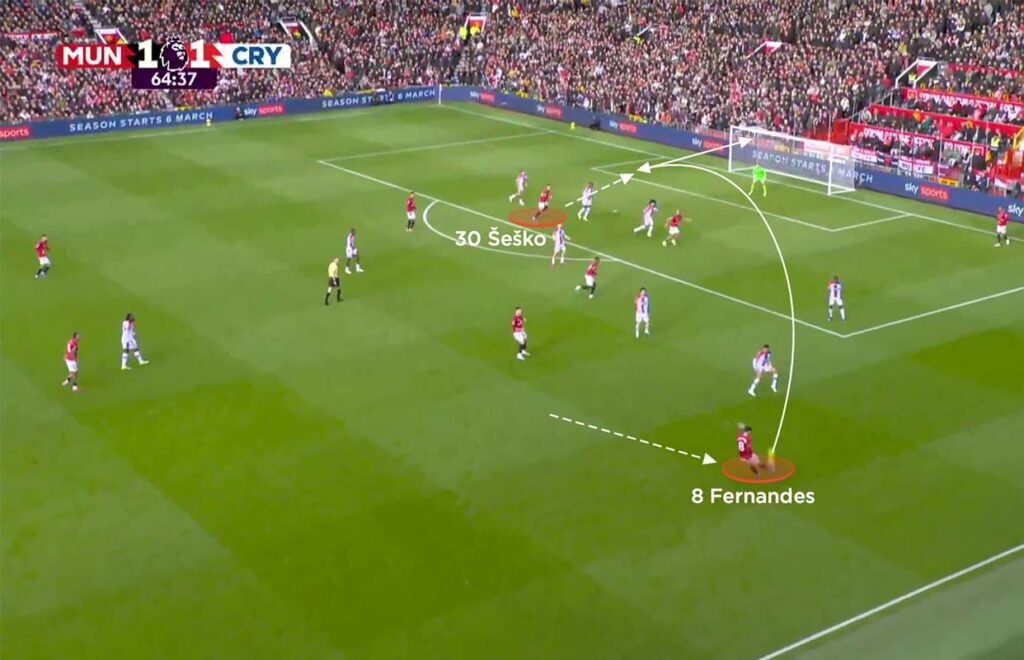
A whipped cross is usually an aerial delivery and can be delivered from high up the pitch, as well as from just inside the final third (as with Fernandes, above).
Cutback
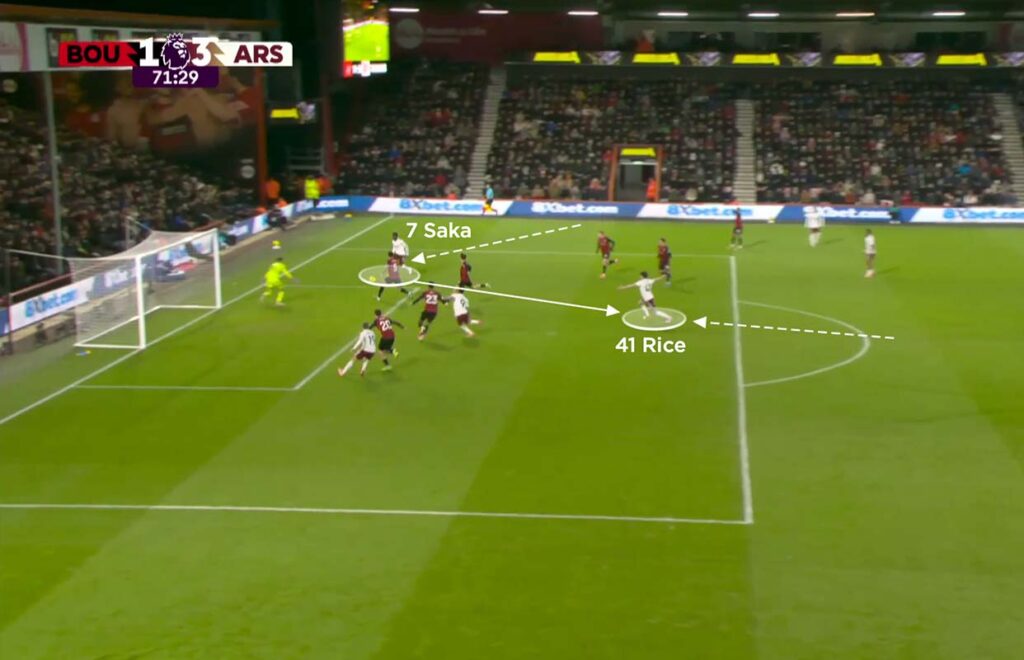
When attacking from very high within the final third – usually close to the byline – ‘cutback’ crosses involve playing the ball back, away from the goal and across the penalty area. The idea is to target the space around the penalty spot, typically to find a runner from deep or the edge of the box. This delivery is usually played along the floor for a shot at goal, as with Declan Rice meeting a cutback from Bukayo Saka for Arsenal in the example below.
Stood-up
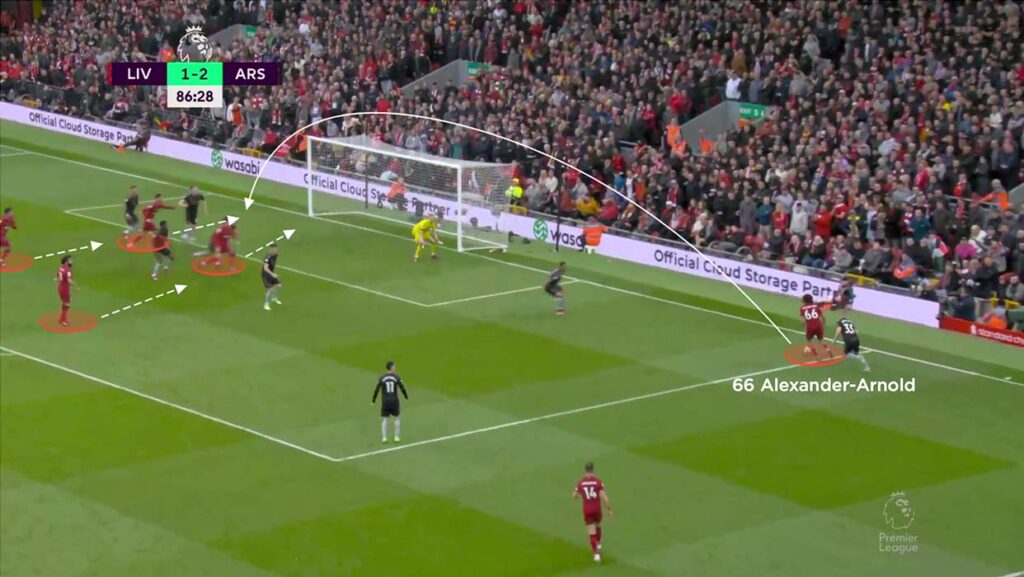
A ‘stood-up’ cross is performed from a similar area to the cutback, close to the byline, but is delivered in the air, targeting space in the middle and towards the back post ahead of the penalty spot, often into the six-yard box – as with Trent Alexander-Arnold’s stood-up cross, below. It is usually a chipped delivery where the ball’s trajectory is initially quite high, avoiding opponents close by, before dropping quickly to enable finishes in the air or as the ball bounces. Both stood-up and cutback crosses can also be delivered from inside the penalty area, but still close to the byline.
Driven
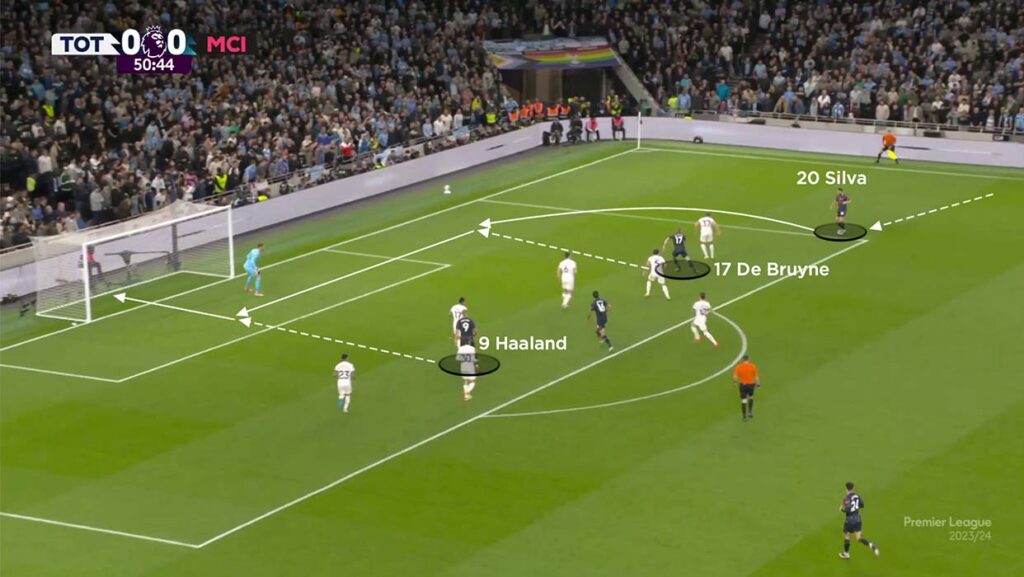
A ‘driven’ cross is a ball that is delivered along the ground across goal, played with significant power, often using the laces of the boot. This is usually played to target space between the opponent’s deepest defender and goalkeeper (below), requiring a reactive finish due to the high speed of cross. It is common to see finishes at the back post from driven crosses, often with wide players from either side of the pitch combining for the cross and finish.
Pushed
A ‘pushed’ cross is a similar delivery to a driven ball, although it is usually much slower and tends to be much easier to finish from. The technique for a pushed cross involves using the inside of the foot, simply pushing the ball across goal with a more traditional passing technique. Both driven and pushed crosses are often delivered within the penalty area, but a driven cross can also be supplied from outside the box, due to its more powerful delivery. It is common to see both driven and pushed crosses played first time as an early delivery.
What types of finish can be used when connecting with different types of cross?
Many crosses are delivered as aerial balls, and so the types of finish reflect that detail. With aerial crosses, headed finishes are important to master, as well as volleys.
Many crosses are hit powerfully into the opponent’s box, typically to avoid defenders, but also to make it harder for the opposition to react to and clear the ball away from goal. Therefore finishes are often deft connections with a ball that is travelling at speed, such as glancing the ball across goal with a header or a shot.
Reactionary finishes are also important because crosses are not always delivered cleanly, nor are they fully cleared by the opposition, leaving a race to connect with the ball in a potentially crowded penalty area. In these situations, attackers can have the opportunity to finish from loose balls, failed clearances, or deflections, and may need to utilise a scruffy finish, such as poking, prodding, or stabbing at the ball, when a clean strike is not possible.
Cutback, pushed or driven crosses across goal are usually finished first time, using powerful shots and clean attempts on goal. The finish can be with the inside of the foot to place the finish, or with the laces to drive the ball at goal, especially if there was little pace on the cross.
Which players have the most responsibility for crossing and finishing, and what are the positional requirements?
To create chances to finish from crosses, width in attack is essential. This can come from wingers, wide midfielders, or advancing full-backs/wing-backs. When a team has maximum width with their shape, passes to the side of the pitch or direct switches of play to wide players can put the ball in realistic places to cross from. The pass before the cross should be clean, smooth and ideally with appropriate detail to allow for a choice of crossing type, as well as giving the opportunity to cross first time.
In support of this pass, teammates can make secondary runs and movements. For example, overlapping or underlapping runs – often from full-backs – can help create wide overloads, potentially moving the ball into an even better position to cross from. These runs can also act as decoy movements, dragging opponents away from the ball to help a teammate deliver a cross.
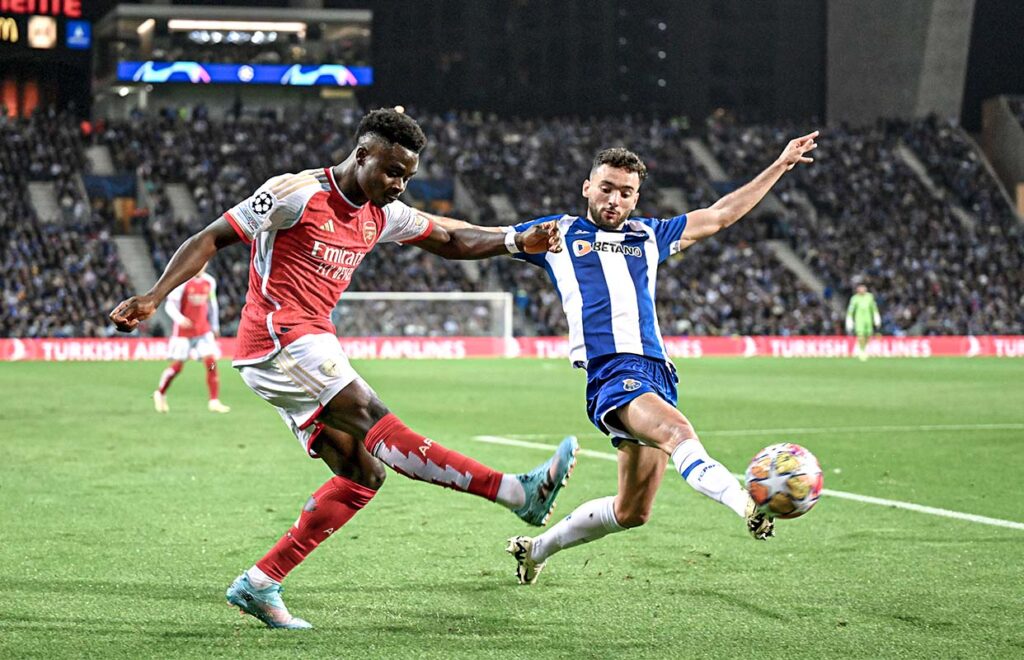
Trent Alexander-Arnold, Antonee Robinson and Lucas Digne are examples of full-backs who get forward to cross, while Bukayo Saka (below), Dwight McNeil and Pedro Neto are wingers who have regularly delivered crosses for their clubs.
In recent seasons, teams including Manchester City, Arsenal and Brentford have often penetrated the penalty area with their attacking play before crossing from within the box. This has involved crosses played from midfielders who have made forward runs through the inside channels, to then cross on the move once they have entered the penalty area. Kevin De Bruyne was a good example of this, often using driven or pushed deliveries during his successful spell with Manchester City between 2015 and 2025.
Attacking midfielders who prefer to support wide attacks can also support with crossing and finishing. For example, Bruno Fernandes at Manchester United has provided crosses after moving wide, despite usually playing as a number 10.
With the finish itself, centre-forwards are often the main target, being a position where the primary responsibility is typically to score goals. Central midfielders and number 10s can also crash the box looking to finish from crosses, sometimes having began their run from a deep position. Frank Lampard was a central midfielder who was outstanding at finishing from crosses after making runs from midfield, with many of his 177 Premier League goals (from 1997 to 2015) scored in this way.
The winger or wide midfielder on the far side of the pitch from where a cross is delivered also has a responsibility to look for finishes. They will often need to make direct, aggressive runs to the back post for stood up, whipped or driven deliveries. But with inverted wingers a feature of the modern game, there has been an increase in wingers finishing from cutbacks, too. Raheem Sterling and Mohamed Salah are examples of wingers who have profited with finishes at the back post from crosses from the far side.
What is a good technical practice to develop players’ ability to cross and finish?
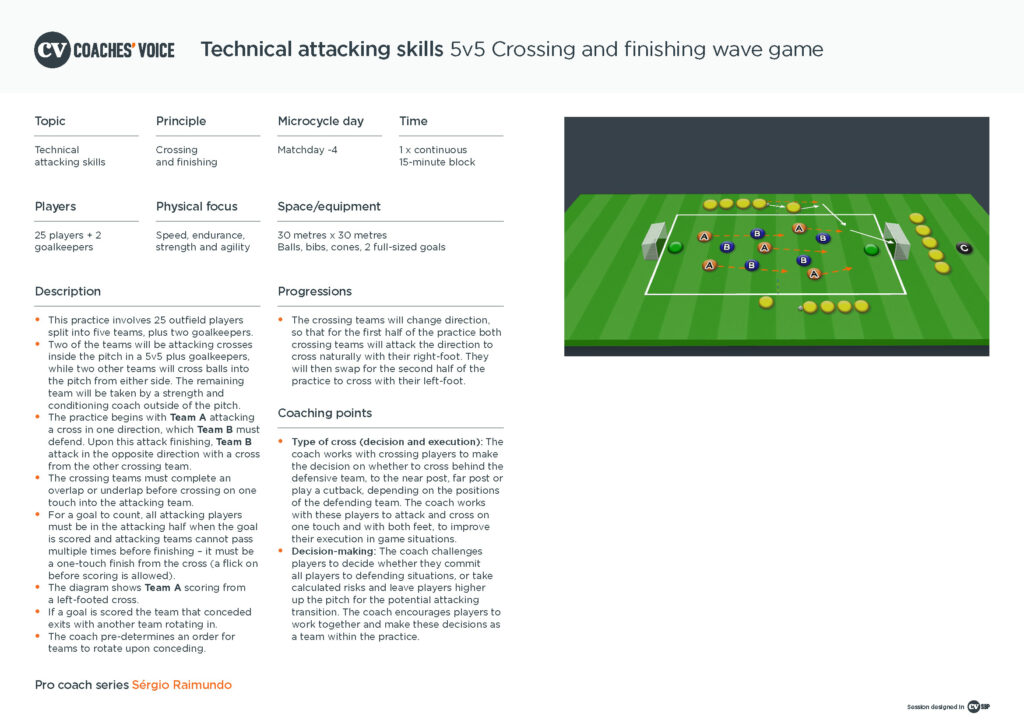
The video below shows former Tottenham Hotspur assistant coach Sérgio Raimundo explaining a wave game with a technical focus on crossing and finishing, which also combines physical, tactical, psychological and social elements.
What is a good tactical practice to develop players’ ability to cross and finish?
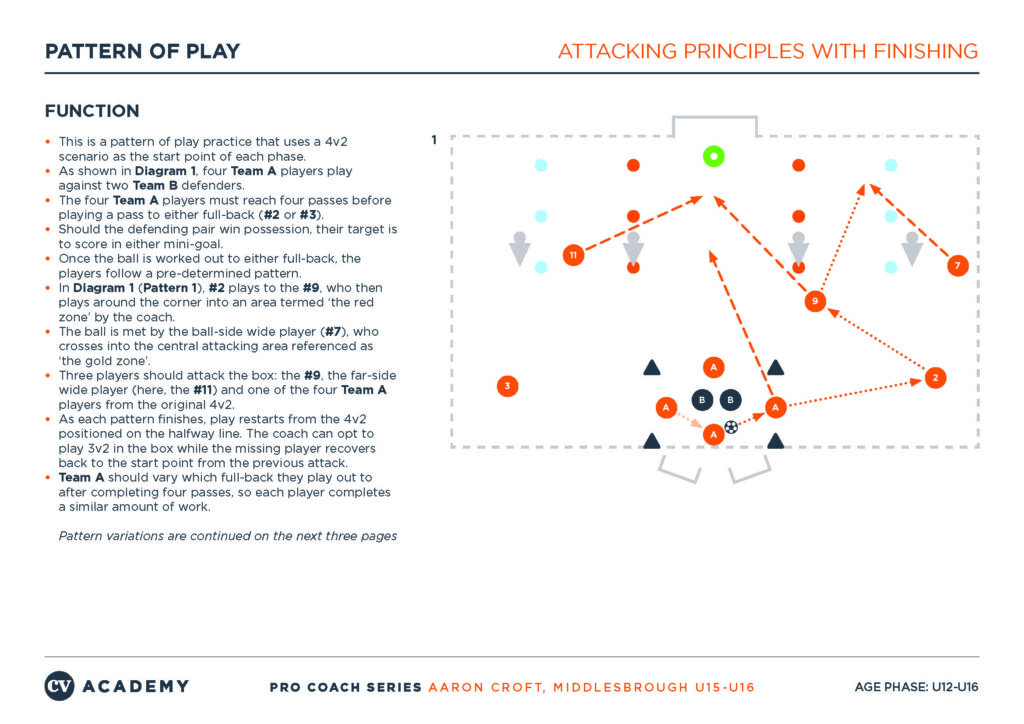
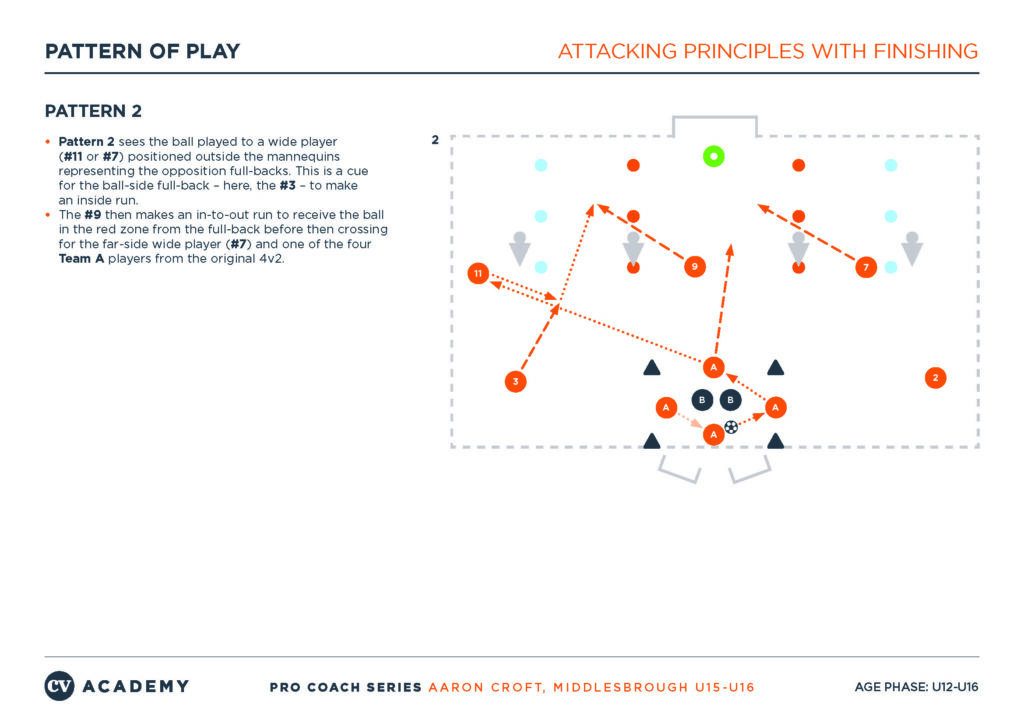
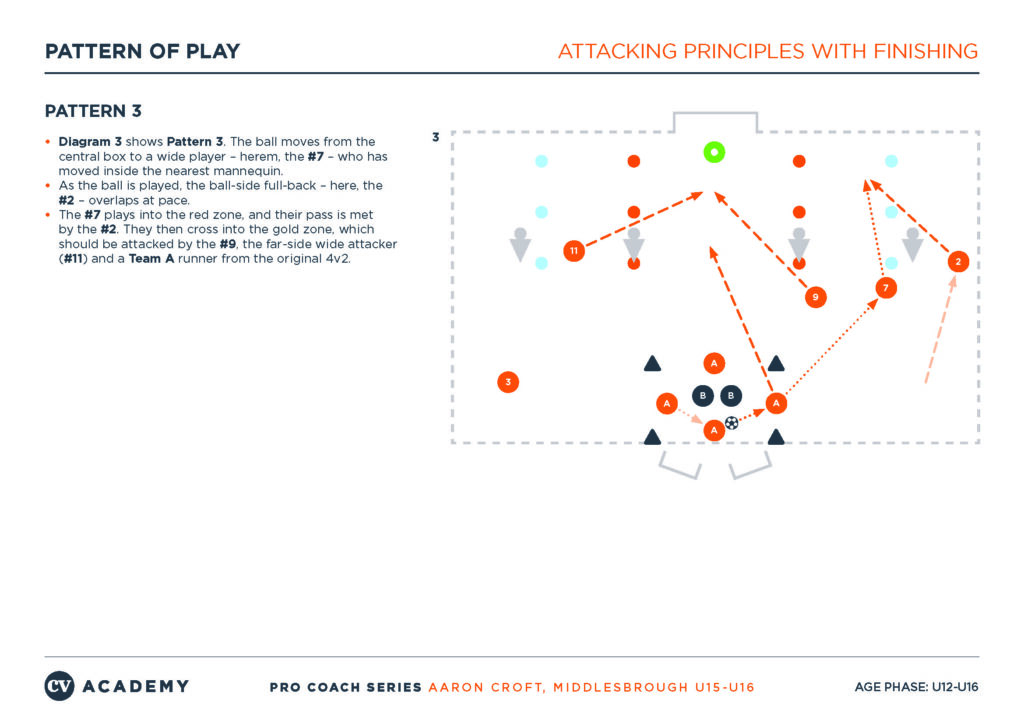
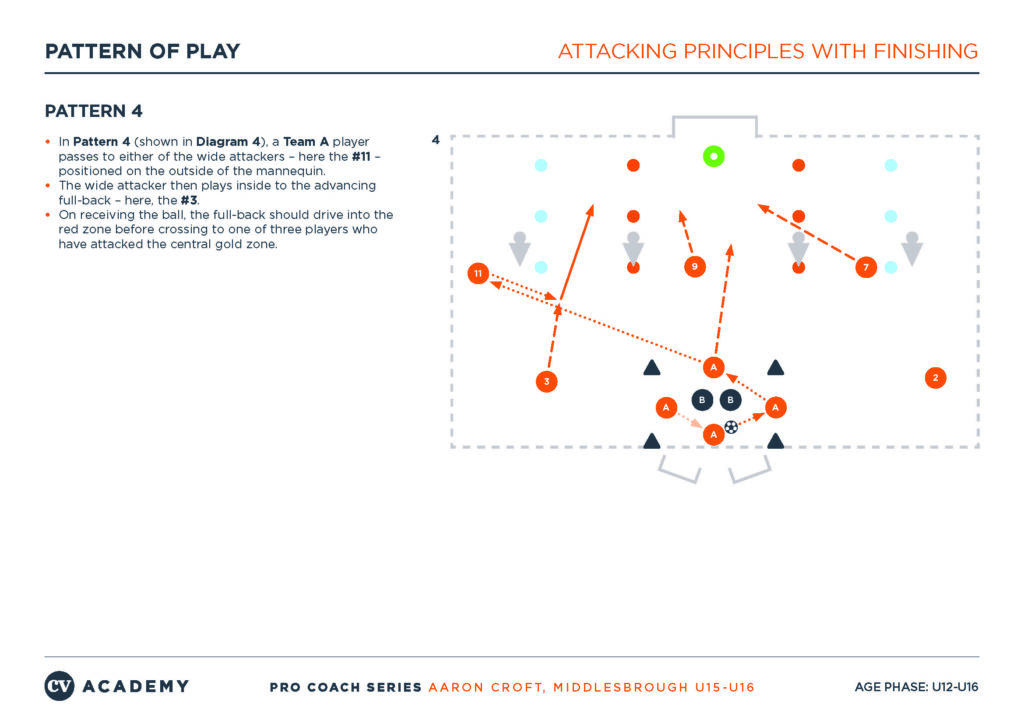
The video below shows a semi-opposed practice used to develop the wide combinations of youth development-phase players at Middlesbrough FC, in order to create good-quality scoring opportunities from crossing and finishing. It is led by Aaron Croft – then Under-15 and Under-16 lead coach, now Middlesbrough academy assistant head of coaching – and involves four patterns of play that culminate in a cross and finish.