What is meant by ‘breaking lines’?
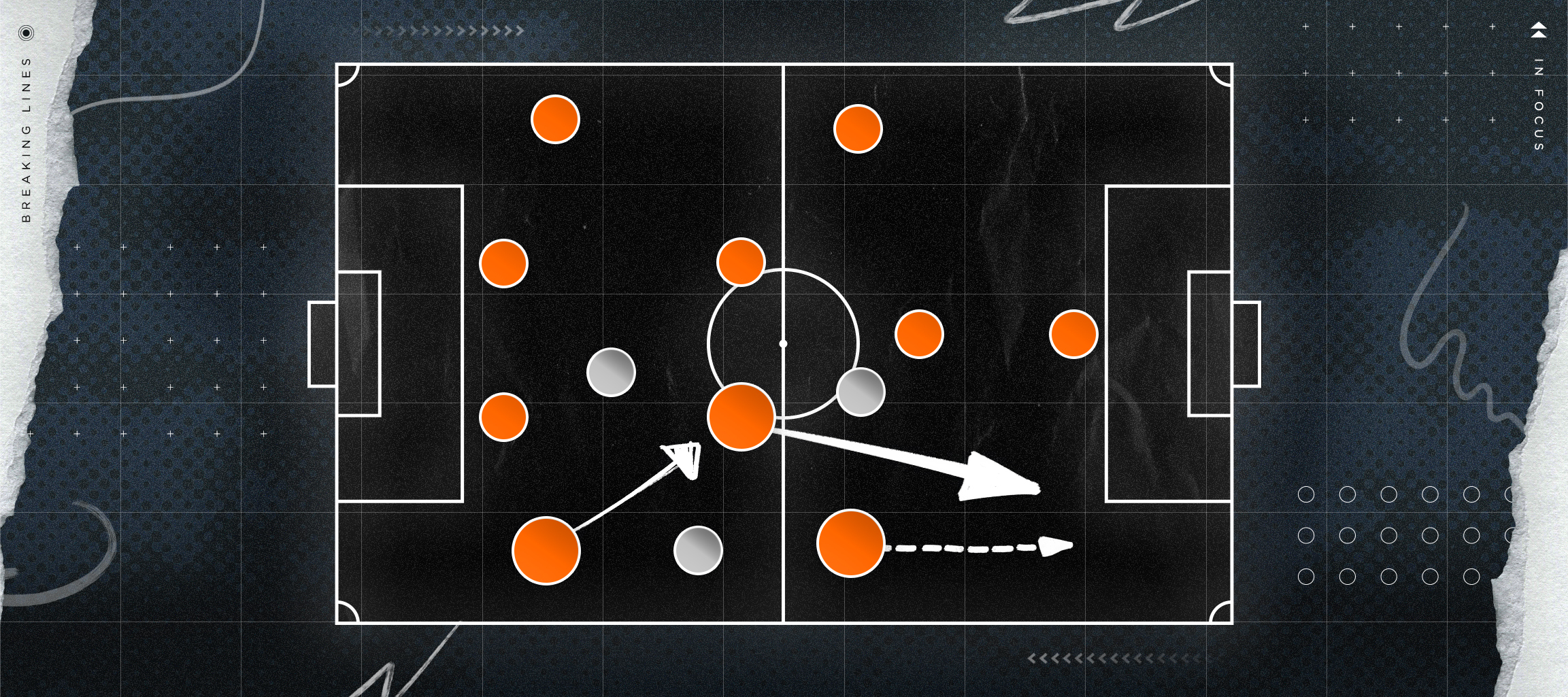
Breaking lines is a technical action performed by a player to penetrate through the opposition’s defensive shape. It is a key tactical concept that helps create attacking opportunities and gives the team in possession an opportunity to progress the ball up the pitch.
Why is breaking lines important?
Breaking lines is important because it disrupts the opposition’s defensive structure and creates opportunities for a team to progress into more advanced and dangerous areas of the pitch.
What are the different ways to break lines?
There are a number of ways to break lines, each requiring a level of skill and timing.
Through ball: this is a precise pass played through the opposition’s defensive shape, usually to find a more advanced teammate between the lines.
Switch of play: this involves playing the ball from one side of the pitch to the other. It can be achieved by quick combinations using multiple players, which can see the line broken by playing around the opposition, or through a single, longer ball that finds the receiver beyond the nearest line of the opposition press.
Playing in behind: this is achieved with longer passes played through or more commonly over the opposition’s defensive structure. Playing in behind can bypass multiple players and lines in the opposition’s shape, and can create goalscoring chances. It relies on the accuracy and quality of the pass, and the timing and shape of the receiver’s run.
Click the links below for two Coaches’ Voice sessions designed to develop a team’s ability in breaking lines...
What are the key principles of breaking lines when the ball-carrier is under pressure?
When the player on the ball is under pressure, it becomes more difficult for them to find a successful line-breaking pass. In this situation, the ball-carrier should prioritise securing possession and looking for a safe passing lane – even if that means not breaking a line with the first pass.
In this situation, nearby teammates are important. They should show intensity in their movement, to offer new and clear passing lanes, enabling the ball-carrier to move the ball away from pressure. Teammates should look to offer at least two options to the player on the ball to complete a pass away from this pressure.
In the video below, Pro Licence coach Luke Benstead, who has worked at Everton, Manchester United and with the Belgium national team, uses the Coaches’ Voice tactics board to discuss how a team can progress the ball under pressure.
What are the key principles of breaking lines when the ball-carrier is not under pressure?
When not put under immediate pressure by the opposition, the player on the ball has more time and space. This makes it easier to identify possible passing lanes to progress the ball and find the free player. Other attacking teammates may also have more time to position themselves in order to receive.
In this situation, it is important that the player on the ball looks to break a line with the pass. The player looking to receive should remain behind the opposition player pressing the ball-carrier.
In the video below, Luke Benstead uses the Coaches’ Voice tactics board to discuss how a team can progress the ball when the ball-carrier is not under immediate pressure and instead facing a medium or low block.
What attributes do players need to be able to break lines effectively?
Breaking lines effectively requires the players to have specific technical and tactical attributes, depending on their role within the team.
Passing accuracy: anyone making a line-breaking pass must have the ability to execute precise passes that can bypass opponents and give the receiver the best chance of progressing play further.
Vision: it is important that players required to break lines regularly have an ability to spot teammates’ runs, and the spaces into which they can make the most penetrative and effective passes.
Dribbling: players can also break lines by dribbling through or around opponents. Being able to keep control of the ball in tight spaces, and having the pace and agility to explode away from opponents, will increase the chances of breaking lines in this way.
Ball control: players who regularly receive line-breaking passes, such as holding midfielders or number 10s, require an excellent first touch and the ability to control the ball in tight spaces. This will give them a better chance to advance the ball, and their team, into more dangerous areas.
What are the key principles when making line-breaking passes?
Making line-breaking passes requires precision, timing and a level of game understanding. Some key principles are listed below.
Timing of pass: recognising the right time to play a line-breaking pass, to ensure the receiver is in a good pocket of space and not under immediate pressure, is crucial. Good timing of pass is also important to ensuring that the line is broken and the opposition shape penetrated as advantageously as possible.
Patience: line-breaking passes should not be rushed, and only played if there is a genuine and good opportunity to do so. Playing forward is always the goal, but if there is not an immediate opportunity then possession should be maintained, with a view to creating a better chance to break a line elsewhere.
Precision and weight of pass: line-breaking passes should be made with the appropriate weight and accuracy, which gives the receiving player the best chance of controlling the ball quickly and easily, with a view to maximising the opportunity to progress play.
In the video below, Luke Benstead uses the Coaches’ Voice tactics board to discuss the key technical requirements that players should possess to be able to break lines effectively – both when passing and receiving.
What are the key principles when receiving line-breaking passes?
Receiving line-breaking passes, whether between two opposition lines or in behind their defensive line, requires a number of key attributes.
Positioning: successfully receiving a line-breaking pass between the lines relies largely on a player’s ability to find good pockets of space. Attackers looking to receive line-breaking passes in behind must be adept at playing either between opposition defenders, or starting on the shoulder of their nearest marker and being ready to exploit the space in behind at the right time.
Awareness: constantly checking what’s around you before receiving the ball will increase a player’s chances of receiving in space. Players should aim to scan when the ball is travelling, giving them time to decide where and how they want to take their first touch.
Control: players receiving between the lines, especially in tight spaces, should look to take a soft first touch to ensure the ball stays under control. Receiving with an open body shape will enable players to create a better picture for themselves and give them more options in their next action.
Protecting the ball: Players should make use of their body to shield the ball from opponents when receiving under pressure.
What is a good technical practice to develop players’ ability to break lines?
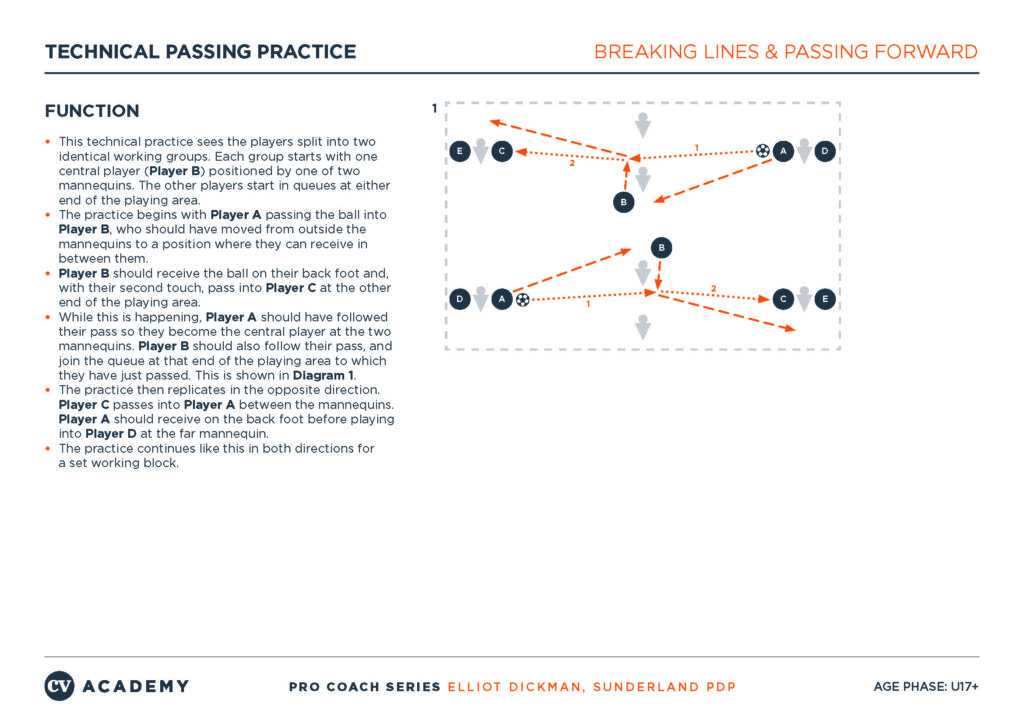
The video below features a technical passing practice delivered by John Hewitson, then Under-18 coach at Sunderland, as part of an exclusive coaching course for Coaches’ Voice. The practice set-up, details of which are included below the video, encourages players to work on their pass detail, timing and movement to receive, scanning and first touch – all key elements when successfully breaking lines.
What is a good tactical practice to develop players’ ability to break lines?
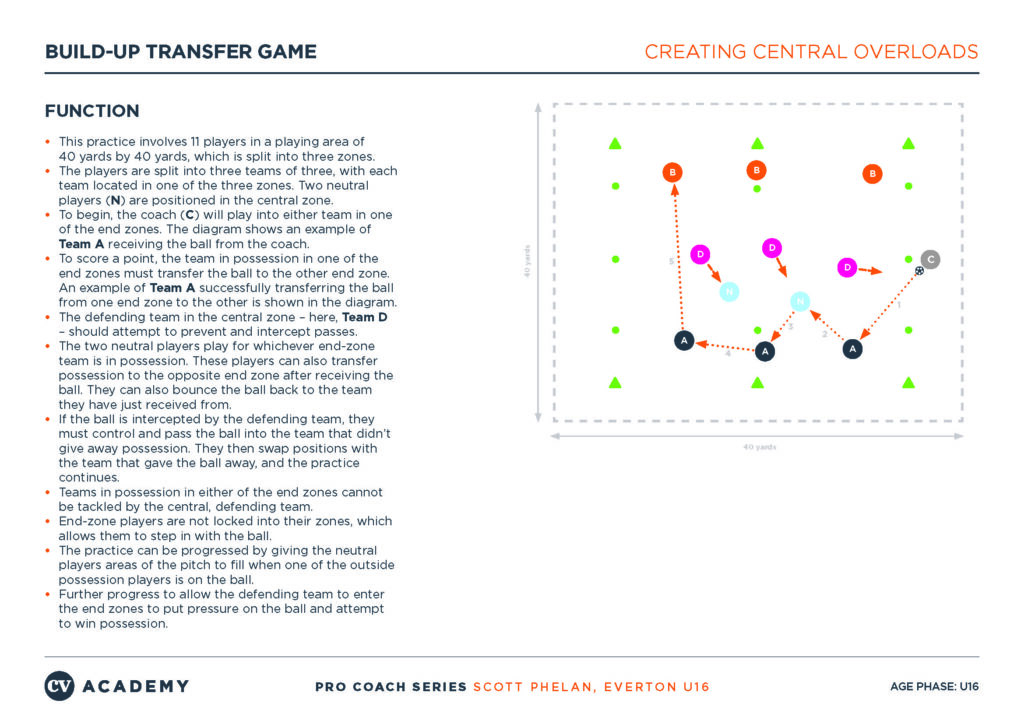
The video below features a build-up transfer game delivered by Scott Phelan, then lead Under-16 coach at Everton, as part of an exclusive coaching course for Coaches’ Voice. The practice set-up, details of which are included below the video. Encourages players to work on the ball speed of their penetrative passes, patience in possession, attracting pressure, using a pivot player to progress and body shape to receive – all key elements in successfully breaking lines.