What is meant by ‘defending in wide areas’?
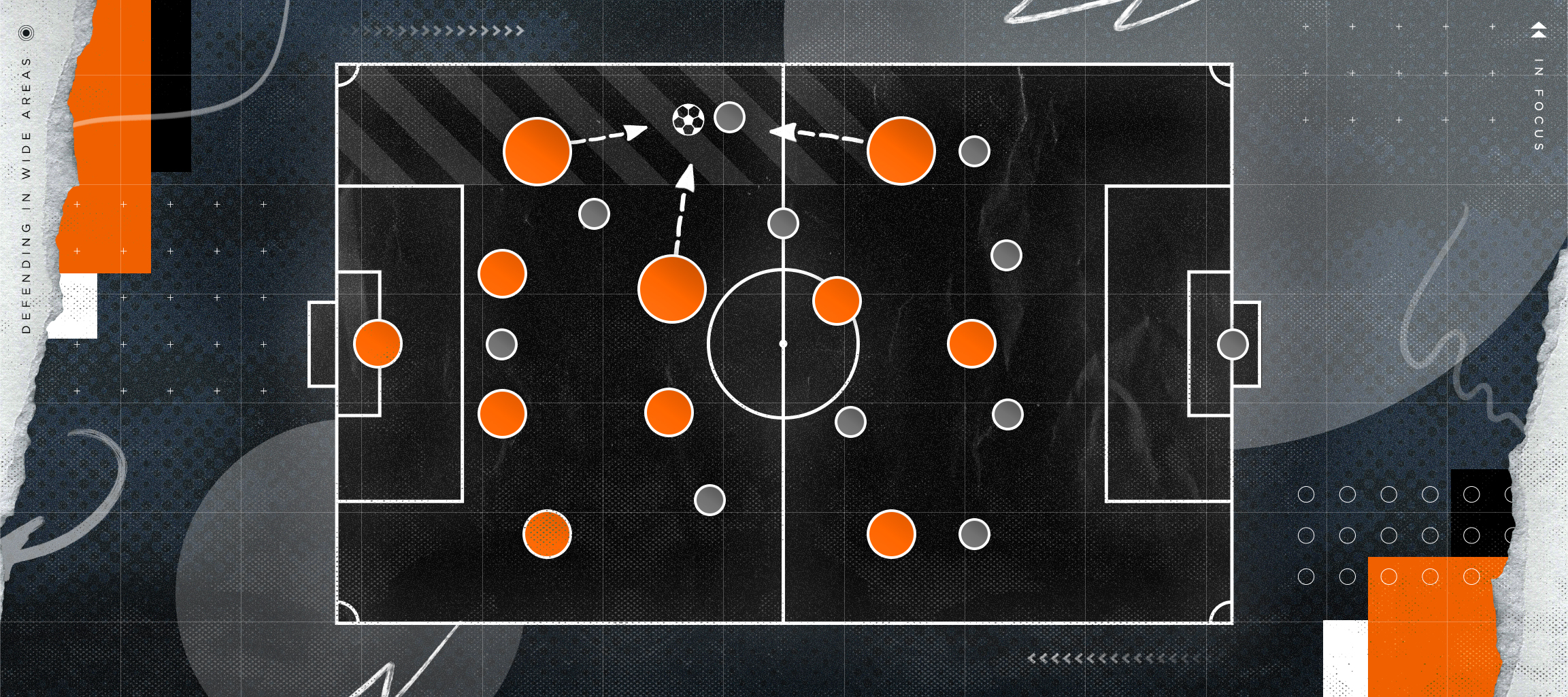
Football coaches divide the pitch into particular areas, zones, or spaces, in order to help break the game down into coachable phases and patterns of play. As such, it is common to split a pitch into five vertical lanes, each with a specific name. The ‘wide areas’ are two outer lanes that run the length of the pitch, roughly the width of the space between the touchline and the outside edge of the penalty area (below).
Coaches sometimes call these the “outer spaces” or “channels”. Alternatively, these five lanes are numbered, with the wide areas being classed as lane one and lane five.
Defending in wide areas is focused on defensive actions within these two wide lanes of the pitch. It can be defending inside the defending team’s half – where they must protect their goal and attempt to prevent access into the penalty area – but can also include pressing high into the opposition’s half, still within the two wide channels.
Why is defending in wide areas important?
As the central spaces of a football pitch are typically the most congested, teams often attack by exploiting wide areas. The team without the ball must be prepared to defend there.
Goals and chances created from wide areas often come from crosses. Therefore, if a team can successfully defend crosses – ideally stopping them at source before they can be delivered into the penalty area – they can limit a key method of chance creation.
In recent years, many teams have also opted to utilise wingers who are adept at attacking inside the pitch, having progressed the play from a wide starting position – that is, a right-footer attacking inside from wide left, and vice versa. How to defend against these inverted wingers is an important consideration with defending in wide areas.
It is common to see teams try to attack via wide areas during transitional and counter-attacking moments of a game. This is because, when attacking, teams in the professional game will typically set up with central cover and protection – usually via their centre-backs and defensive midfielders – while in possession of the ball. If they then lose possession, the spaces towards the sides of the pitch will have less immediate defensive protection against a counter-attack from the opposition.
Many full-backs are involved in their team’s attacks, sometimes being among the highest players on the pitch in terms of positioning in relation to the opposition goal. This means that they can also be out of position for defending wide areas during opposing counter-attacks, being far away from the back line if possession has been lost.
Finally, pressing high up the pitch has become a key defensive strategy for many teams. In this scenario, defending in the wide areas is performed inside the opposition half, sometimes all the way towards the byline. With most teams focused on protecting the centre when defending, they will naturally force the ball wide and begin to defend in the wide areas, as a pressing trap or trigger.
Click the links below for two Coaches’ Voice sessions designed to develop a team’s ability to defend in wide areas...
Session 1: Defending wide areas
Session 2: Full-backs defending in wide areas
What are the key principles of defending in wide areas?
Whether a team is pressing high up the pitch or defending deep inside its own half, it is important not to get beaten in 1v1s. Otherwise, the opposition can have clear space to run forward and progress with the ball. In the context of defending in wide areas, another defender may have to move out wide as cover if a teammate has been beaten in a 1v1, potentially freeing space elsewhere that the opposition can exploit.
In the video below, former Argentina and Manchester City full-back Pablo Zabaleta uses the Coaches’ Voice tactics board to explain the detail of defending 1v1 in wide areas deep inside the defensive half.
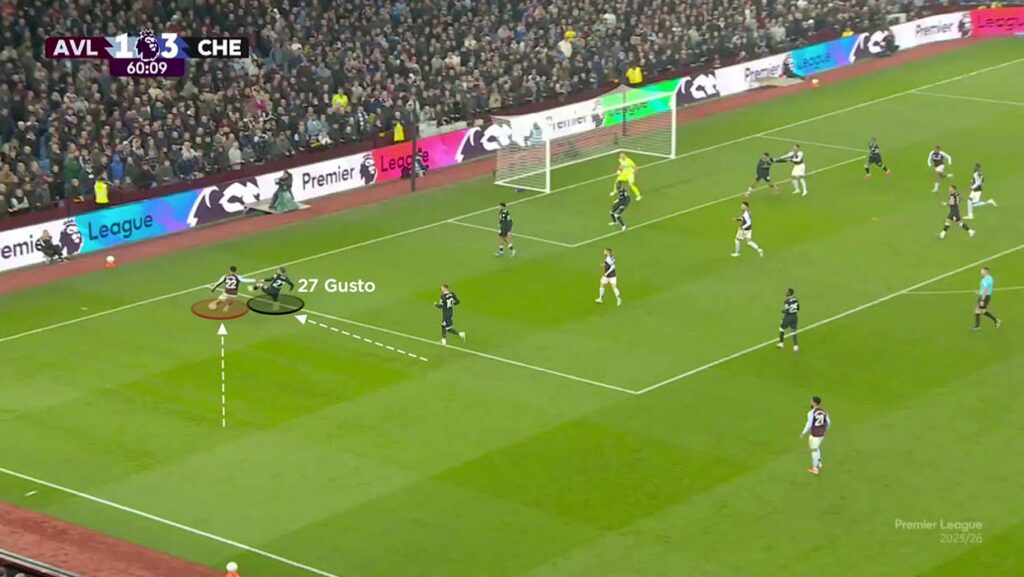
Another key principle of defending in wide areas is preventing or blocking crosses. Ideally, crosses will be prevented at source by a defender tackling, duelling, or intercepting a wide combination, as seen with Malo Gusto (below) for Chelsea against Aston Villa. A defender getting quickly into the line of the ball and penalty area can limit early opportunities to cross. From there, a defender aggressively approaching the ball – while still in line with the ball and penalty area – can prevent the attacker from being able to deliver other types of cross, blocking them at source.
Teams can also stop crosses at source by creating defensive overloads in wide areas, outnumbering opposition attackers to increase the chances of winning possession, or forcing a backwards pass before a cross can be delivered. In the video below, former Wolverhampton Wanderers head coach Bruno Lage explains the tactical approach his team took to defending in wide areas in a 1-0 Premier League win at Manchester United – specifically with a view to stopping crosses at source, against a team that had, in Cristiano Ronaldo and Edinson Cavani, attackers adept at scoring from wide deliveries.
Stopping crosses remains important against inverted wingers, but defenders also need to guard against shots and passes back inside from these types of attackers. Defenders must screen and cover – which is helped by staying tight and tracking the opponent – while forcing an inverted winger to attack on the outside puts them on to their weaker foot, potentially giving the defender an advantage.
Curving any defensive pressure from in to out can guide the opposition out towards the touchline. From here, defenders can squeeze and close the space around the attacker, almost forcing them off the pitch, using the touchline as another defender and limiting the directions in which they could escape. Continuing to force an opponent wide, ideally towards the corners, reduces the space they have available.
When pressing high up the pitch, it is important to curve the press from in to out, because it forces the ball away from the centre towards a wide area. Showing the ball wide, with support and cover from teammates, can lock the opposition to one side, potentially limiting their options to play out.
A wide pressing trap is useful for locking the ball along the touchline and forcing passes along the wide areas, where defensive teammates can jump and aggressively duel, tackle or intercept passes. If players on the far side of the defending team also narrow, helping to keep their team compact, then defending in wide areas is easier by virtue of reducing available spaces around the ball, limiting options for the opposition to play back inside.
Which players have the most responsibility for defending in wide areas, and what are the positional requirements?
Full-backs are most involved in defending wide areas due to their positioning and traditional role within a football team. They will be first out to the wide areas to defend against wide attackers, frequently engaging in 1v1s. Blocking crosses, tracking forward runs and preventing play from penetrating into the penalty area are common requirements of a standard full-back.
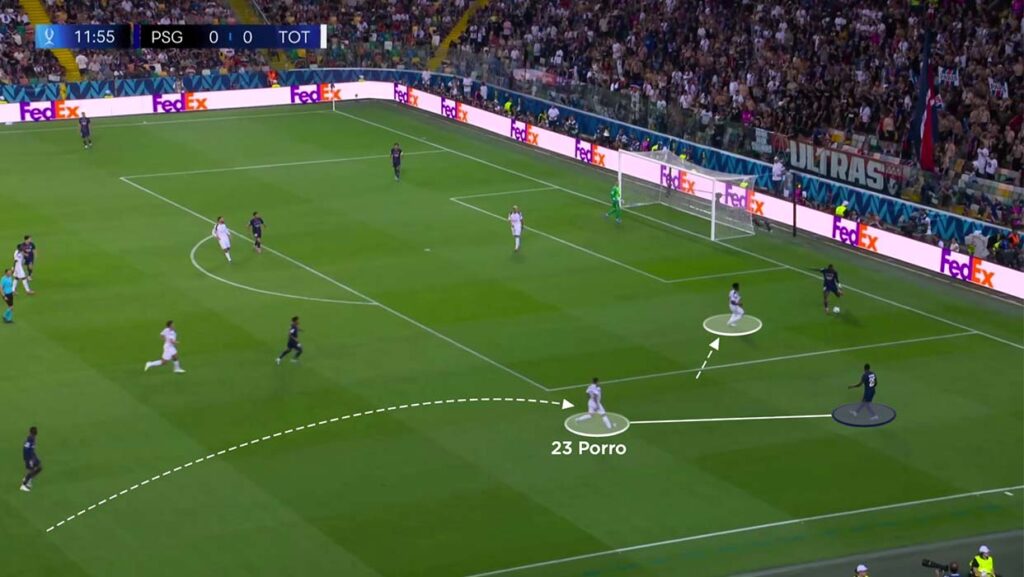
A team’s pressing strategies can rely on full-backs defending high up the pitch, especially if a winger teammate ahead has narrowed during a press. Full-backs can therefore defend well inside the opposition half, possibly pushing on to defend against an opposing full-back (as with Pedro Porro for Tottenham against Paris Saint-Germain, below).
Wing-backs operate similarly to full-backs, but have the added advantage and protection of playing in a team with a third centre-back – see Patrick Dorgu, below, as a left wing-back in a Manchester United back line that included three centre-backs and an opposite wing-back. Generally, wing-backs are positioned slightly wider than a typical full-back, meaning that wing-backs defend in wide areas for longer periods. They have the same defensive requirements as full-backs, however, including 1v1 defending and blocking crosses.
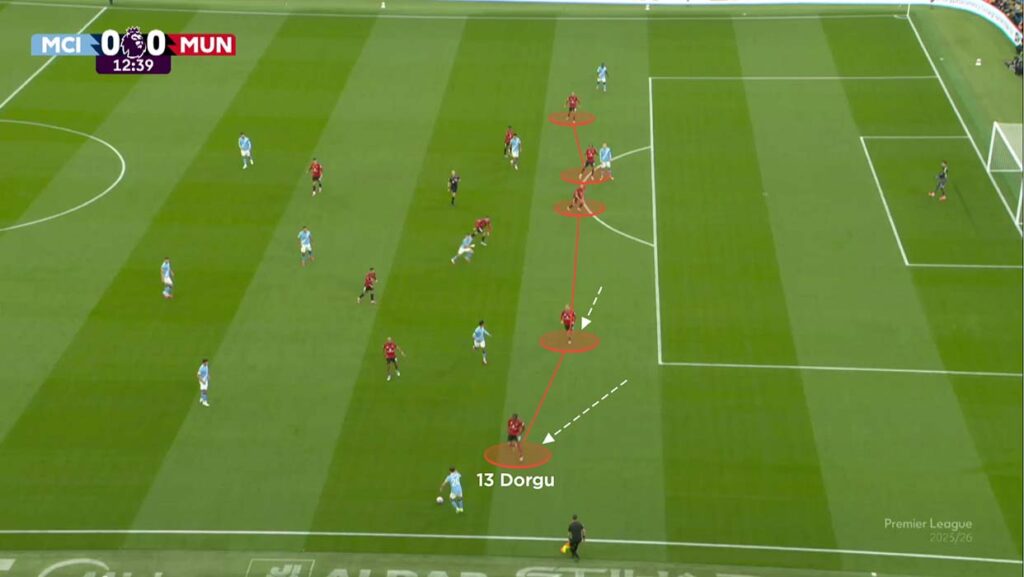
Wing-backs usually do not have a winger teammate ahead of them, and so they must press high more often than a full-back. When a team does have wingers, it usually their responsibility to defend wide areas in a pressing role. For the most part they will press from in to out, locking play towards the touchline, because most pressing strategies attempt to force the play wide.
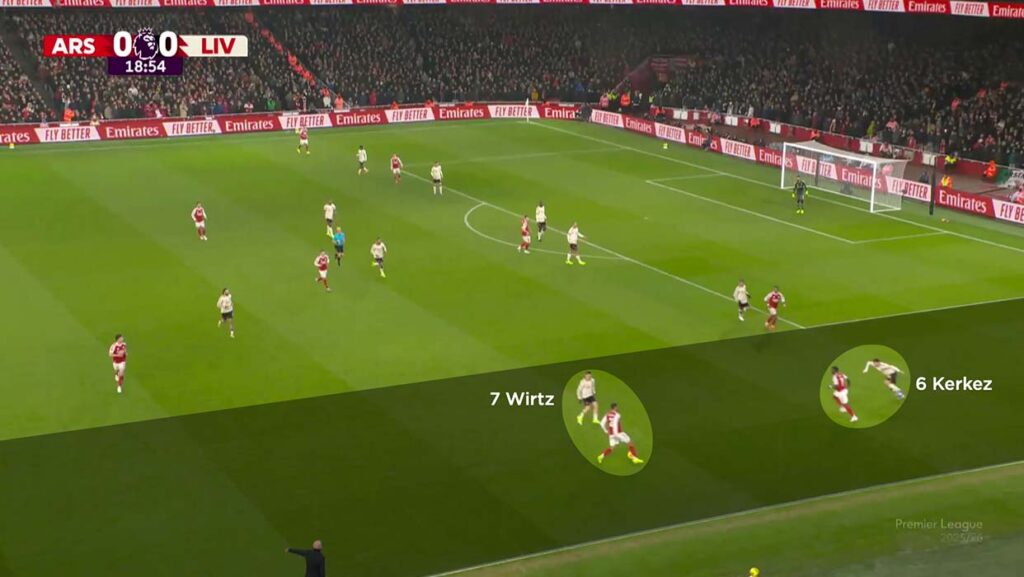
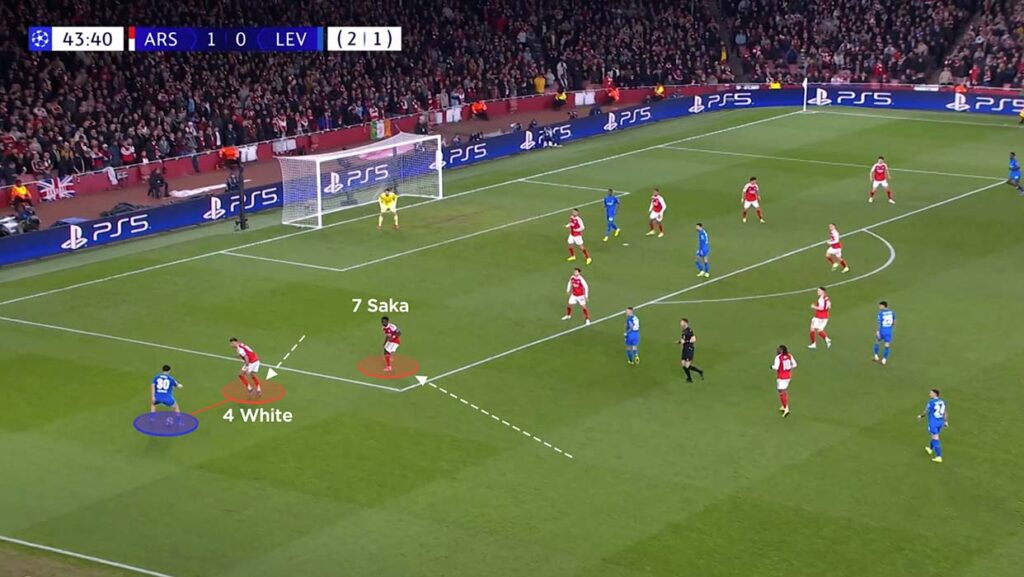
Wingers are often required to work back and defend, especially because opposition full-backs can be adventurous with their attacking forays. It is important that an out-of-possession team tracks the runs of advancing full-backs, so that their own full-backs don’t get overloaded and outplayed, usually in a 2v1 scenario. In fact, a winger working back to defend can create an overload in the defensive team’s favour – a 2v1 against the opposition winger, as with Bukayo Saka working back to help his full-back, Ben White, defend for Arsenal against Bayer Leverkusen (below).
What is a good technical practice to develop players’ ability to defend in wide areas?
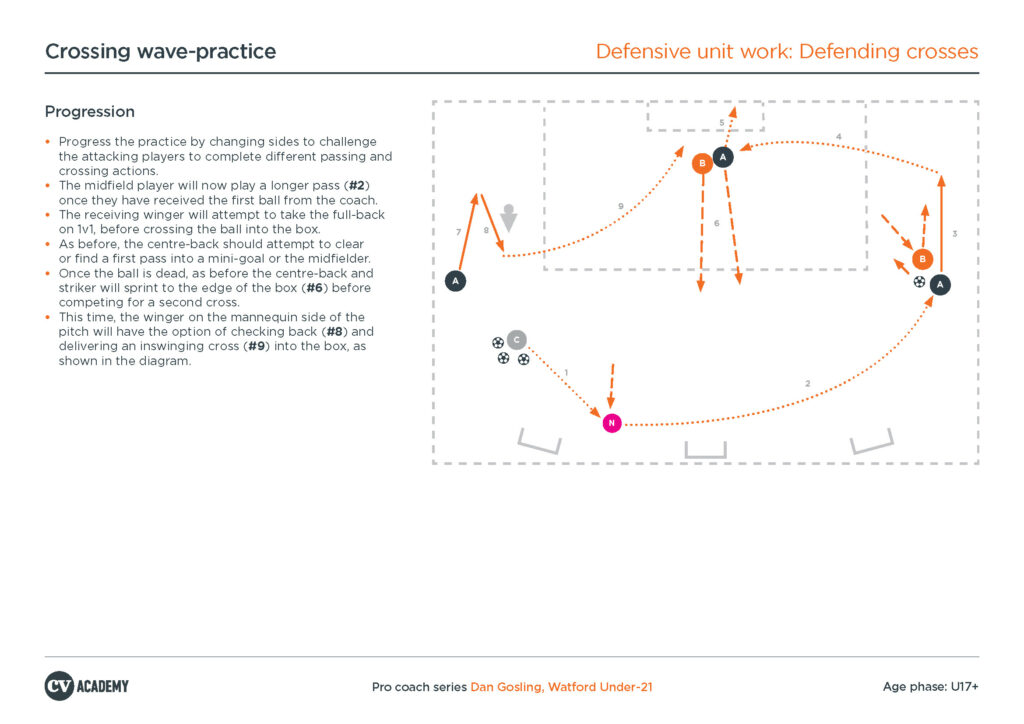
The video below features an individual development and unit practice that is focused on defending crosses, led by then Watford Under-21 assistant coach Dan Gosling. As well as having a centre-back defend different types of cross in the penalty area, it includes a full-back attempting to prevent crosses at source in a wide area. Gosling coaches the full-back on their timing to engage the opposing winger, without leaving space in the wide area that could be exploited by a pass in behind.
What is a good tactical practice to develop a team’s ability to defend in wide areas?
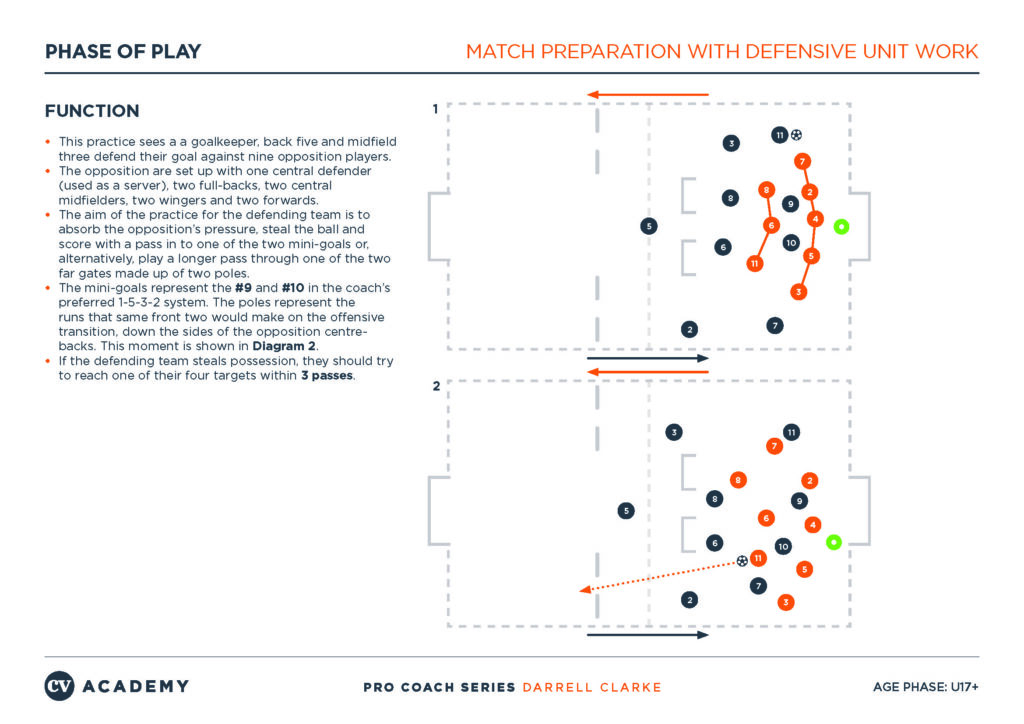
The video below shows a phase-of-play practice from a Port Vale training session, designed to prepare the first team for an away game that took place in 2021. Led by then Port Vale head coach Darrell Clarke, it focuses on out-of-possession organisation in Clarke’s planned 5-3-2 formation which includes wing-backs, against an opposition set up in a 4-4-2 shape with a focus on attacking through overloads in wide areas. As the attacking team moves the ball in to a wide position, the near-side midfielder on the defending team needs to be positioned close enough to cover the inside channel, while there should be only a small gap between the wing-back and the near-side central defender. As the opposition then moves the ball in an attempt to create space and overloads they can exploit, the defending team slides and shuffles to deny them.