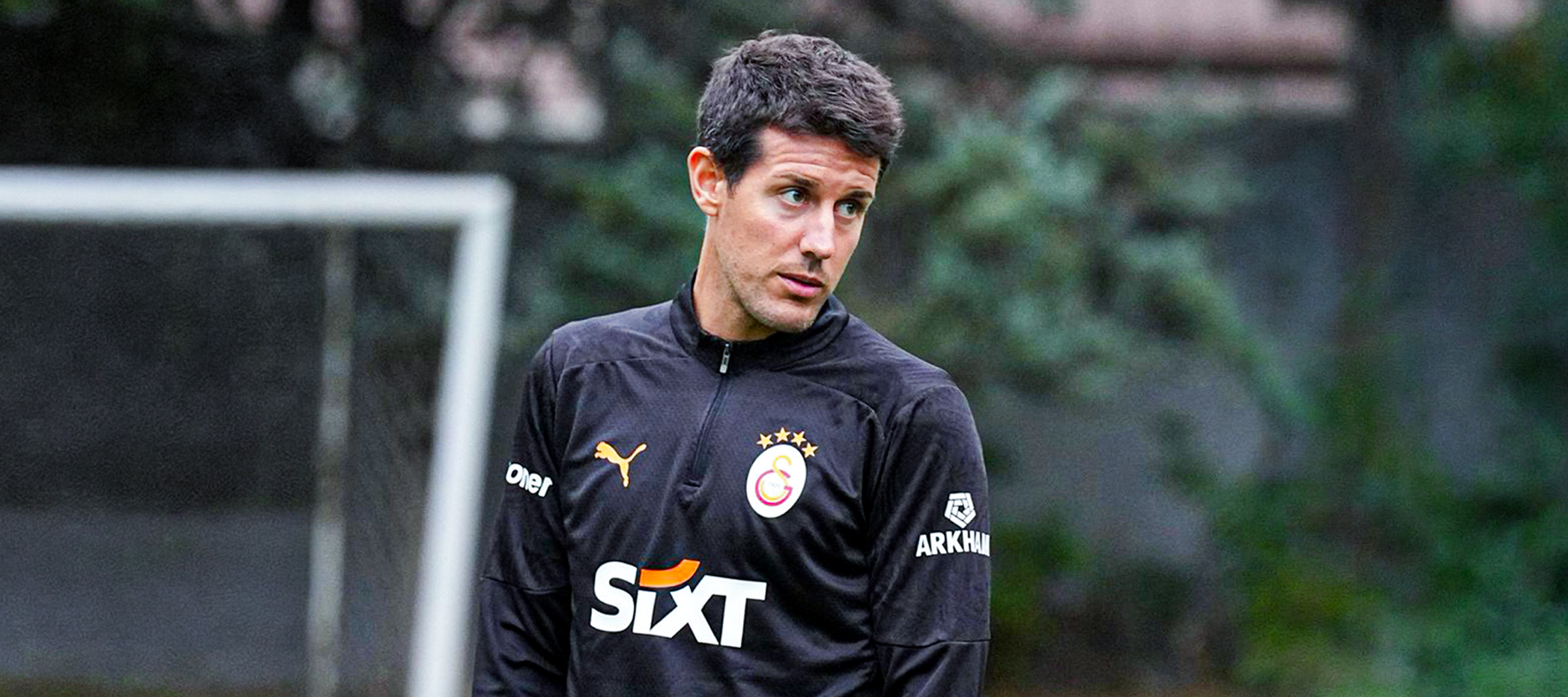
Ismael García Gomez
Assistant manager, Galatasaray
I knew very well what I wanted from the beginning of my coaching career.
I didn’t know if I would end up as an analyst, a scout, an assistant, or a head coach. But what I did know is that I wanted to learn.
So I started my UEFA B when I was 18 years old – the first year that was allowed by the Spanish Federation. Then I did my UEFA Pro when I was 24. I think in all of Spain I was the youngest to do it at that time.
Learning is an essential part of my life, even in my personal life. For example, if I go for holidays to Hungary, I will watch documentaries or read something about the history of that country.
Adaptability is also essential for me. I have had to adapt to working in different countries outside my native Spain, including Greece, Italy and now Turkey, with Galatasaray. Working in different countries helps you grow as a person. You have to adapt to different cultures, languages and ways of living. When you go to a new club or country, you are the one who has to adapt.
Galatasaray has been an amazing experience for me. It is the biggest club in Turkey, at the same level in this country as Real Madrid are in Spain or Bayern Munich in Germany. Here, it is much more than football. Galatasaray is very proud of the community around the club, which even includes a Galatasaray high school and university. It isn’t just football; it is a multi-sport club.
“The message was that the past was the past”
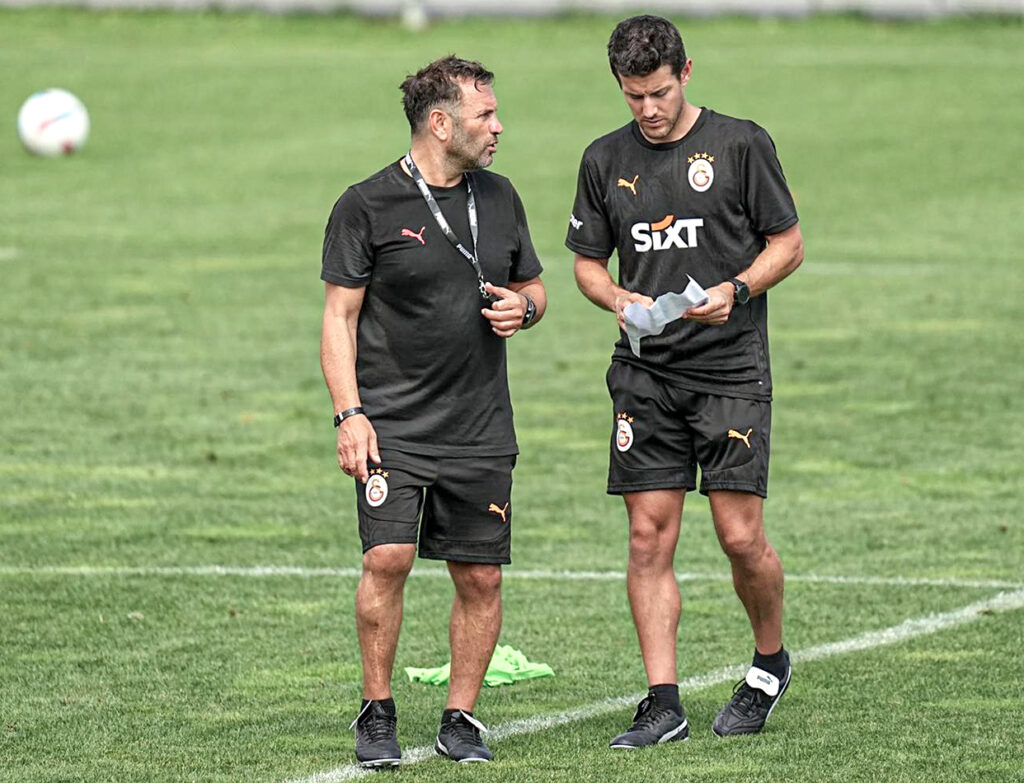
I cannot really express with words how lucky I have been and how thankful I am to Galatasaray’s manager, Okan Buruk, for what he has done for me. He has taken care of me not as an assistant coach, but as part of his family.
When we arrived in 2022, the team was coming off the back of probably the worst season in the last 30 years. Imagine if Real Madrid finished 13th in La Liga – that was the reality and level of frustration at the time. From the beginning we had to change the mentality. The message was that the past was the past. We were starting a new project.
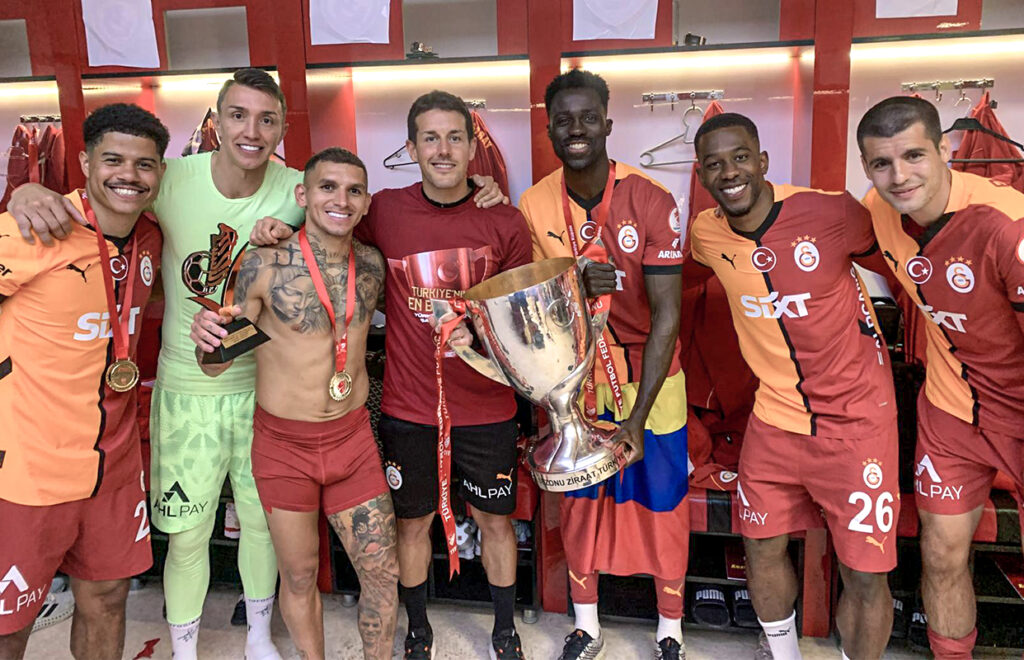
The club made a big effort to bring in good players like Juan Mata, Dries Mertens, Mauro Icardi and Lucas Torreira. From the very beginning, the target was not just to do better than the previous season. The target was to win the title.
In the three seasons since then we managed to win three consecutive titles. The first of these was probably the most beautiful for me.
In the second season we won the title with 102 points – a record for the Turkish league. Fenerbahçe finished second with 99 points, which was also more than the previous points record. They did an amazing job, but we did better. And then, last year, we won a league-and-cup double.
In this time with Galatasaray I have learned so much from players like Mata, Bafé Gomis, Tolgay Arslan and Kaan Ayhan. At this level, it’s not just about the skills they have, which are of course impressive. They have something else that sets them apart.
“In all groups, there are egos”
But having been involved in football all the way from amateur level up to the Champions League knockouts, I have realised something about players. No matter whether they drive Ferraris and get a €10m salary, or play part-time for a few hundred euros a month, all of them are people. They are human, and they all need attention.
In all groups, there are egos. In all groups of adults, you can find toxic people as well as good people. So while I have learned a lot over the years about the football side, I have especially learned how important the human side is.
My coaching journey began at a young age. I played a lot of football when I was growing up, but was smart enough to be aware I was not good enough to make it as a player. So I studied a sports science degree in my home region, Coruña, where there is a well known club: Deportivo de la Coruña.
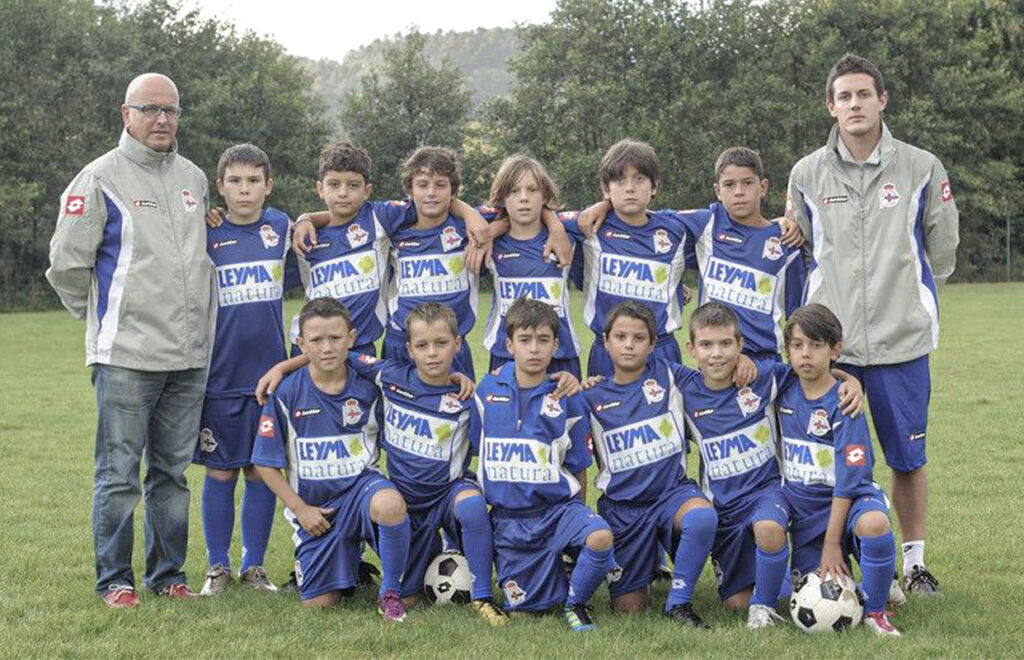
In the last year of my degree I had to do a placement, and was lucky to go with Deportivo’s Under-19 team. When I finished university I then had the opportunity to continue with Deportivo, which was where my official coaching career started.
In those years I tried to get as much experience as I could, working with Under-12, Under-14, and then Under-16 players. I also had the opportunity to start collaborating with the scouting department, where I was put in charge of watching second-division football in France, Switzerland and Portugal.
After three years with Deportivo I started working as an analyst with the first team, under head coach José Luis Oltra. That year Deportivo were in La Liga, and there was no full-time analyst in the club. It was left to the coaches to watch games and make reports. That was my first experience in a first-team environment, while continuing with my academy coaching.
“Sometimes football can be beautiful”
It was a massive help to get experience with different departments at the club, because it allowed me to speak with people with more experience than myself. It helped me to understand how a sporting director or a head of recruitment works. And I believe that all coaches are, in one way or another, a kind of analyst.
Yes, the most enjoyable part of coaching is the 90 minutes we are on the pitch, but that is a small percentage of what we have to do. Right now I spend around 70 per cent of my time in the office. Most of it is watching our own games and training sessions, to see how we can improve the team and players, and watching our opponents. It is about constant development, including for myself.
After Deportivo I moved with José Luis Oltra to work for Real Mallorca. A big influence that year was the opportunity to work with the assistant manager, Chema Sanz, who afterwards went to coach at Valencia, Sheffield United and now Osasuna.
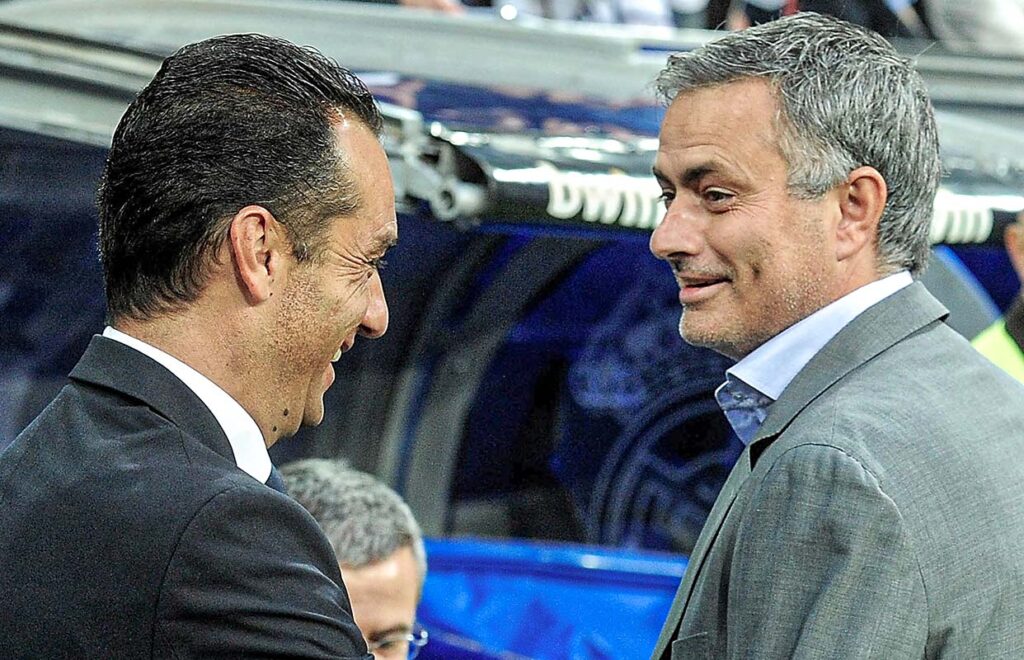
Because it wasn’t a full-time job for me at Mallorca, I also worked as an assistant performance coach for a nearby club, Murense, who were in Spain’s sixth tier. There was a crucial moment where both head coaches I was working with were fired within a period of one week. It meant I was finished at Mallorca, but at Murense they told me: “At 24 years old you are very young, but maybe you can take the team for one or two weeks.”
In Spain there is a saying that translates as: “New coach, certain first win.” But I broke that saying because we lost the first game I was in charge. We won the second game at home, though, and then drew the next.
Still, I was not expecting that the club was going to trust me. But people were very happy with the environment, the training sessions and the feel of the place since I had taken over. Then, in the next five games, we had four losses and a draw. The team was deep in the relegation zone.
Sometimes football can be beautiful, though, and we started winning games.
“A small fire from a non-football matter can affect the football side”
It wasn’t because we did something different. In fact, we stayed consistent with what we had been doing, and in the second-to-last game we secured survival. It will always be one of the best memories of my life.
Another big experience came with my first head-coach position in professional football, at third-tier L’Hospitalet in Barcelona. I was 27, and the youngest coach in any professional league in Spain that season.
In that job I learned something very important: in football, especially as a manager, coaching is not everything. Coaching is one part. As a manager you have to focus on many things that are not football. The relationship with the sporting director, board members, sponsors, agents, media. Sometimes a small fire from a non-football matter can affect the football side.
After this experience I had the opportunity to work in different countries and clubs. At Udinese in Italy, I saw one of the best organisations I have ever worked with. The club is owned by the Pozzo family, and there was a very clear line about how to run it. I learned a lot from the people there and was fortunate that I was close to Gino Pozzo, one of the smartest people I have met.
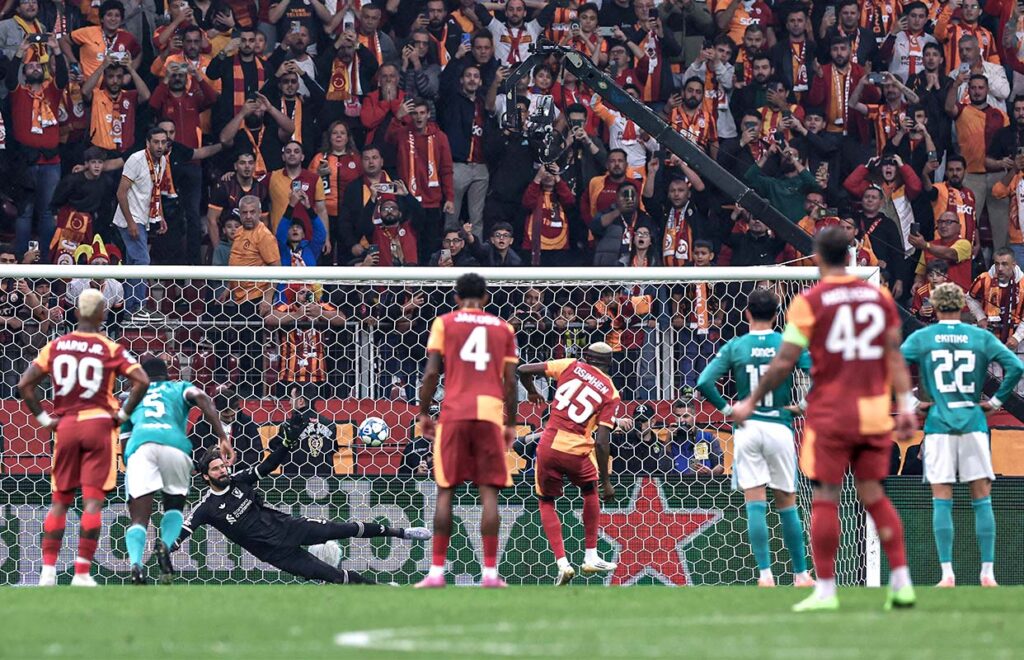
Now, at Galatasaray, I have had not only incredible experiences in the Süper Lig, but also in Europe. Our first year in the Champions League we played against Manchester United, drawing at home and winning at Old Trafford – one of the most beautiful stadiums I have experienced.
Last season we beat the eventual winners, Tottenham, in the Europa League. Then in the 2025/26 Champions League we faced Manchester City and Pep Guardiola, who in my opinion is the best coach in the world. Earlier in the league stage we won against Liverpool, before drawing them in the last 16 after beating Juventus in the knockout phase.
“Little by little, the projects at these clubs are getting results”
We also managed to beat Bodø/Glimt in the league stage, who have done so well in recent seasons under Kjetil Knutsen. Having played against other Scandinavian teams including Copenhagen and Malmö, I have a lot of respect for football in these countries. They are very well organised and coached.
Perhaps because of their budgets, the Scandinavian clubs need to be innovative and creative to generate income and compete. If they cannot sign big players, they have to develop them, so they are scouting with a medium to long-term vision to develop players.
It’s not that these teams are dominating their leagues. In Norway last year, Bodø/Glimt didn’t win the title. Copenhagen did well this year in Europe, and last year were Danish champions, but this season they are in the relegation round after the Danish league split. So they are creating a very fair competition in these leagues, and little by little the projects at these clubs are getting results. Because in the end, in football, what people pay most attention to is results – they don’t see the path to get there.
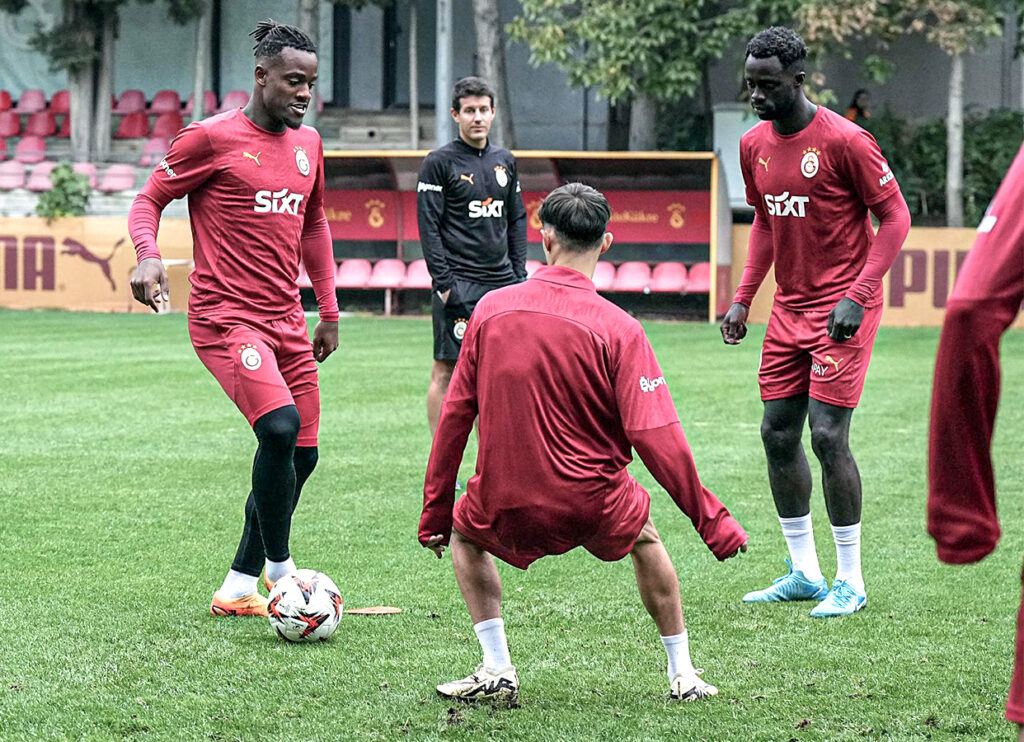
For me, when it comes to coaching, the most important thing is to develop players. Development takes place on a daily basis, through training and feedback, and players are now very aware of the importance of video analysis and feedback.
I always say that it is crucial that players feel that I am available for them, always, for whatever they need. Whether that be players who are playing, players who aren’t getting in the team, players who want to do extra work… I want them all to feel that I am a coach who is always there to help them.
But it is not easy, because not all players are the same. With some players, after a bad game you can show them the bad actions. With others, you have to show the good actions first. The key is knowing how to treat them, when to say things, how to say them, and where to say them.
Everything is done to try to create trust and an honest relationship.
“England right now is the NBA of football”
Looking to the future, I don’t know what is going to happen next season because I finish my contract with Galatasaray. But I have two things very clear. One is that I would like to work in England, and I feel that this is going to happen.
England right now is the NBA of football. The best stadiums, the best players, many of the best coaches are there. The competition is incredible. A team fighting relegation in the Premier League can compete in the market with teams fighting for Europe in Italy or Spain.
Unai Emery, David Moyes and Keith Andrews are coaches I have followed with particular interest – as well as Arne Slot, who has become a familiar face to us at Galatasaray this season. I have followed his tactics since he was in Holland, as head coach at Feyenoord and AZ Alkmaar, where he started as an assistant.
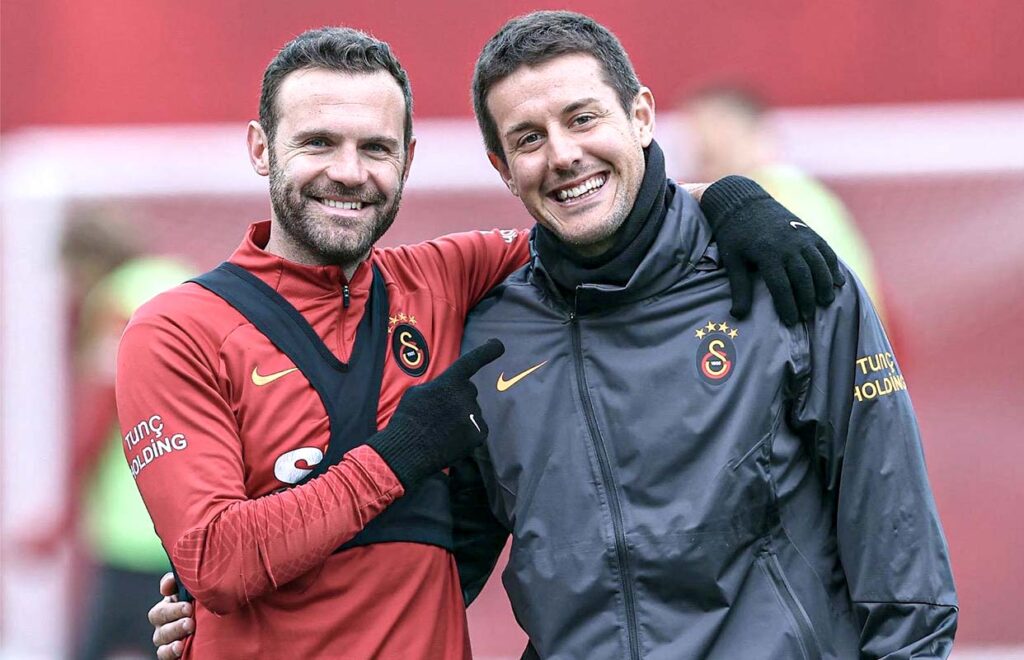
I will want to return to a head-coach position, but I don’t have the rush or ego that my next step must be a head-coach role. What I need is to continue feeling that I am in a challenging environment where I can learn a lot.
That has always been my motivation from the beginning: to learn, improve and continue growing in football.

Ismael García Gomez