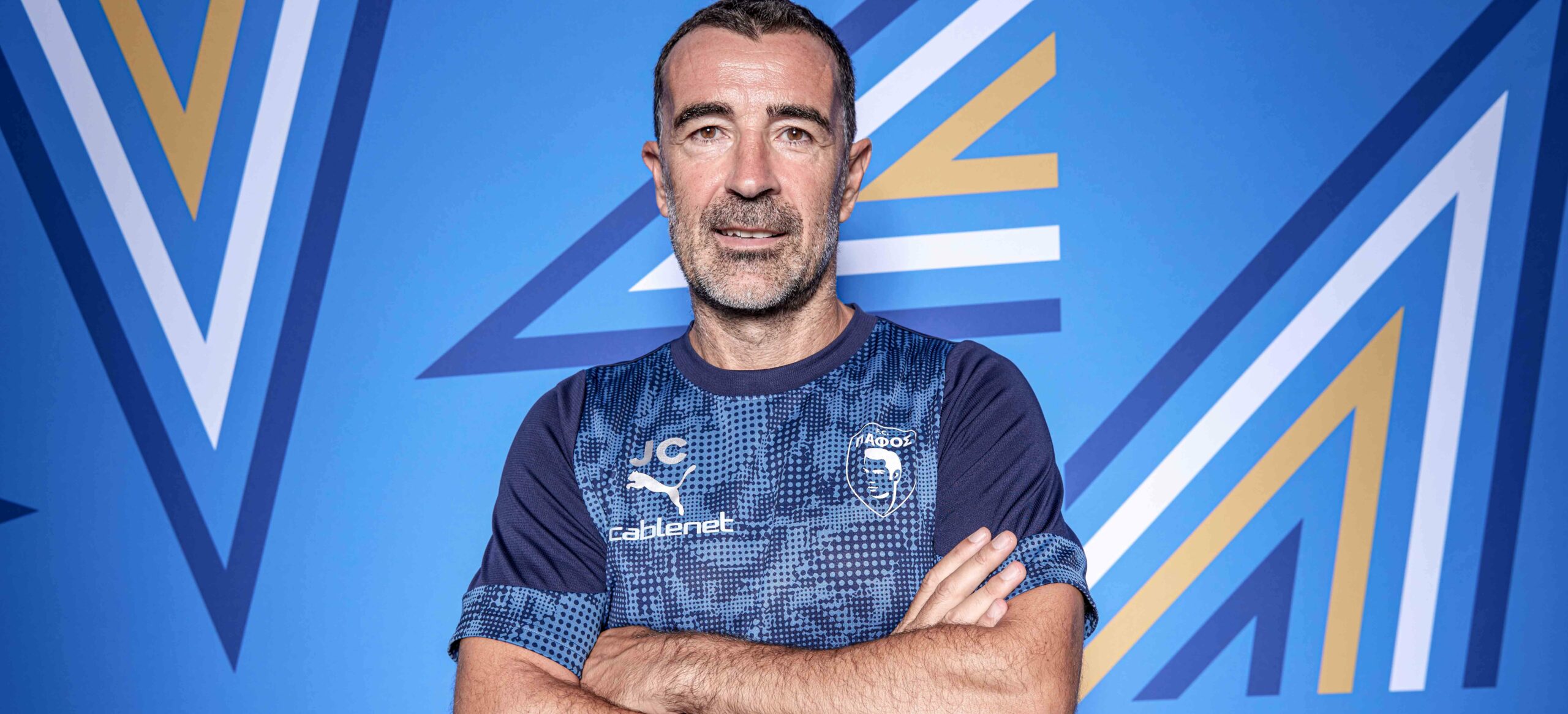
Juan Carlos Carcedo
Pafos, 2023-2026
I always dreamed of coaching in the Champions League – of having that badge of honour in my career.
When I was still playing, I started working towards my coaching badges – and had no doubt what my next step would be when I retired. I had a strong tactical curiosity and wanted to remain involved in football, so becoming a coach was clearly the best way to do it. I finished my playing career at Las Palmas and shortly afterwards began working as assistant coach at the club, first alongside Josip Visnjic and later with Juanito.
My work with Unai Emery started at Almería in the 2006/07 season. He came from doing a great job with Lorca – first winning promotion to the Second Division, then in the second year fighting to go up to La Liga right up until the last fixture. When he signed for Almería, he needed to put together a coaching staff and thought of me.
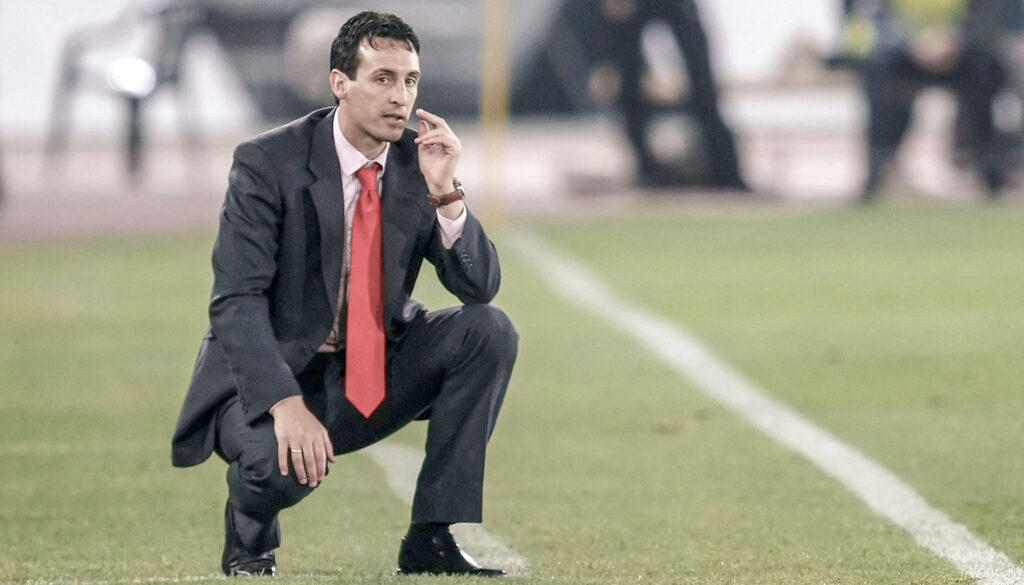
Unai and I had known each other for years. We were teammates at Leganés in the Second Division, and completed the Johan Cruyff Foundation master’s degree together. We already had a connection and were passionate about football and tactics. That’s how, at Almería, we started the journey with promotion to La Liga in the first season. We followed that with a historic eighth place in the second year, with 52 points.
Unai’s success was, and still is, down to his culture of hard work. Work, work and more work for the players, but above all for himself. These days, coaches have multiple ways to show videos to players, obtain all kinds of data, analyse matches and review clips of opponents. But back then at Almería, everything was much more basic. You only had DVDs to show clips to the players, and had to figure out how to get them.
Unai had a contact from his time at Lorca, who would send him videos of the opposition we were about to face. Once a week, he would drive the roughly 300km round trip from Almería to Lorca to pick up the videos. After that, we would edit the clips, investing countless hours in detailed work.
“With time, more credit has been given to what we achieved at Valencia”
That dedication led us to reach great heights at Almería, and then on to a club that allowed us to take the next step: Valencia. That was when we realised things were getting serious.
At Almería there was pressure, of course. Every coach has it, but Valencia is a club with tremendous demands. When we arrived in 2008, the club was already starting to face financial problems, which meant some of the most important players had to be sold. Even so, during the four years we were there, we still managed to qualify for European competitions. Except for the first season, we finished third in La Liga every year, right behind Pep Guardiola’s Barcelona and José Mourinho’s Real Madrid. These were teams winning the league with more than 90 points – or even 100, like Real Madrid in 2011/12.
With time, more credit has been given to what we achieved at Valencia. Back then, perhaps the fans didn’t appreciate it as much. Understandably so, because Valencia had just come through a period in which they had won La Liga twice and a UEFA Cup under Rafa Benítez. However, several years had already passed since those days. The club had fallen into an economic decline that could be felt within the organisation, and in its day-to-day work.
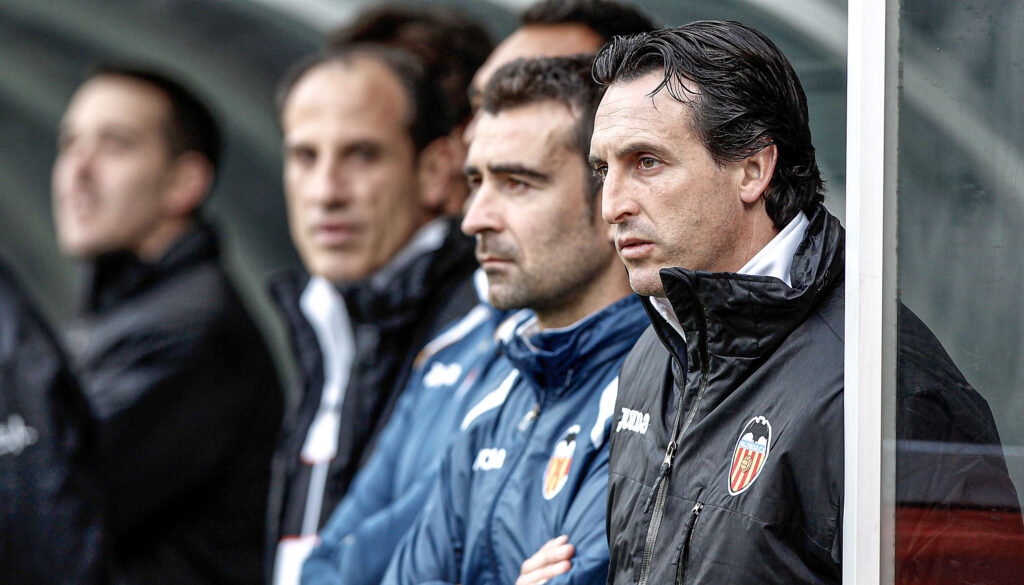
Inside the dressing room, the feeling that the fans didn’t value what we were achieving was sometimes frustrating. But we always worked with the same passion and motivation, and believed that we were accomplishing important objectives.
We also managed to improve the performance of players who, at first glance, did not seem to have that much potential. The best example is Jordi Alba. When we arrived at Valencia, Jordi was a winger who wanted to leave the club and lacked confidence. Vicente and Juan Mata were already playing in his position. He was very young, had come on loan, and was the third-choice winger. We asked him to help us in another position, although at first he was not keen on the idea. “How am I going to play full-back when I’ve never done it before?” he said. But with trust, persistence, showing him videos and working with him on the pitch, he improved every week. Jordi has said in interviews that it is perhaps thanks to that change of position that he was able to become the player he did, becoming a Spanish international and making history.
Beyond the importance of hard work, Unai and I always shared one belief. It is essential to work abroad, to leave Spain and open yourself to new countries. That opportunity first came with Spartak Moscow in 2012. The owner wanted to compete to win the Russian league and play in the Champions League, and he offered us an interesting sporting and financial project. We were also young and eager to try new experiences. In the end, Spartak was chosen among all the offers Unai had at the time.
“Winning that first important trophy changes your mindset”
Although we did not achieve the expected results, our time in Moscow did give us the impetus to return to Spain with renewed energy when Sevilla came along in January 2013. I will never forget the insightful conversation we had with the then chairman, José María del Nido Senior, upon our arrival.
“A club’s finances are very important, but winning matters even more,” he told us. “People want to celebrate trophies.” And so we focused much more on the sporting target, prioritising competitions we believed we had the best chance of winning. Instead of simply securing a Champions League spot through La Liga, we pushed to win a trophy in Europe. With that mindset, we placed our focus firmly on the Europa League.
The best moment was the first Europa League trophy in 2014. We won it against Benfica on penalties, at the Juventus Stadium in Turin. Every trophy is special, of course, but this one – perhaps because it was the first – left a deeper mark.
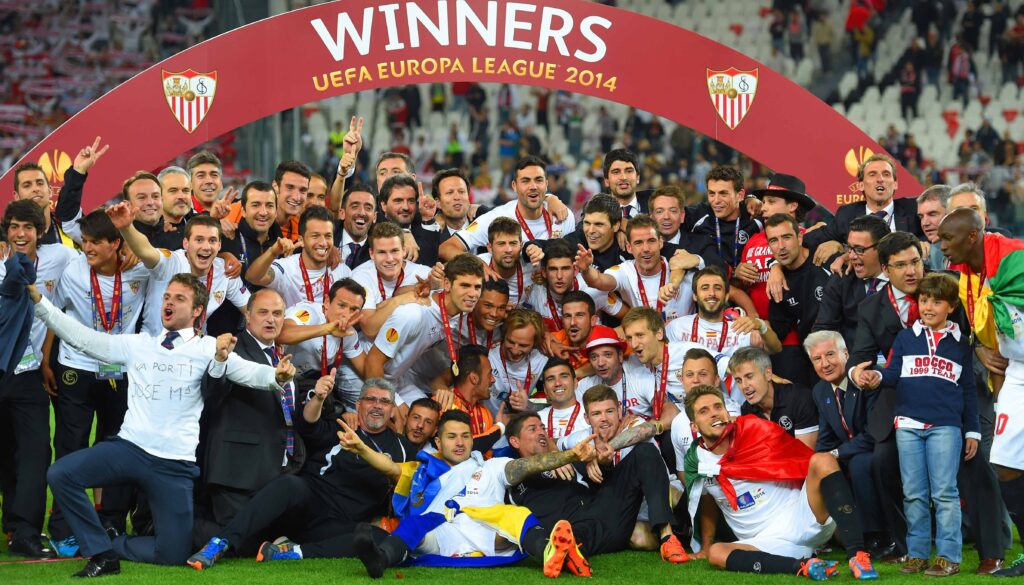
Winning that first important trophy changes your mindset. When Del Nido told Unai that we had to win trophies, I remember thinking: “How are we going to win trophies if we are at Sevilla, if we have never won anything, if we don’t have much experience?” But that first trophy makes you realise that it is possible. You realise that, if you work hard, persevere and have the bit of fortune you always need, you can advance through each round and end up winning major competitions.
The final against Jürgen Klopp’s Liverpool in 2016 was also unforgettable, with the comeback in the second half. I really value the ability of coaches to change the dynamic of the game at half-time. At Sevilla, our stadium the Sánchez-Pizjuán was key. When you have played in that stadium, you feel its great atmosphere.
Although we played Liverpool in Basel, Unai wanted the players to visualise themselves playing that final at the Sánchez-Pizjuán – to believe in their own ability, in the team, and in everything they had already proven. We were fortunate; we scored at the start of the second half and went on to win the final 2–1.
“It was a tough moment, but one from which you also learn”
Now, with time, we can see things in perspective. We won three consecutive Europa League trophies with Sevilla. One is hard. Two? Unlikely. Three? Unimaginable. I still have to rub my eyes. It is something that you don’t know will ever happen again, but we were fortunate enough to have the experience. It was a beautiful, golden era for all Sevilla fans, and for us as well.
As success came, I was always aware of my role. The good thing about my relationship with Unai was that he always gave me a very important part to play. We worked side by side. I was in charge of one group when he was working with another. He knew how to delegate and give real importance to his assistants. I felt enriched and supported, and never needed to seek the limelight because he gave it to us.
After everything we experienced at Sevilla, Paris Saint-Germain came along. A team on another level. We were fortunate that, in our second season there, the transfer market was blown open with the signings of Neymar and Kylian Mbappé. That meant a huge shift in the club’s ambition and global profile. PSG had long been recognised in Europe, of course, but with those players it became recognised worldwide.
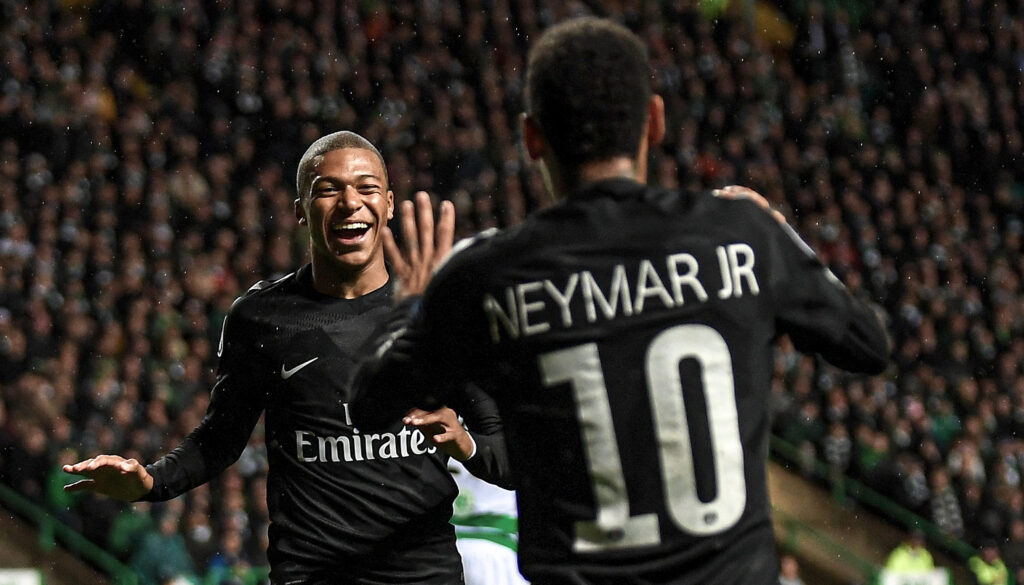
Working with Neymar and Mbappé is like working with normal people in some ways. They want to win, they want to work, they are professionals. But anything involving them has a much bigger impact. That was why, when working with them, you talk to them just like any other player, but you have to know how and when to say things. In the end, the most important thing is that they accept you, see that you can teach them something, and understand that you share the same goal.
In two years at PSG, we won seven trophies. But we weren’t able to win the Champions League, which was the club’s real objective. In the first season, 2016/17, we played an incredible first leg in the round of 16 against Barcelona. Everything went well and we won 4-0. In the second leg, we knew what Barcelona were capable of and spoke with the players about the need to be careful.
But circumstances turned out badly for us, and very well for Barcelona. They scored early and got their second goal before half-time. Right at the start of the second half, a penalty that wasn’t a penalty put us 3-0 down. We managed to pull one back to make it 3-1, and we thought we had the tie under control. But with seven minutes to go they completed a comeback to win 6-1. It was a tough moment, and hard to take, but also one from which you also learn.
“When we arrived at Arsenal in 2018, it was a difficult time after Arsène Wenger’s departure”
The following season, 2017/18, we faced Real Madrid. At PSG we had players used to playing these kinds of big matches, with extensive international experience. But how do you go from a 1-0 lead at the Santiago Bernabéu, with the game under control, to a 3-1 loss in that first leg and ultimately to then losing the tie? On the pitch, we coaches believe that everything can be controlled, but it is not always possible – especially when you are up against the magic of the Santiago Bernabéu.
That is why football is the king of sports.
The best place to experience football at its fullest is the Premier League. There you have all the ingredients that make the game different. First, because financially the Premier League is stronger than all other leagues. Second, because of the passion of the fans. Third, because the best players and managers have already arrived there. And I believe that the organisation and everything that goes with it is a step ahead.
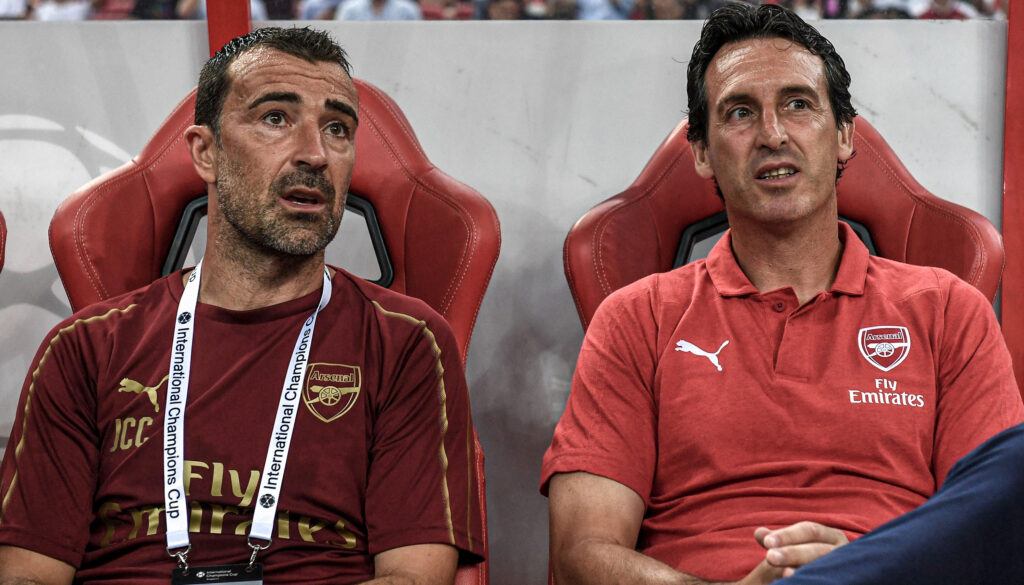
When we arrived at Arsenal in 2018, it was a difficult time after Arsène Wenger’s departure. The fans were used to that managerial figure. Perhaps with a little more time – and more Spaniards on the coaching staff to support Unai, as is now the case at Aston Villa – we would have had greater stability. Something that would have led to winning a trophy, because the conditions were there and the club is big. In fact, we played in the Europa League final in 2019.
When our time at Arsenal ended, it was time for me to go my own way. It wasn’t an individual decision, but a shared one. It was a conversation we had been having over time, because I had had the opportunity to be head coach at several points in our journey, and Unai had always opened doors for me. He also told me that it would be important to set goals, each in our own role. It was the perfect time for him to take a break, while I was eager to step up as a head coach. I needed to see if I was ready to build a new project.
After 12 years together, so many experiences, so many countries, training sessions and big moments in our lives, what matters most is who we are as people. Friendship is the most important thing. And on a professional level, there was always Unai’s work ethic. He has an incredible passion that he passes on to everyone around him, including the players. You can do nothing less than try to match him, follow his path and embrace that intense work. But you also can’t be afraid to step out on your own, which is why I came to Pafos two years ago.
“Players are different from how they were 20 years ago”
In my playing days I had moved to France, to play for Nice. In that sense, I had long been open to new adventures and challenges. After experiences as a head coach at Ibiza and Real Zaragoza, it was the right time to leave Spain for a place with more calm and stability. So I thought, why not? Pafos was a place where I could start a new project and grow as a coach.
In the first year we won the Cypriot Cup, the following year the league, and this season we have qualified for the league phase of the Champions League. Overcoming these challenges isn’t easy, but the important thing is that we are improving, growing, and the club is building new infrastructure so that both the team and fans can look forward to an even better future. It is an important project with the players, because in the end it is them you have to convince.
Today, modern football requires hard work, discipline and dedication, but players are different from how they were 20 years ago. You have to guide them through persuasion, try to build a rapport with them, but at the same time know how to push them. That middle ground, which is not easy to find, is one of the keys to success and to getting players to trust in your work. All of this must be done within a structure, because otherwise everyone would do whatever they want. I like my teams to be tactical, to dominate the game, to have different ways of adapting to the opponent, but also to maintain the players’ creativity. You cannot deny them that, but it should always come with a recognisable stamp.
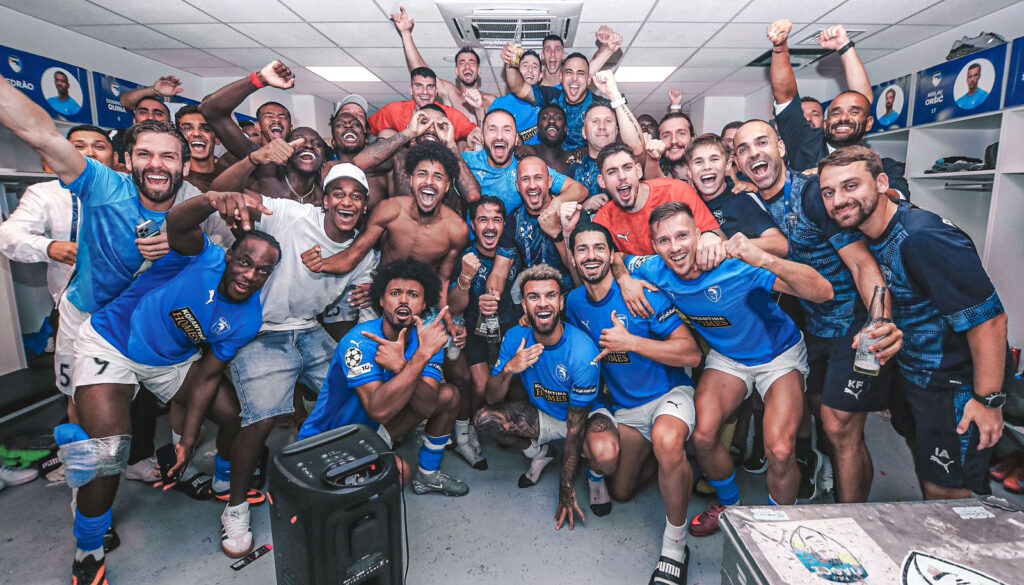
With Unai, I had already been in the Champions League as an assistant. Now, as a head coach, facing the best opponents in big stadiums is something that fills me with pride and responsibility.
We are aware of the difficulty of the challenge, but for us it is important to try to perform at a high level.

Juan Carlos Carcedo