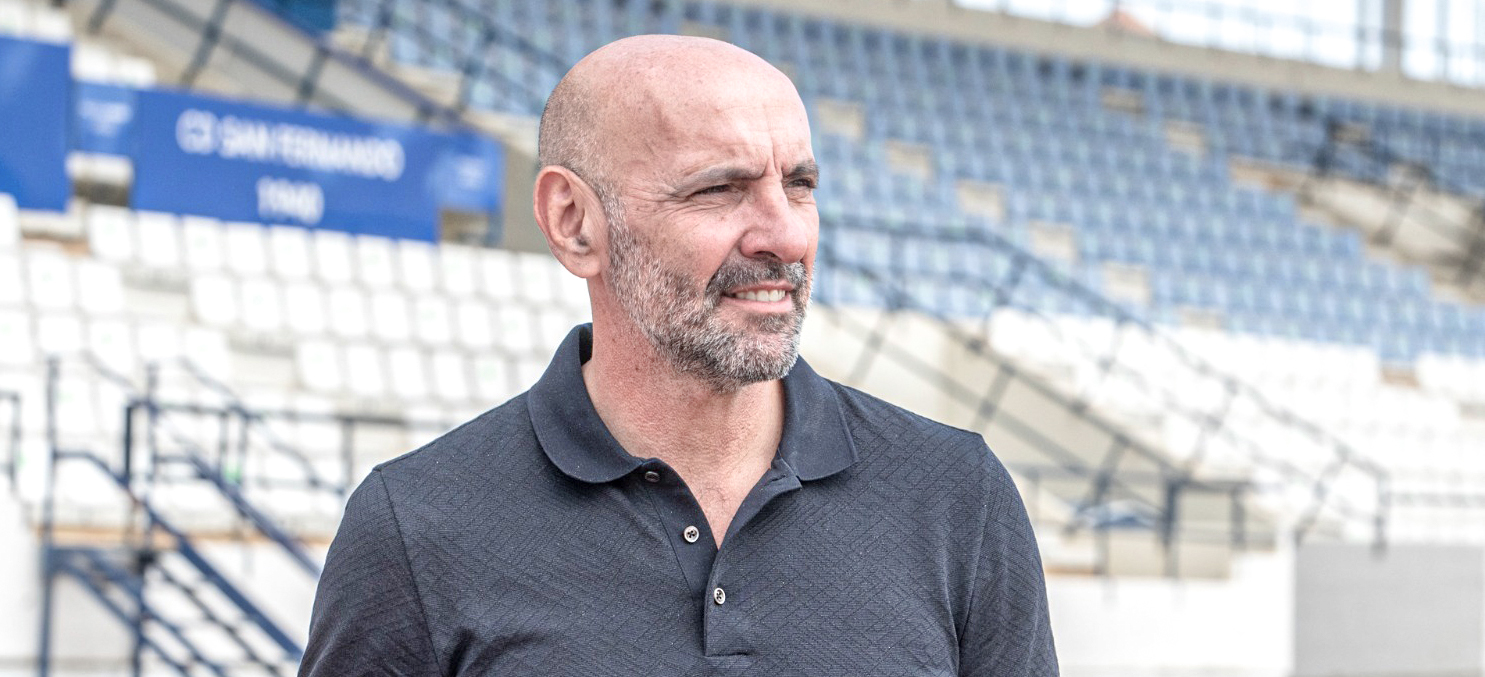
Monchi
Sevilla 2000-2017 and 2019-2023, Roma 2017-2019, Aston Villa 2023-2025
I never imagined I would become a sporting director.
I studied law so that I could practise as a solicitor when I retired from football. As it turned out, everything in my professional life moved very quickly, because I retired very young. I had been a goalkeeper for Sevilla from 1990 to 1999, and in the 1999/2000 season I became a delegate for the first team.
It was the president of Sevilla at the time, Roberto Alés, who suggested I become sporting director in 2000. Why? It was simple reasoning. As the team delegate, I had also acted as a press officer, organised trips, and attended meetings with the supporters’ clubs. Roberto said: “At least this guy puts in a lot of hours for the club.”
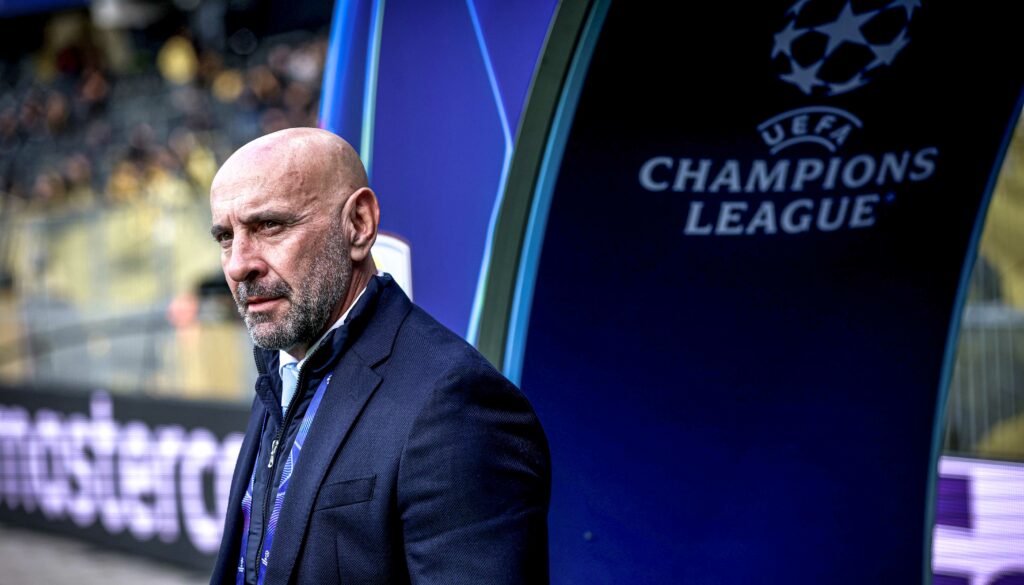
When he proposed the role to me, I didn’t really have a desire to be a sporting director and wasn’t even sure what the job entailed. That was when I started to develop my idea, which was based on two things: to be a sporting director who is very close to the dressing room, and to build as broad a sporting department as possible. And it was all based on my previous experiences in football.
There were two fundamental foundations to everything I tried to create, which came from my experience as a player and then team delegate. I started from the basic premise that the more players you watch and the more times you watch them, the easier it is to get it right. And so, from the outset, I was obsessed with creating the broadest possible sporting department to keep tabs on the market in and around Seville. It is what I call the theory of concentric circles – you cover and dominate the areas where you have the capacity to recruit players.
At Sevilla, I focused on the basics – on knowing where I was. I was the sporting director of a team with a good brand and appeal, but with limited financial resources. That was why I didn’t go to watch players in the Premier League, or the French and Italian leagues. Instead, I went to look at places where we could recruit players, which was Andalusia and the Spanish Second Division.
“You have to be very specific about your objective, otherwise you can waste time”
I always tell the story that my first trip outside Spain with Sevilla came a full year after I became sporting director, in April 2001. My initial concept was to master what I could master, and from there we grew and created a broader sporting department.
The other foundation that was key for me is something I also took from my time as a footballer and, to some extent, as team delegate. I wanted to build a sporting department that was very close to the people who actually win games – the manager and the players. There is not much more to it than that. Victory belongs to them, not the sporting director, nor the chairman or anyone else.
I told myself: “I will try to stay close to the coach and the players.” But how? By being there day in and day out, acting as a bridge so that the coach and players saw me as both a tool and a companion on the journey. That meant being very close to them as people, not just footballers, because I believe when the person is well, the professional performs better. Throughout my career as a sporting director, I have been obsessed with staying close to the person and understanding players’ challenges. Their focus should be on preparing for games, working hard, training and day-to-day life.
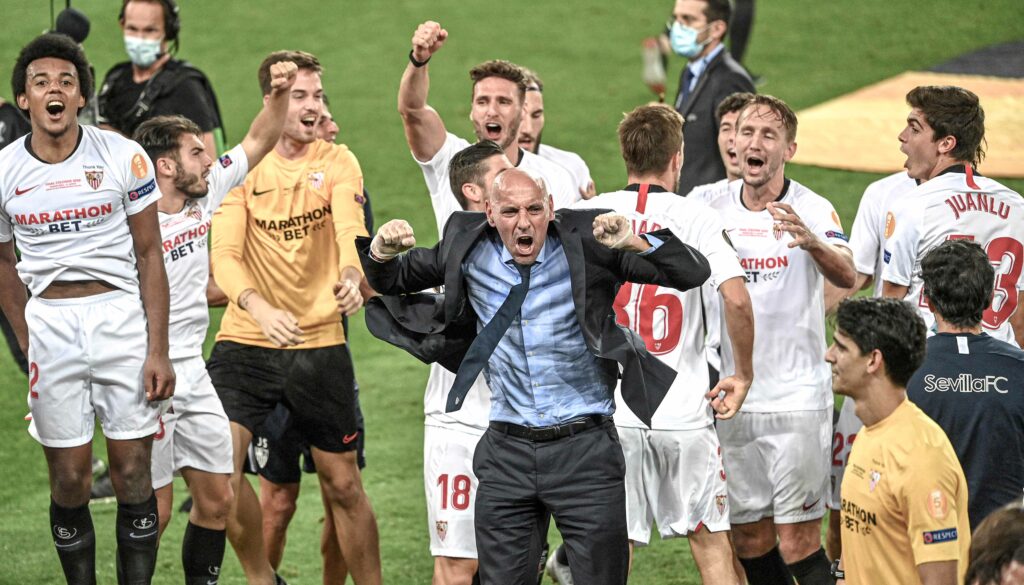
Sevilla grew over time, which allowed us to cover more territory. And when you grow – in terms of brand, results and finances – you begin to expand. That was when we planned our way of working in two parts, which I call the ‘gross part’ and the ‘net part’.
With the ‘gross part’, we were very thorough in monitoring all competitions, and classifying them into three levels: League A, League B and League C championships. It had nothing to do with the level of the competitions, but with the scouting you need to do in those leagues and your ability to recruit players. For example, during my time at Aston Villa – a team with significant resources – our scouting focus was on League A competitions. That included the Premier League and the Championship – in January 2024, we signed Morgan Rogers from Middlesbrough – as well as France, Spain and Germany.
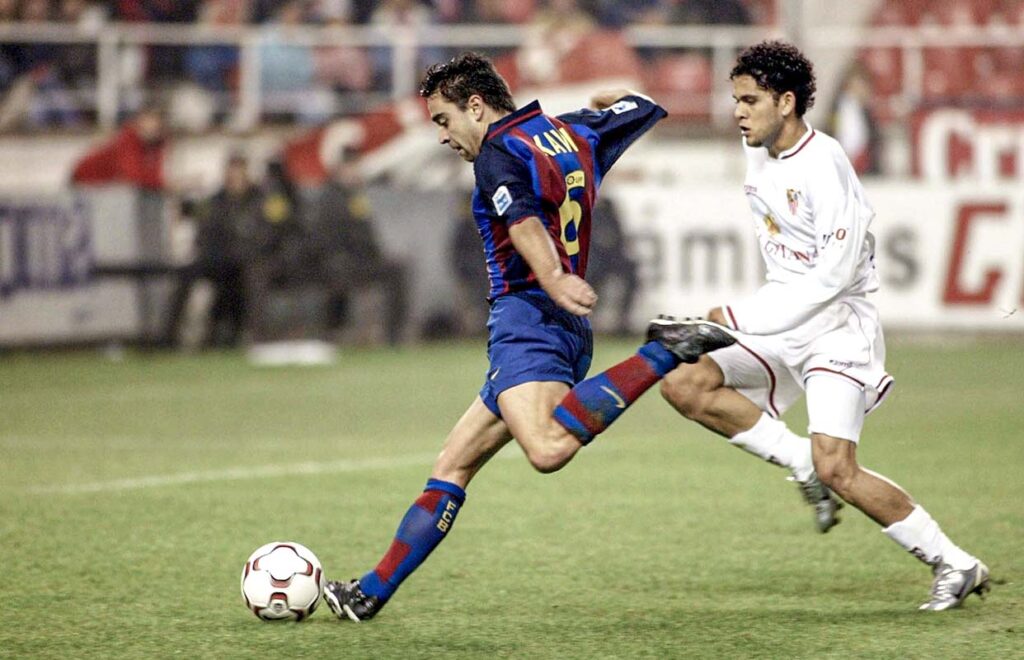
Time is very important, too, because there are competitors, especially now that every club has sporting directors. At Sevilla, we discovered Daniel Alves in 2003. That was at the South American Under-20 Championship in Uruguay – a tournament at which we were the only accredited club. Go to that same championship now, and there will be more than 200 accredited clubs. That is why it is very difficult to discover a rare gem that no one else has seen before, and why you have to be very specific about your objective. Otherwise, you can waste time looking at things that are not going to be useful to you.
“If I had relied only on my own instinct, we wouldn’t have signed him”
Everything has changed in football. Today, an 18-year-old player is worth €50m, whereas Alves cost Sevilla just €900,000. Back then, there was no Wyscout or any other platform for viewing players. No Big Data, no Artificial Intelligence, no software where you could select the profile of an under-20 player with the characteristics you are looking for and, with a single click, receive a long list of footballers.
At that time, it was all about fieldwork. You had to assess where you thought you could find the type of player you were looking for. Which players were succeeding in Europe? Back then, the highest-performing players were South American, so they were the targets – Brazilian, Argentinian and Uruguayan players. Even though we were growing a lot at Sevilla, we couldn’t sign players from the Spanish league, the Premier League or Serie A, because they were too expensive for us. So we turned to the French league, because France is a country with strong youth development. They have good football schools, and players with good physical attributes. It was always a matter of searching and imagining where you could find the cheapest and best-performing products.
Everything you analyse and study about a player is transferred to reports that have two important and different parts. One is the objective section, with all the technical, tactical and physical analysis of the player. There is nothing innovative there, just data and what you see on the pitch. Then there is the subjective section. These days it is much easier to get to know the subjective side, because with social media you can screen the player to help you profile them. You can see if they are a player who goes out partying, how they react to victory or defeat, and if they are individualistic when it comes to posting photos. By looking at their social media, there are a lot of things that allow you to quickly identify what a footballer is like in their personal life.
Before social media, building this subjective profile was much more up to me. I was in charge of talking to the player, their family, a coach who had worked with them, or anyone who knew them well.
With player reports, you have to trust the people you work with. That is what happened when Sevilla signed Carlos Bacca from Club Brugge. If I had relied only on my own instinct we wouldn’t have signed him, because I went to watch him play in a match against Anderlecht and his attacking contribution was poor. But I trusted the people I worked with, who had fortunately seen him in many more games. I was wrong, and Bacca turned out to be one of the best signings we made.
I say it over and over: it’s not that there are good or bad signings, there are good or bad performances. That is why co-ordination with the manager is essential. The biggest failures when it comes to signings, when performances do not meet expectations, usually come from not being able to sign the type of player the coach actually needs.
“When a team doesn’t have players who fit the coach’s style, it is impossible for things to work out”
If a coach asks for a powerful striker who plays well with his back to goal and is good in the air, but the sporting director brings in a magnificent striker who is more of a link-up player with other features, that player is unlikely to perform well. The key to good planning by a sporting director is perfect co-ordination with the coach, and the sporting director’s ability to interpret what the coach needs.
I also believe that the first step towards a manager failing at a club is planning without talking with the sporting director. I am not saying that the coach should decide the name of the player they want, because often it can be a transfer that’s impossible for a club. But there must be good communication between the two, because the sporting director must know the profile of the player the coach needs.
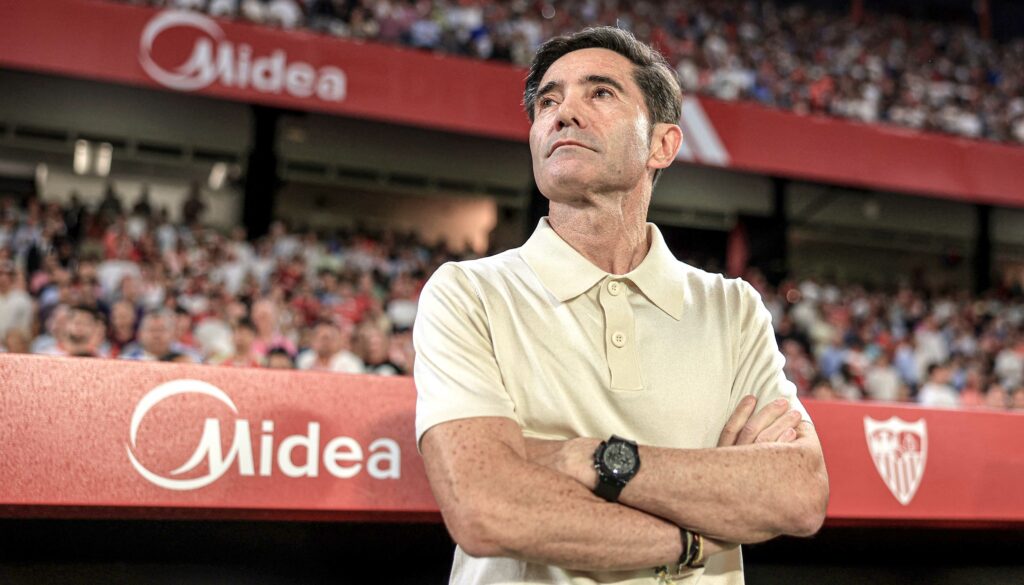
Here, I use the example of Marcelino García, who I have tremendous admiration for. He was only head coach at Sevilla for six months because I wasn’t able to put together a squad that met his needs. When a team doesn’t have players who fit the coach’s style, it is impossible for things to work out.
Then there are signings that turn out well in positions you hadn’t actually signed them for. The most surprising case for me was Julio Baptista. When we signed Julio, we were looking for a number six, which is the position he played at São Paulo. When he arrived at Sevilla, we lacked a player who could play behind the striker. The coach, Joaquín Caparrós, put him there, and he went on to score 50 goals over two seasons. That was a very special case, though. It doesn’t happen very often.
When it comes to the sporting director’s relationship with the coach, first it is important that the sporting director does not have a coaching licence. That way you are not the coach’s rival. It may seem silly, but it’s not. Second, you have to make the coach see that they are the most important asset, because for me the most important figure in a team is the manager. A good coach turns good players into very good ones, and very good players into excellent ones. That is Unai Emery – he makes all players better.
You have to understand Unai, get to know him and know how he works. My relationship with him is one of gratitude, although we have also had difficult moments, because we both have strong personalities. Is that a bad thing? Not for me. Quite the opposite, in fact.
“Having more money to sign players doesn’t change anything”
When Unai left for PSG, he tried to take me with him. Then, when he left for Arsenal, he also tried to take me with him. And, when he left for Aston Villa, he did take me with him. We made a good pair, because he knows me and I know him. But above all, in our partnership, success depended a lot on him, because Unai is a top manager.
It’s also important to understand that the work of a sporting director isn’t just about signings – the youth academy is also part of it. Sporting management is holistic, so the academy should be fully integrated into professional football. It is good to have continuity and integration of the academy with the first team – out of conviction, not obligation. The working methodology of the first team should be included in the academy, making it easier for players to come through with those ideas.
During our time at Sevilla, we had Jesús Navas, Carlos Marchena, Sergio Ramos, José Antonio Reyes, Diego Capel and many important youth players come through. Their sales generated capital gains, which allowed us to reinvest the money in other players to maintain the level.
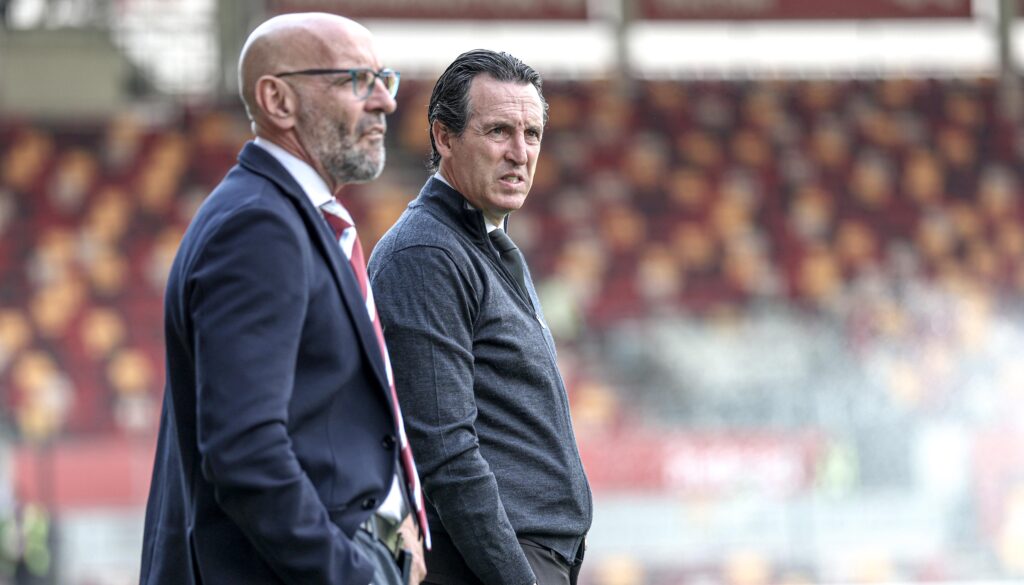
My way of working didn’t change at Roma or Aston Villa, because I was hired to bring the Sevilla approach to those clubs. The only difference at Roma was that there was a sporting management that believed strongly in data, in Big Data. And I had already been thinking about it, so it was easier for me to adapt and keep the same structure.
Aston Villa is a club with greater financial resources than Sevilla or Roma, and it is a much more demanding competition where you have to know the ideal player profile for the Premier League, especially for Unai. Because in the Premier League, the hierarchy is different – the manager is the boss. The first-team head coach is the general manager, and the rest of us are below them in the hierarchy.
But in terms of work, it is the same. All you have to do is find the most suitable profile of player for English football and, above all, for your manager. Having more money to sign players doesn’t change anything. When I made decisions at Aston Villa, they were always as closely aligned as possible with what was needed.
“Leadership cannot be based on absolutism, nepotism or dictatorship”
I followed the same model at the three teams where I worked as sporting director. Obviously I made some adjustments depending on the context of each club and competition, but I always tried to work in the same way and based on three basic pillars that are important to me in this job.
The first is having a single direction. All parts of the club must be moving in the same way. Many projects have failed because there was a bad relationship between the coach and the sporting director, or between the sporting director and the chairman, or between the sporting director and the academy director. I’ll say it straight: the enemy must be the one wearing colours other than yours.
The second pillar is planning. This goes hand in hand with having a roadmap. You have to be clear about what you want. Have a roadmap that you can change, but with a goal in mind. In my career, I have always made mistakes when I have tried to make decisions based on pressure, because that leads you to work inconsistently. It may work out once, as it did for us at Sevilla when we signed Ivica Dragutinovic after Sergio Ramos left, but normally it goes wrong almost every time. You cannot improvise in football.
And the third pillar is the working group. Earlier, I mentioned signing Bacca. We signed him because I had people around me who believed in him. So, if you want to lead a group, you have to be very clear that leadership cannot be based on absolutism, nepotism or dictatorship. It has to be based on trust. This means letting everyone do their job, giving them space to operate, and allowing them to make their own decisions.
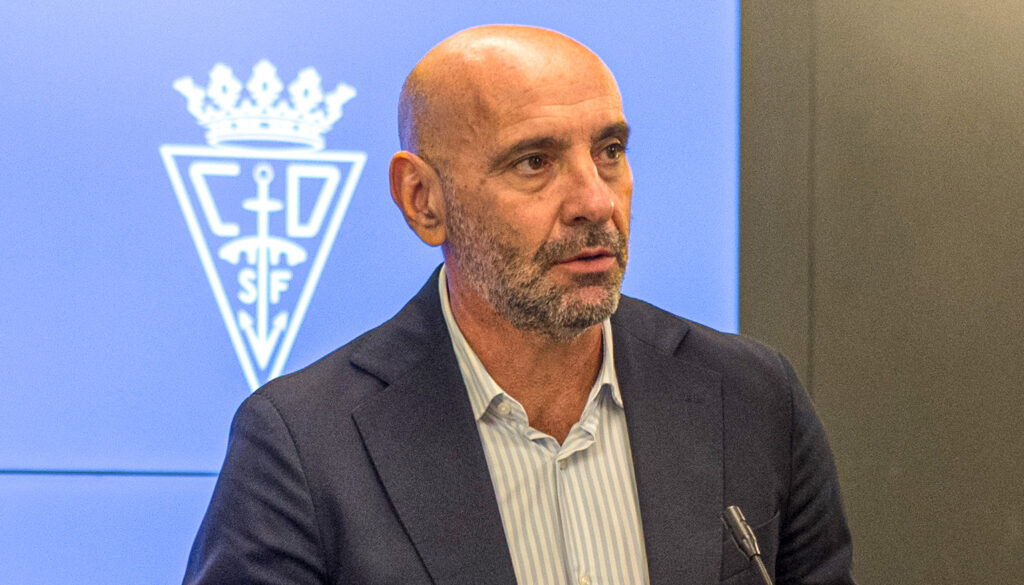
It has been a year since I left my position as sporting director at Aston Villa, and since then I have focused on my work as president of San Fernando, a small club in the province of Cádiz. Although it is true that the workload is much lighter, I am someone who is 100 per cent committed to everything I do. However, from time to time, I still receive messages from people offering me a player, or from someone at a club asking me about a footballer – requests I am happy to respond to.
Although I sometimes miss it, in the short and medium term my time as sporting director is over for good. And in the long term? That is a question I don’t know the answer to yet. Only time will tell.

Monchi