
PREMIER League, DECEMBER 2 2025
Guimarães (71)
Gordon (86 pen)
Romero (78, 90+5)
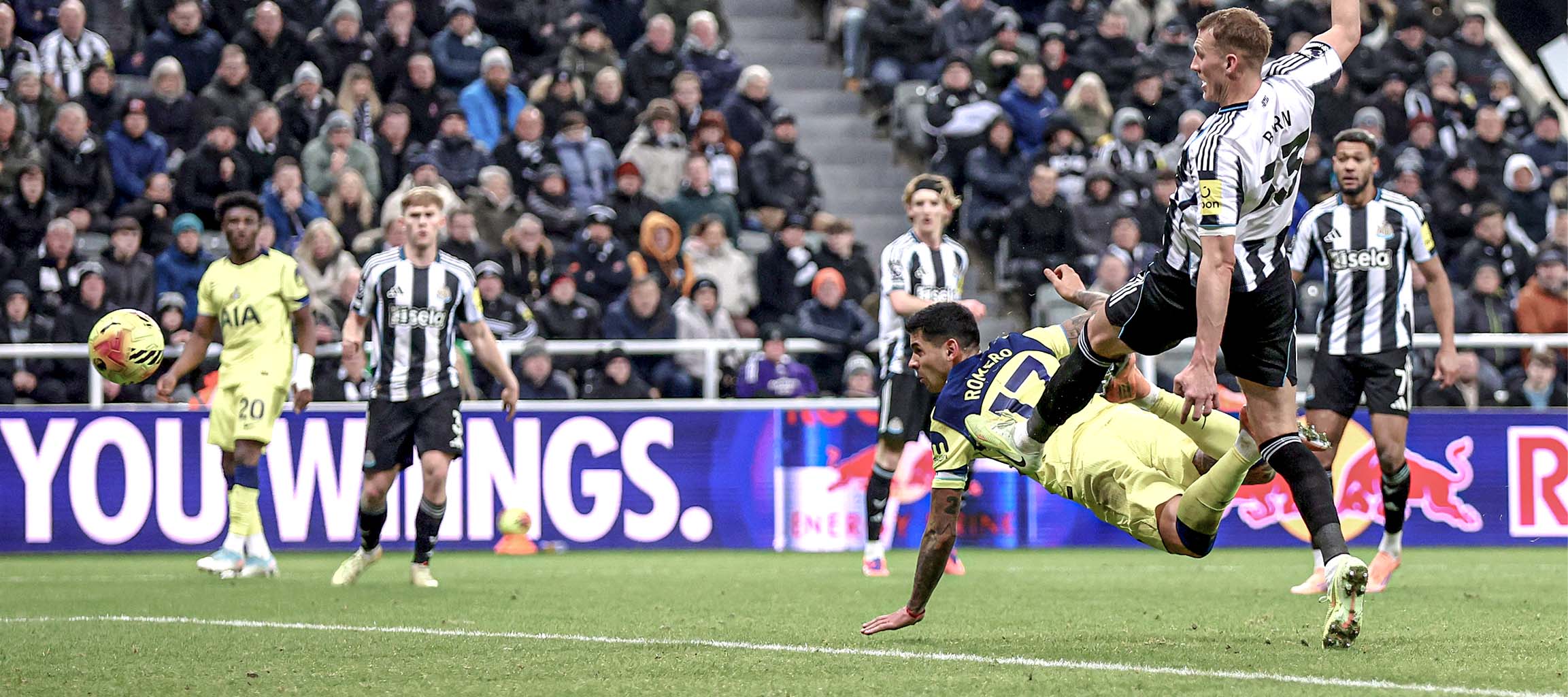
Newcastle and Tottenham shared the points after a late flurry of goals culminated in Spurs captain Cristian Romero scoring a 95th-minute overhead kick. Newcastle had looked set for a third successive league win when substitute Anthony Gordon scored a penalty to make it 2-1. But Romero – who had already scored with a diving header after Newcastle captain Bruno Guimarães had fired his team into the lead – rescued Spurs from what would have been a sixth defeat in eight games.
How the managers saw it
“We were strong, the better team,” said Newcastle head coach Eddie Howe. “[We] created the majority of chances but weren’t clinical enough. It took too long for us to score today… then we didn’t protect the lead well enough on two occasions. Ultimately, we haven’t defended a corner well enough, not doing our jobs individually, not getting the first contact.”
“I really liked the character and the mentality in the team,” said Tottenham head coach Thomas Frank. “To go here, the fourth game in 10 days, the third away game, very difficult place, go down two times and come back, it shows everything about the willingness and the mentality in the team.”
Scroll down to see analysis from our UEFA-licensed coaches on how the game played out, tactically…
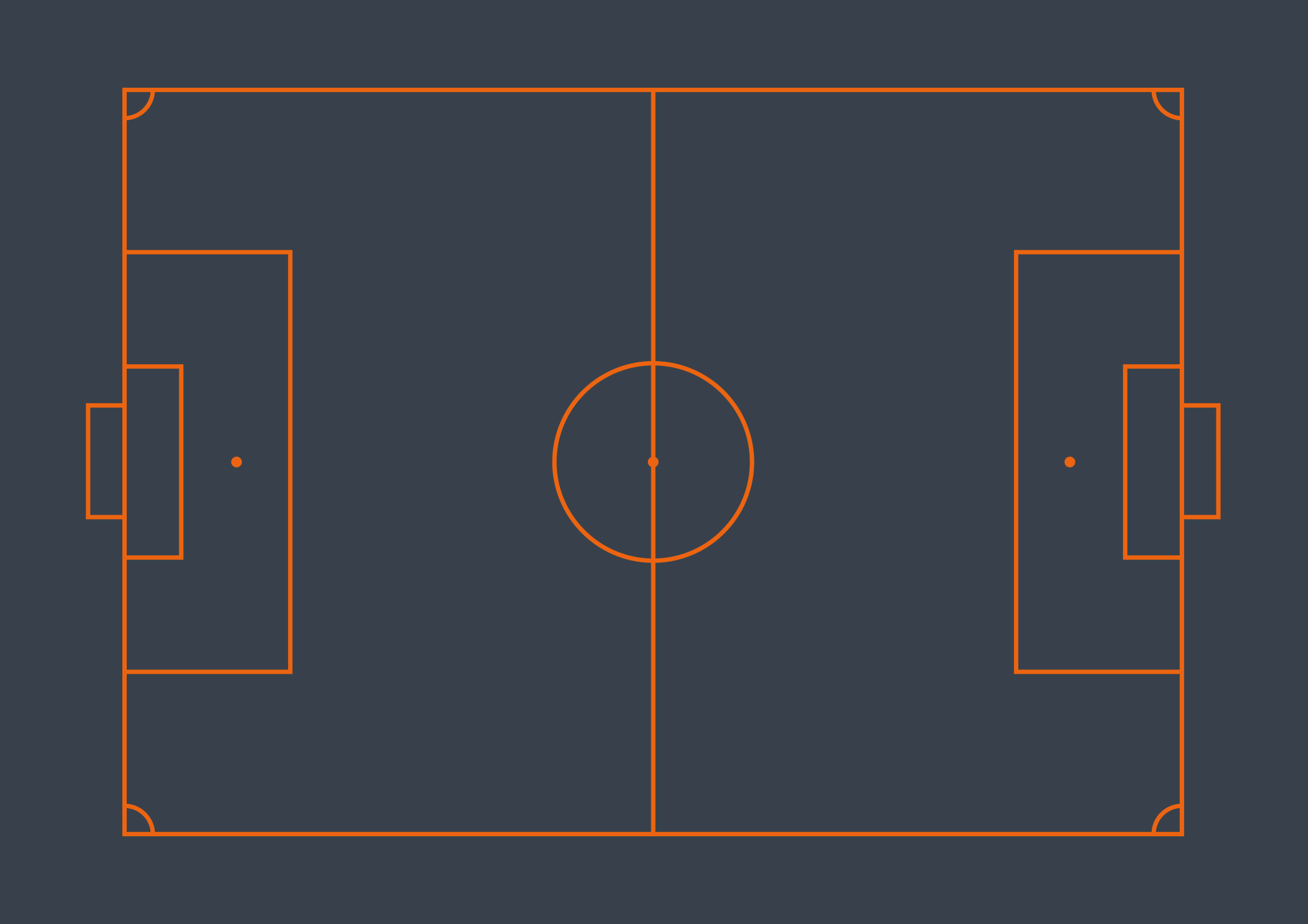 323331221876727112312317413302920152239
15/6
SHOTS / ON TARGET
7/2
52%
POSSESSION
48%
34
ATTACKS INTO AREA
26
2.35
EXPECTED GOALS (XG)
1.07
Newcastle’s high press
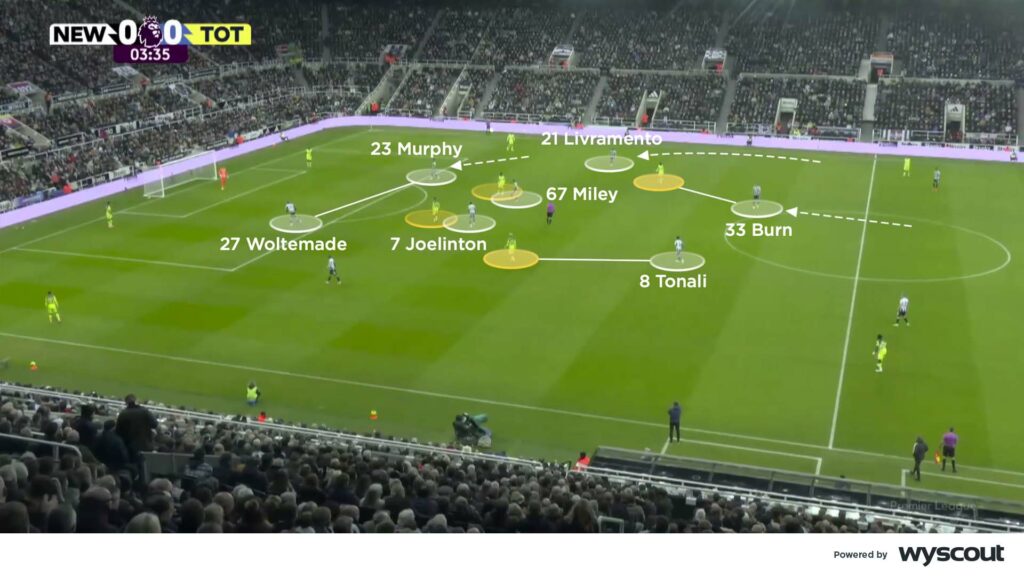
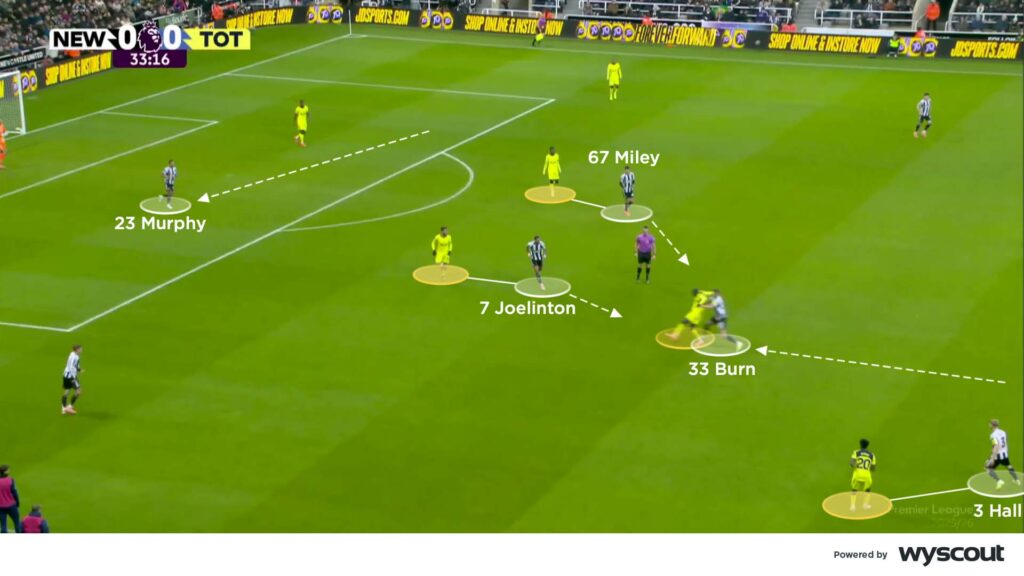
Newcastle’s high press limited Tottenham’s build significantly in the first half, while also giving them good attacking moments from frequent high regains. Right-winger Jacob Murphy aggressively pressed inside, joining Nick Woltemade in the first line. Right-back Tino Livramento supported, jumping to Tottenham’s full-back, with one of Newcastle’s centre-backs ready to engage high into midfield to deal with any dropping Spurs forward. Although this left significant spaces beyond Newcastle’s back line – and sometimes a 2v2 on that line (below) – Spurs did not trouble their opponents by securing any longer passes.
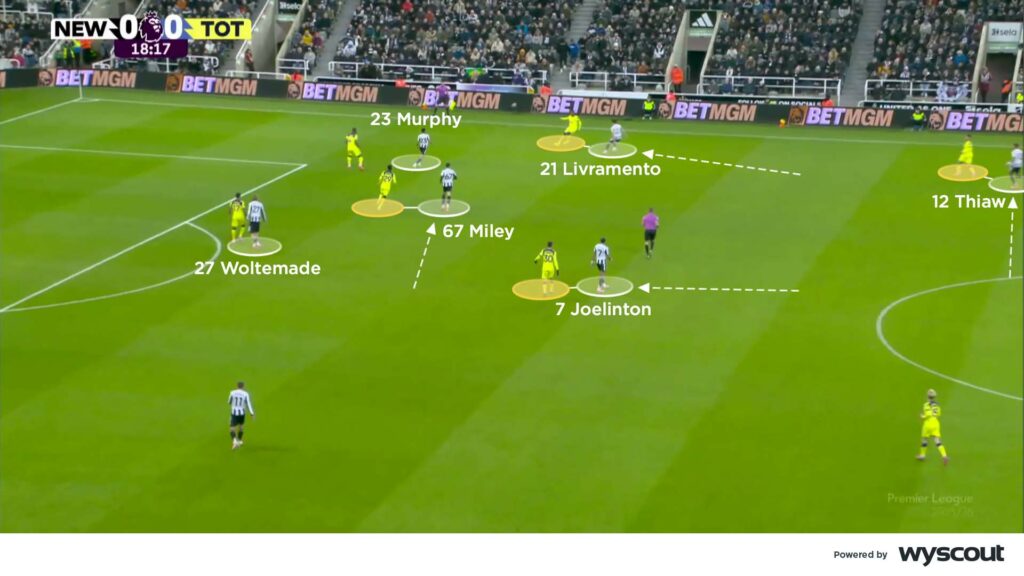
As the first half progressed Newcastle continued jumping on their right side, with Murphy doing well to cut off potential passes between Kevin Danso and Destiny Udogie. When Tottenham did play around the first phase of the press, Livramento and Malick Thiaw supported with additional pressure into the wide areas (below). Newcastle’s central midfield were also excellent in cutting off potential passes back inside, helping force play into their wide pressing trap, which often delivered high regains.
As a result, Tottenham attempted to play more to their own right side, trying to avoid Newcastle’s pressing trap from the other side of the pitch, as Murphy pressed even further across. On Newcastle’s left, however, Lewis Hall and Harvey Barnes were excellent in their 1v1 duelling against Tottenham’s right. Aggressive jumping from Dan Burn at left centre-back also supported the midfield in latching on to any straight balls. Back-pressure from Lewis Miley and Joelinton then helped squeeze Spurs’ central players (below). This forced mistakes, nullified the build and created chances from the host’s consistently high regains.
Narrowing the front line
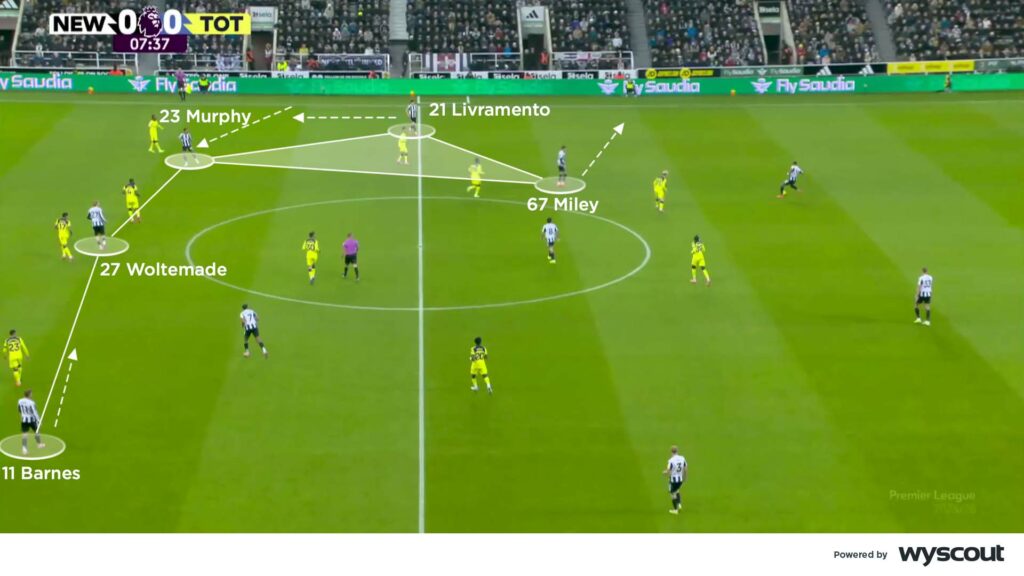
In possession, Newcastle’s 4-3-3 involved multiple rotations from the right, with Livramento and Miley flexible in their positioning and movement. Wingers Murphy and Barnes looked to narrow and receive between the lines, supporting close to Woltemade. Penetrative passing from the back line often skipped the midfield, working the ball into Newcastle’s narrowed forwards and penetrating around Tottenham’s first-line pair (below). The visitors utilised a 4-4-2 block to defend.
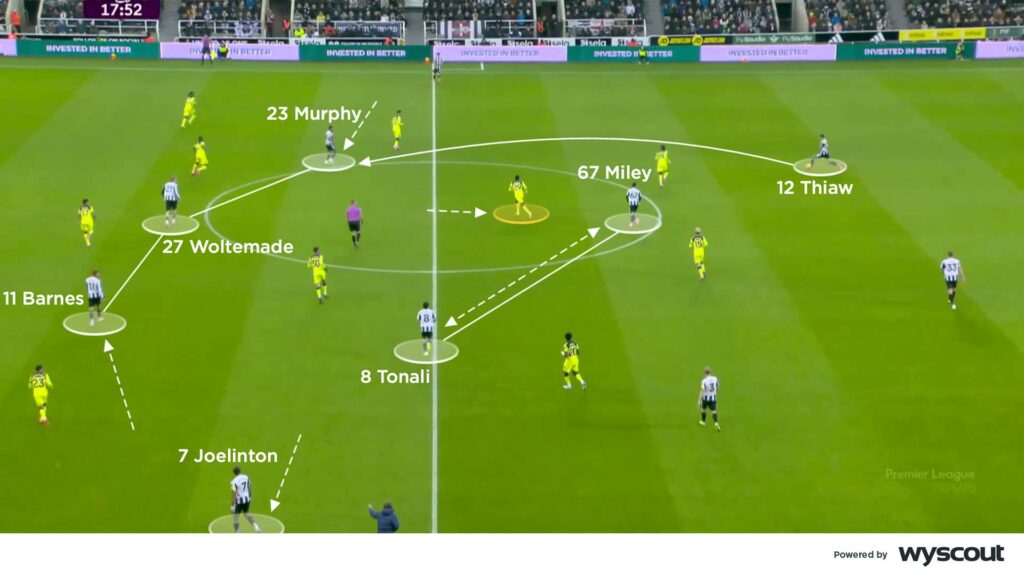
Newcastle continued to progress with their right-side rotations, as well as having rotations within their midfield three at times. Single pivot Tonali often rotated with Miley and, occasionally, also with Joelinton, dragging out the Spurs midfielders who were defending the centre or, in particular, the left inside-channel space. From here, Newcastle were able to break forward via access into the narrowing Murphy or Barnes. When Barnes continued to move inside, one of the host’s central midfielders widened (Joelinton, below), especially if Hall was deeper in the first phase of the attack.
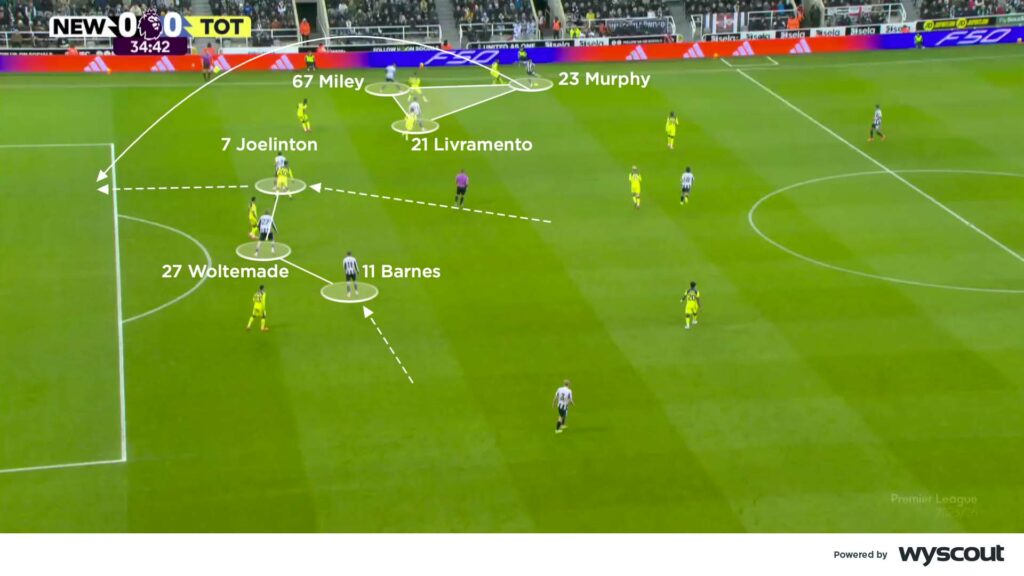
As Newcastle searched for the opening goal, their right side became more flexible with rotations and movement. When Murphy was deeper, Miley and Livramento adapted to support higher into the wide areas. As Barnes narrowed around Woltemade, Newcastle used a central midfielder to maintain their narrow front three, often attacking with all three of their central-midfield unit on one side of the pitch. This helped them work a key chance for Joelinton (below), who ran beyond and drove across goal to hit the post.
Howe responding
When Newcastle’s attacking play died down for a period in the second half, Howe responded by adding Gordon and Anthony Elanga to the wide areas. No longer narrowing, the home side subsequently attacked with maximum width from their forwards. The back line and midfield worked the ball around and across to find the wingers to attack Tottenham’s full-backs 1v1 where possible. Newcastle continued to rotate their pivot during this wide progression, with forward runs from players crashing the box or supporting inside the wingers’ dribbling.
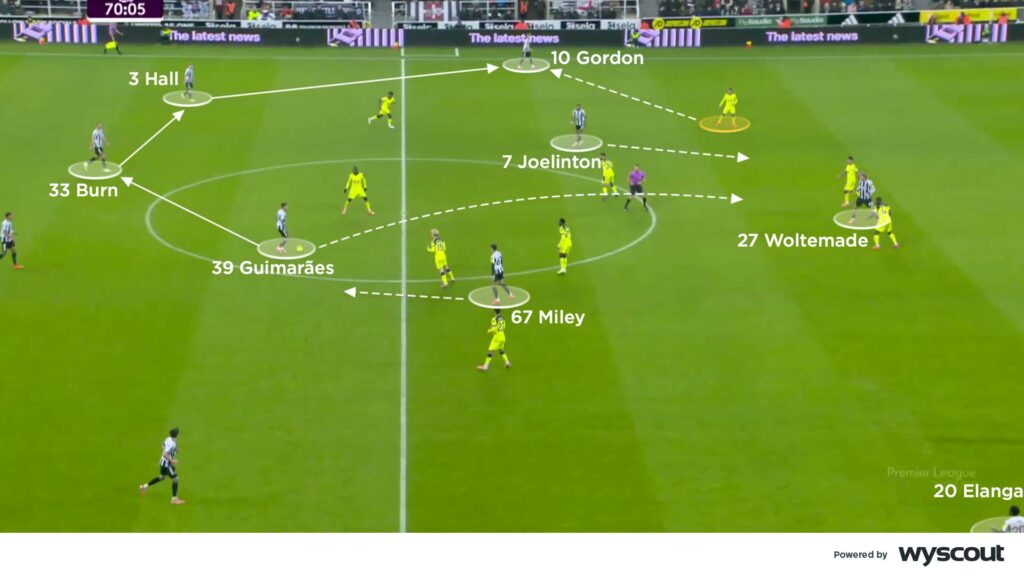
Two of Howe’s substitutes were heavily involved in putting the hosts ahead, with Guimarães – on for Tonali – converting Gordon’s cross. But Tottenham and Romero gave them a lesson in being clinical, scoring twice from just two attempts on target to take a point from St James’ Park after Gordon had restored Newcastle’s lead. The result kept Tottenham above Newcastle in the Premier League table on goal difference, in 11th against 13th place.
To learn more about football tactics and gain insights from coaches at the top of the game, visit CV Academy