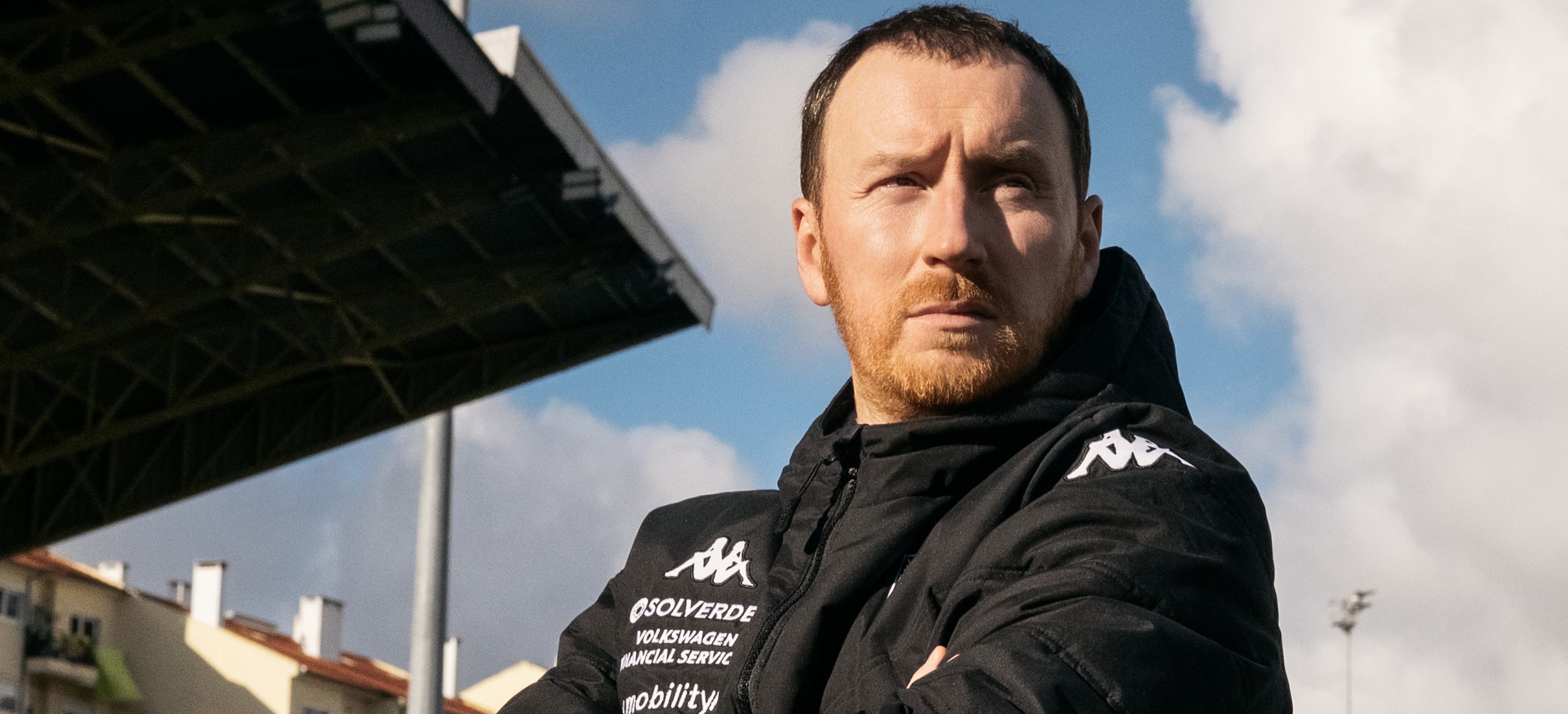
Ian Cathro
Estoril, 2024-2026; Saint-Étienne, 2026-
“Sooner or later, I’m going to leave Scotland.” That is what I told my parents during a surprise visit home.
“Where are you going to go, son?” they asked me. I didn’t know, but I was certain of one thing – I needed to leave my country to grow.
This was back in 2009, when I was working as a youth coach at Dundee United, the club from my hometown and one of the great traditional names in Scottish football. For a 22-year-old whose dream was to make a living from football, it might have seemed like an attractive job. But I was convinced that if I stayed there I would soon hit a ceiling. I needed to cross borders, discover new cultures and grow.
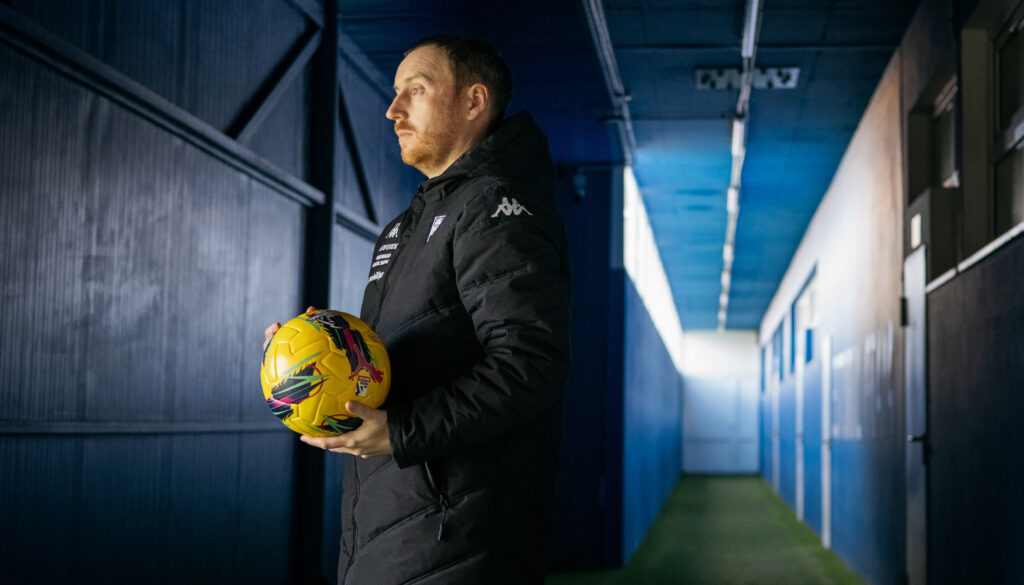
I wasn’t quite sure what I wanted to do with my life, but I was clear about what I didn’t want for my career. Not that I told that to my parents, of course.
Not long after that conversation, I received a call from a Portuguese number. It was Nuno Espírito Santo, who had been a fellow student on the UEFA B coaching course in Glasgow. Nuno was about to take charge of Rio Ave FC and wanted me to be his assistant at the Portuguese club.
The opportunity I’d been waiting for arrived just like that, out of the blue, with the sound of a phone ringing. Just as I’d imagined, that call would end up changing my life completely.
“I imagine that, in his eyes, I was just a young Scot who spent 20 hours a day thinking about coaching and training”
It wasn’t easy coming to Portugal without any knowledge of the language. During the first few weeks, while we were preparing for training sessions at Nuno’s house, I tried to memorise key football terms so I could use them with the players on the pitch the following day. The players’ generosity was also crucial to helping me settle in. They welcomed me with open arms, so it didn’t take me long to feel at home.
The professional chemistry between Nuno and me was exactly the same as it had been when we were classmates. When we first met, I knew nothing about his successful career as a goalkeeper. To me, he was simply a big Portuguese bloke. I imagine that, in his eyes, I was just a young Scot who spent 20 hours a day thinking about coaching and training.
At Rio Ave FC, everything seemed to fall naturally into place. In our first season together, 2012/13, we finished sixth in the Primeira Liga. The following campaign, we reached the finals of both the Portuguese Cup and the League Cup, and secured the club’s first-ever qualification for a continental competition, the Europa League.
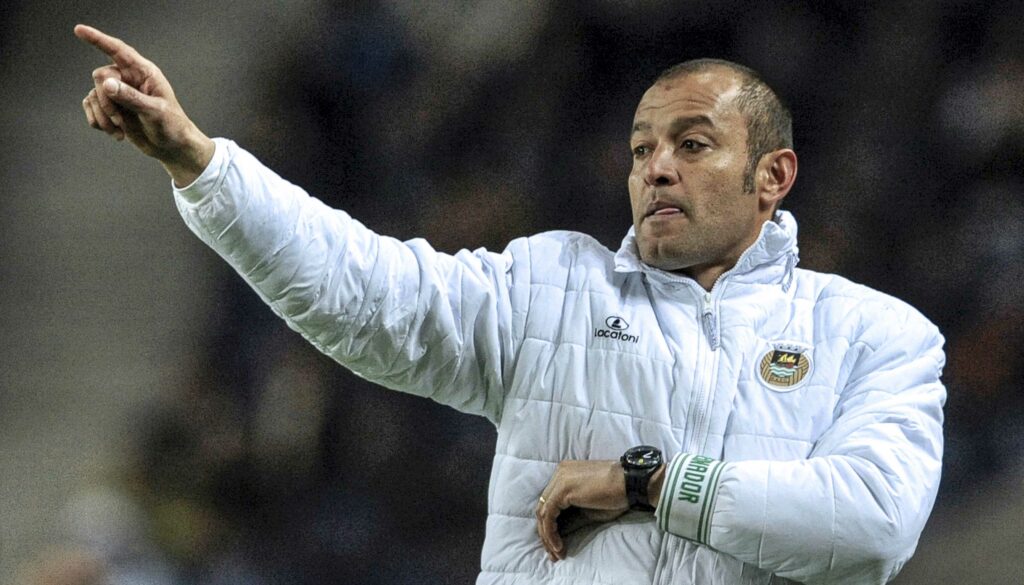
The stability that Nuno brought to Rio Ave caught a lot of people’s attention. You could really feel that the hard work was paying off. Then he received an offer from Valencia to become the club’s new manager.
I must admit the move scared me a bit. Football is football wherever you go, of course. But we were moving up two or three levels in one go. Valencia is a great club, with a history full of triumphs and brimming with players and managers who have been hugely important.
On top of all that came the demand for results, including the very clear — and very difficult — objective of qualifying for the Champions League. That level of internal and external pressure was new to me. But we managed it, with Nuno always leading the decision-making, understanding the demands of our new environment, and leaving our mark.
“The opportunity to work at Newcastle was incredibly valuable for my development”
At Valencia, we opted for something different from the usual style of play associated with La Liga.
Our team played a faster, more aggressive style of football that involved more transitions. We weren’t interested in tiki-taka just to see if we could advance 50 metres down the pitch in two minutes. Our aim was to win the ball back and, in an organised manner, attack the opposition straight away.
Gradually, we developed in other areas of the game as well and became a very difficult team to beat. We finished the league in fourth place, achieving our goal of getting the club back into the Champions League.
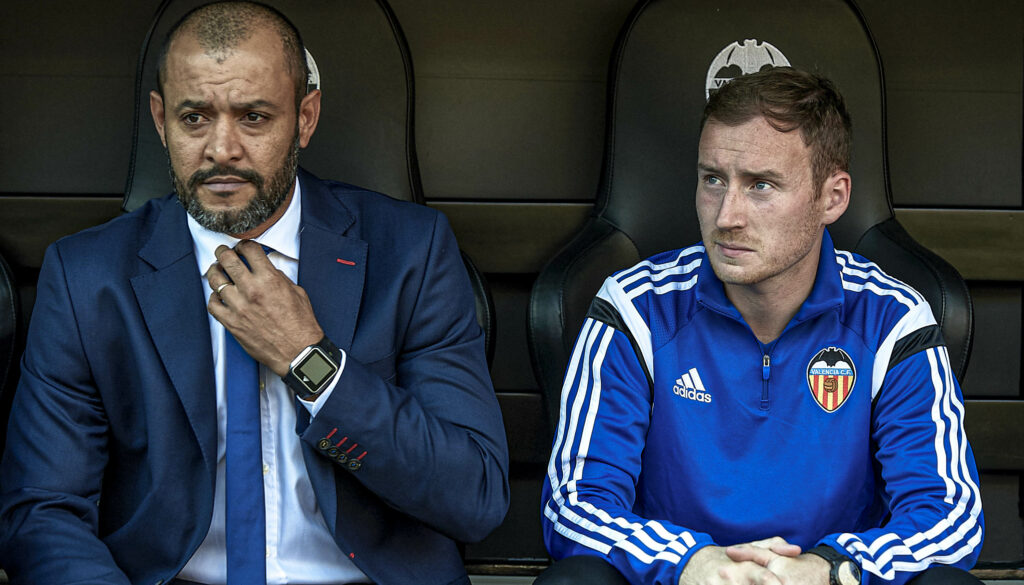
At the end of the 2014/15 season, however, I decided to step down from my role as Nuno’s assistant at Valencia. For family reasons, I needed to be closer to home. A few months later, I reached an agreement with Newcastle United to become Steve McClaren’s assistant.
My decision to leave Valencia was largely driven by those personal circumstances. Professionally, though, I never saw it as a step backwards to leave a club preparing to play in the UEFA Champions League for one that had just been fighting to avoid relegation from the Premier League. Newcastle is a huge club with an incredible fanbase, and working in the Premier League can never be considered a step backwards, regardless of where you’ve come from.
The opportunity to work at Newcastle was incredibly valuable for my development as a coach. It is a club with huge expectations and extraordinary support from its fans. During my time there, I had the privilege of working alongside two outstanding managers. After Steve McClaren left, the board appointed Rafa Benítez.
“I shouldn’t have returned to Scotland”
I had many long conversations about football with Rafa. He enjoyed talking about the experiences he had lived through, and I loved listening to them. It’s a privilege to be able to have that kind of interaction with someone with such a wealth of experience in his profession. During our time together, I also learned a great deal from him about a team’s defensive organisation.
As we all know, life is made up of decisions. In December 2016, after leaving Newcastle, I chose Hearts in Scotland as my next professional destination. In theory, it was my first opportunity as a head coach. However, I don’t see it that way, as it turned out to be the wrong decision.
Scottish football is very peculiar. For the very same reasons that led me to tell my parents years earlier that I wanted to leave, I shouldn’t have returned to Scotland. I am referring to the mindset of the people who run football in my country, and the working conditions they offer to professionals in the game.
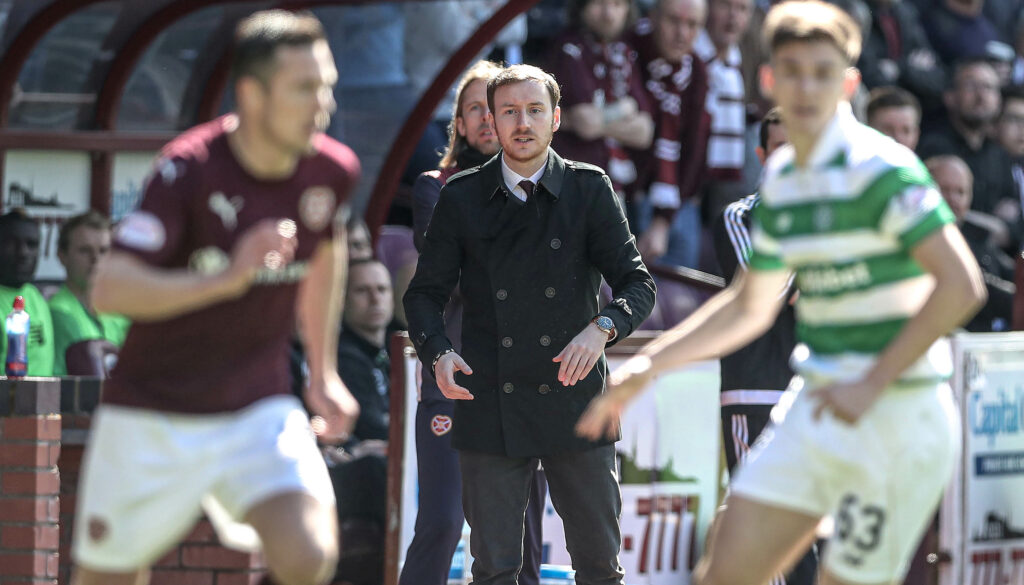
In any case, the seven months I spent at Hearts helped prepare me for whatever might happen in my professional career. You have to be grateful when an experience shows you what you don’t want for yourself.
I went almost a year without joining another club, but I needed that time to reorganise my thoughts. I even wrote a book, which was never published, entitled My Game, so I could review certain ideas and test some of my long-held beliefs. Writing is a form of therapy that I practise constantly.
Again, it was Nuno Espírito Santo who brought me back into football. In 2018 he took charge of Wolverhampton Wanderers and wanted us to work together again. Had it been anyone else, I might not have accepted the invitation to return as an assistant coach. As it was him, though, it was impossible to say no.
“Whatever the system, we always took to the pitch with a team that was aggressive”
The partnership with Nuno proved fruitful again, and the decision to join him at Wolverhampton turned out to be the right one for my career.
I spent three years at the club, joining shortly after Nuno had guided Wolves to the Championship title. Then, I was able to witness first-hand how the team established itself among the Premier League’s top seven. Together, we helped take Wolves back into Europe, qualifying for the Europa League for the first time in 39 years.
After Nuno left Wolves in 2021, I also joined him at his next two clubs. At Tottenham Hotspur, our spell lasted just four months. At Al-Ittihad in Saudi Arabia, however, we won the Saudi Pro League title in 2022/23 and lifted the Saudi Super Cup in 2023.

Finally, in 2024, the opportunity arose for me to truly become a head coach. Estoril Praia presented me with a bold project. They were willing to take risks in order to play a different kind of football than is typically seen in the Portuguese league.
The club was tired of reaching March and April every season still looking over its shoulder. The proposal matched exactly what I was looking for. They were a well-structured club with a clear idea of what they wanted to achieve and a vision shared by everyone in charge of the organisation.
Our team could play with a back three or a back four. We could line up with two, three or even five midfielders, and we could attack in different ways. Whatever the system, we always took to the pitch with a team that was aggressive, organised and prepared to play without fear.
“The only thing I asked of my players was courage, and they responded in every single game”
Because the objective from the very beginning was to play without fear, without constantly thinking about survival. We wanted to play proactive football, with courage, with the confidence to take risks and without being afraid of what might go wrong. At the same time, we wanted to help build a different club culture – one in which everyone shared that same sense of bravery: the coaching staff, the board, the owners and the supporters.
That was my vision for a different Estoril, the challenge I set myself. An Estoril without fear, where the anxiety and pressure of simply avoiding relegation no longer existed, allowing us instead to keep growing and aim for bigger objectives. I believe we achieved that.
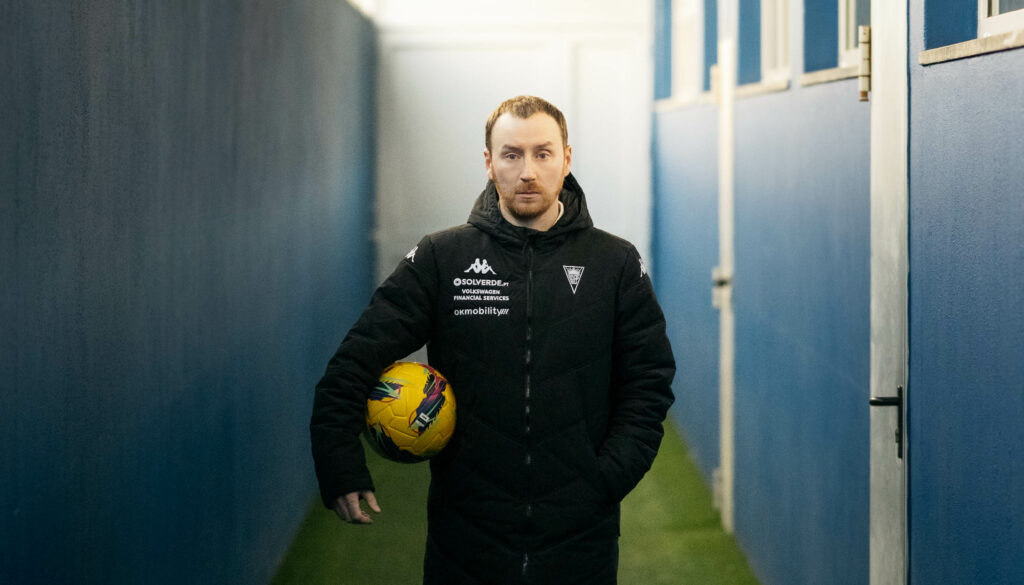
Playing the way we did wasn’t easy. But the only thing I asked of my players was courage, and they responded in every single game. That commitment is perhaps what makes me most proud of my work at Estoril. Far more than hearing people say we deserved many more points, that we played football worthy of European qualification, or seeing the squad’s market value rise. Kévin Boma, for example, has just been sold for a club record fee.
It is a nice feeling to know you have left behind a job well done. Now a great opportunity has arisen and all my attention is focused on Saint-Étienne – a historic club. I leave with enormous gratitude towards Estoril, towards the people and the fans, and in particular towards the players.

Ian Cathro