
FA CUP FINAL, MAY 16 2026
Semenyo (72)
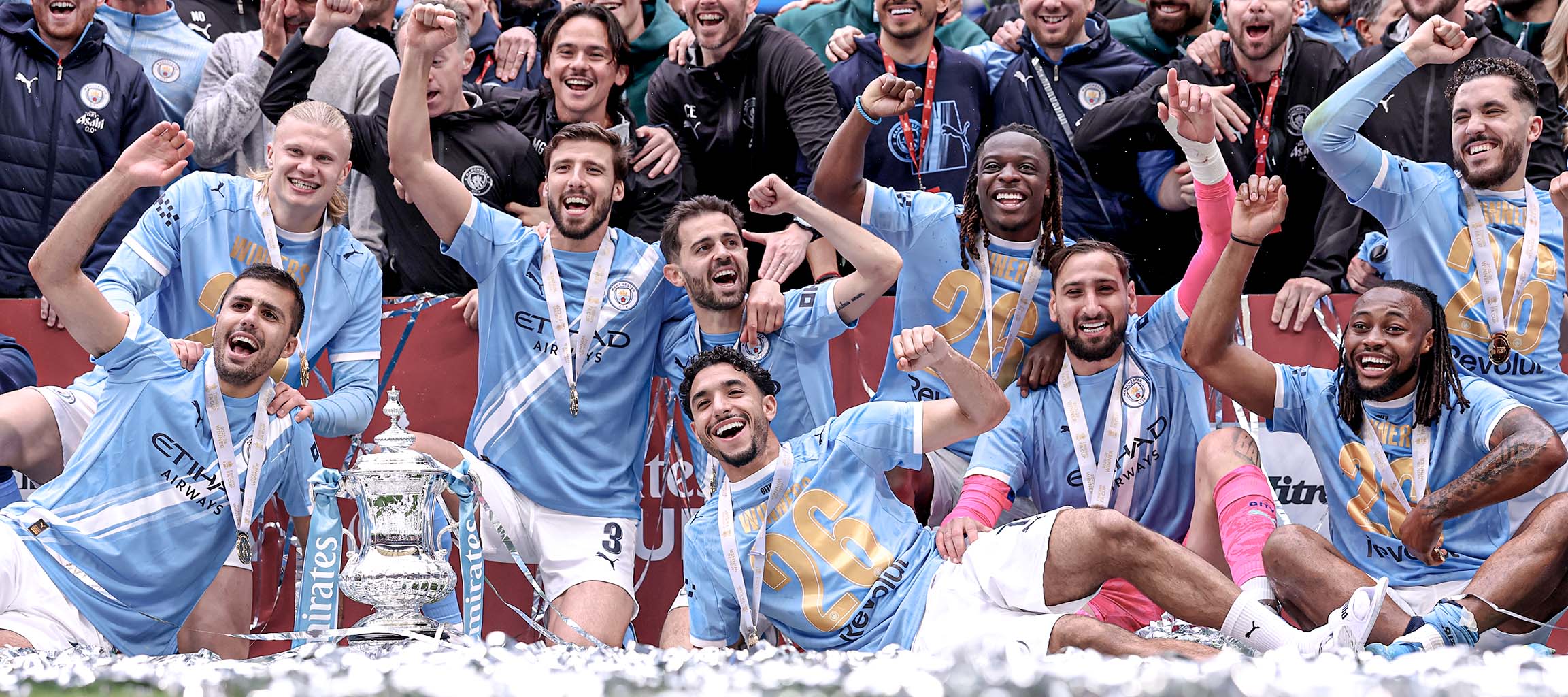
Antoine Semenyo’s skilful flicked finished was enough to see off Chelsea and seal an eighth FA Cup success for Manchester City. It also meant that City have completed a domestic cup double this season, with the Premier League title still a possibility – albeit relying on Arsenal to unexpectedly stumble with the finish line in sight. Chelsea, on the other hand, became the second club after Leicester City (between 1949 and 1969) to record four successive FA Cup final defeats, following losses in the 2020, 2021 and 2022 finals – three of them under different managers (Frank Lampard, Thomas Tuchel and now Calum McFarlane).
How the managers saw it
“Last season against Crystal Palace and two seasons ago against [Manchester] United we were better than today, but these types of games, the margins are so minimal,” said Pep Guardiola. “Since he arrived, Antoine has had a sense of goal. He can play in three positions and in the last game he had an incredible finish. It was massive. It was a little swap, normally he crosses to Erling [Haaland], but he has that sense and it was a really good goal.”
“Both teams had moments of control,” said McFarlane. “Both teams had momentum at different times… I thought we had momentum at the end of the first half, I thought we had momentum at the start of the second half. If you get that moment of quality and you get yourself in front, it makes the game very different, and we didn’t manage to do that.”
Below, our UEFA-licensed coaches analyse the key tactical points from the 2026 FA Cup final…
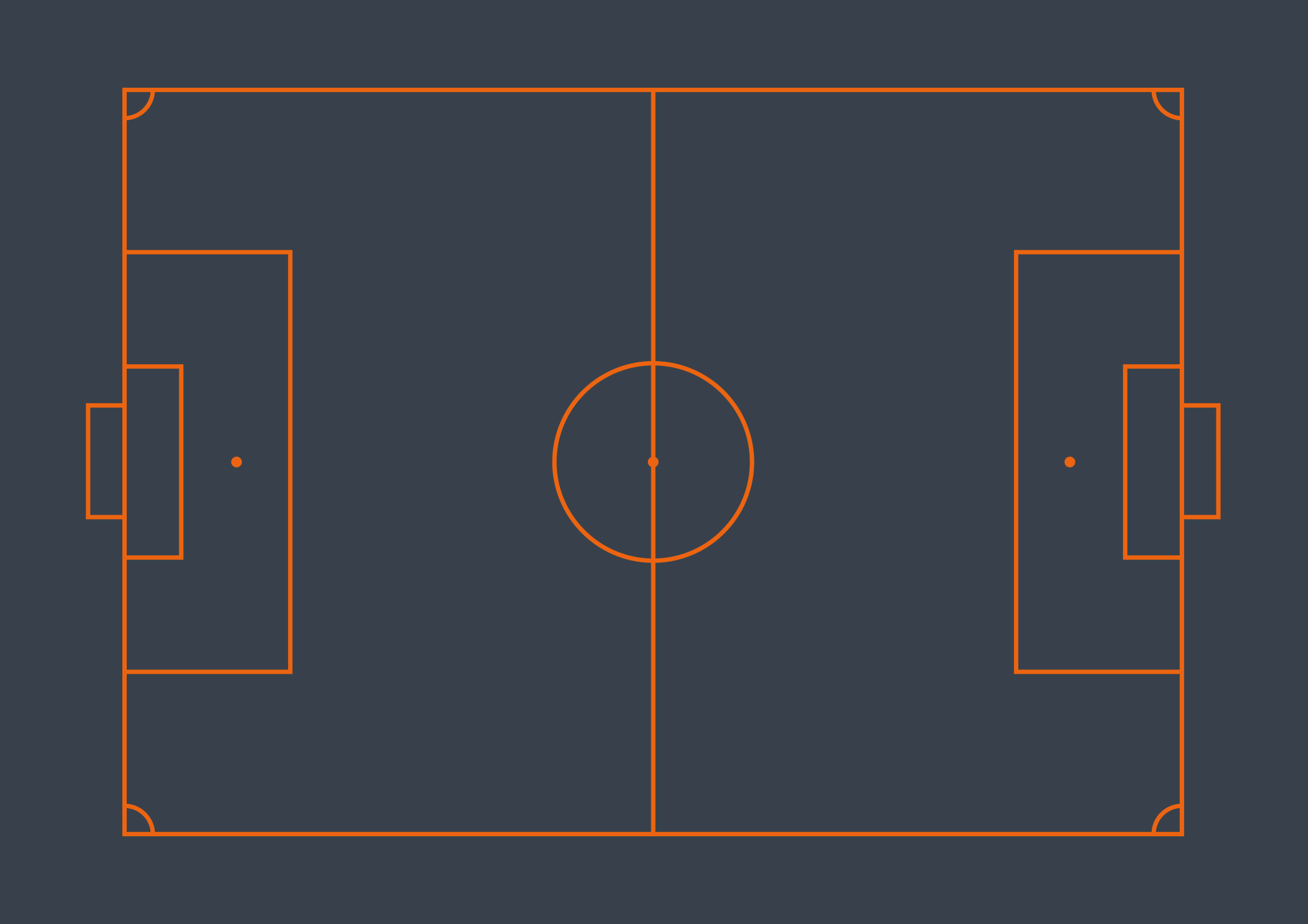 121629325242782010127455334216201179
6/1
SHOTS / ON TARGET
8/4
42%
POSSESSION
58%
21
ATTACKS INTO AREA
26
0.49
EXPECTED GOALS (XG)
1.41
City tempt Chelsea’s centre-backs to jump out
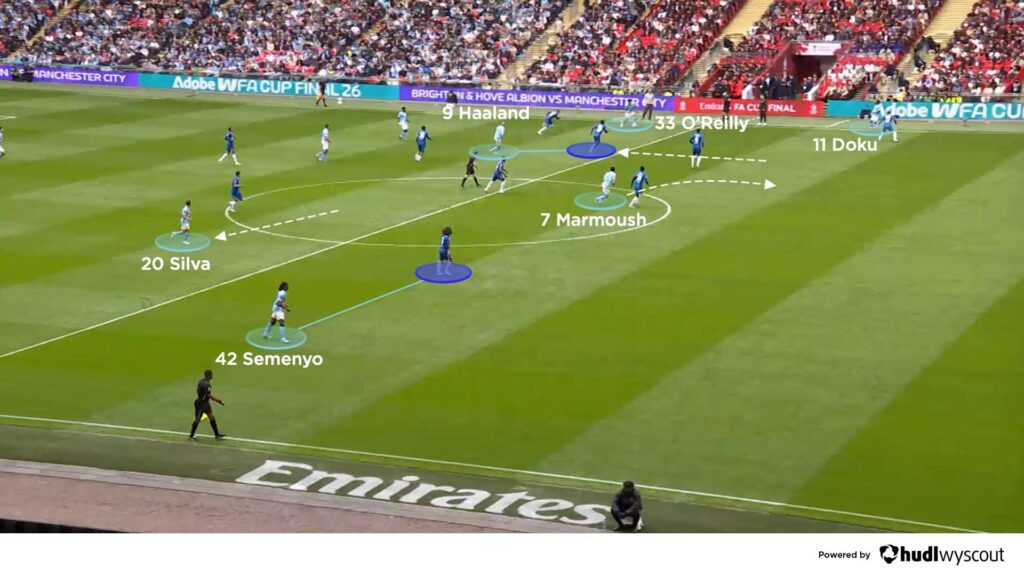
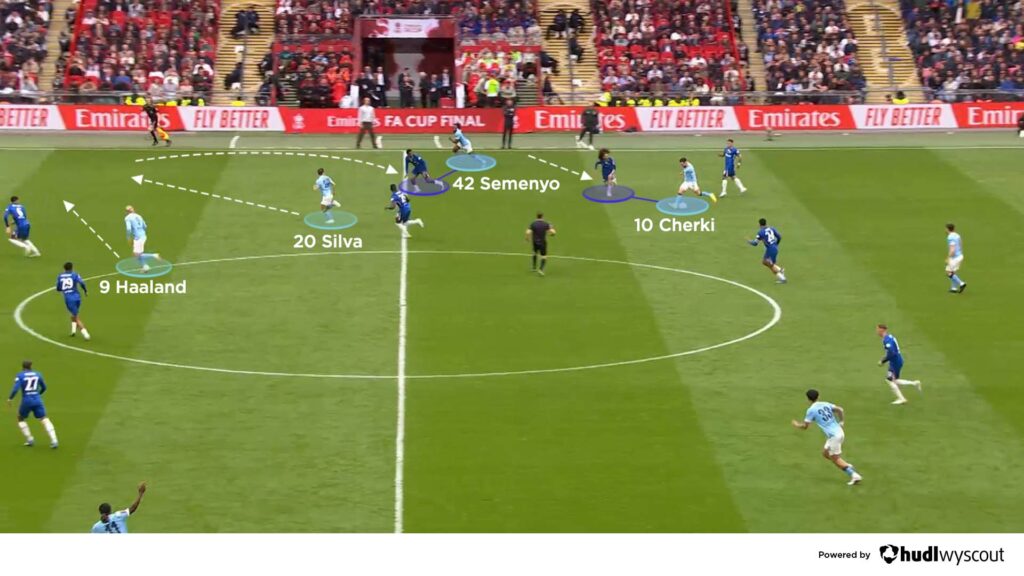
At times when City had the ball in the first half, Haaland dropped into midfield, looking to either overload and receive, or drag one of Chelsea’s centre-backs out with him. With Jérémy Doku and Nico O’Reilly fluidly working around one another, City’s left side was the most threatening in the first half. This was especially the case when they targeted the space created by Haaland dragging out Wesley Fofana, with Omar Marmoush making runs across the Chelsea back line (below). Haaland’s dropping also gave Bernardo Silva more licence to roam and receive, to then link with Semenyo, who looked to attack Marc Cucurella in 1v1 situations.
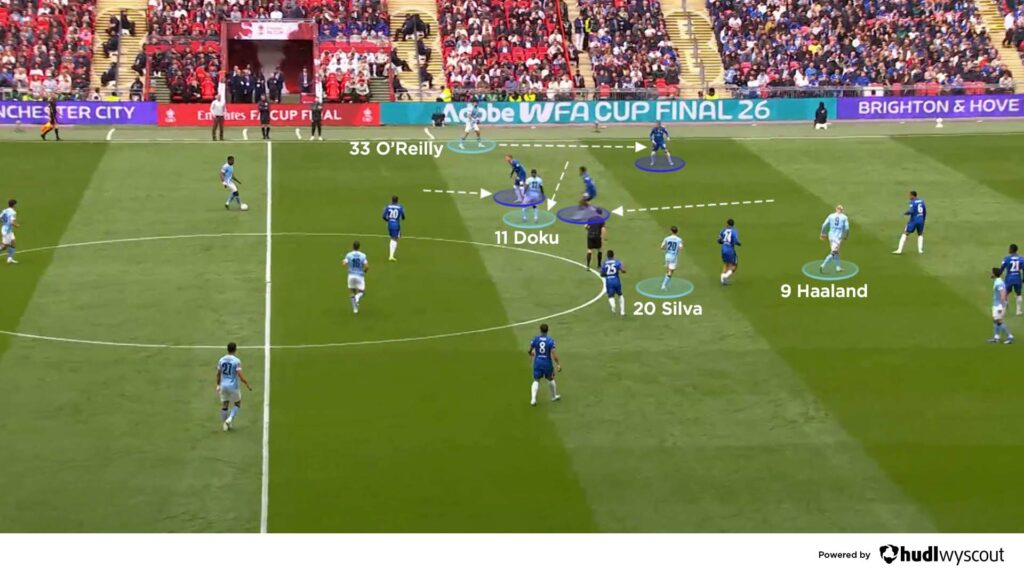
Whenever Haaland remained high and central, City’s left side rotated more, with Silva between Chelsea’s lines. Fofana continued to jump out, while Cole Palmer worked back well to help Malo Gusto defend and deny City a wide overload (below). With the exception of one Haaland attempt after Marc Guehi’s superb penetrating pass beyond Fofana, City offered little in terms of goal threat, despite initially dominating possession.
Guardiola added Rayan Cherki to City’s attack for the second half, in place of Marmoush. Cherki frequently dropped out to City’s right to receive between Semenyo and Matheus Nunes, which forced Cucurella to jump more – although Chelsea generally pressed much higher and more regularly in the second half. As a result, Chelsea’s two wide centre-backs had to swing around and support any wide press with more aggressive positioning. From here, City had purposeful forward runs inside and beyond the advancing Chelsea centre-backs (below). The only goal of the game came from exploiting this situation. Indeed, City’s second-half attacks were much more transitional and less co-ordinated than the first half, playing to Cherki’s strengths.
Colwill’s passing
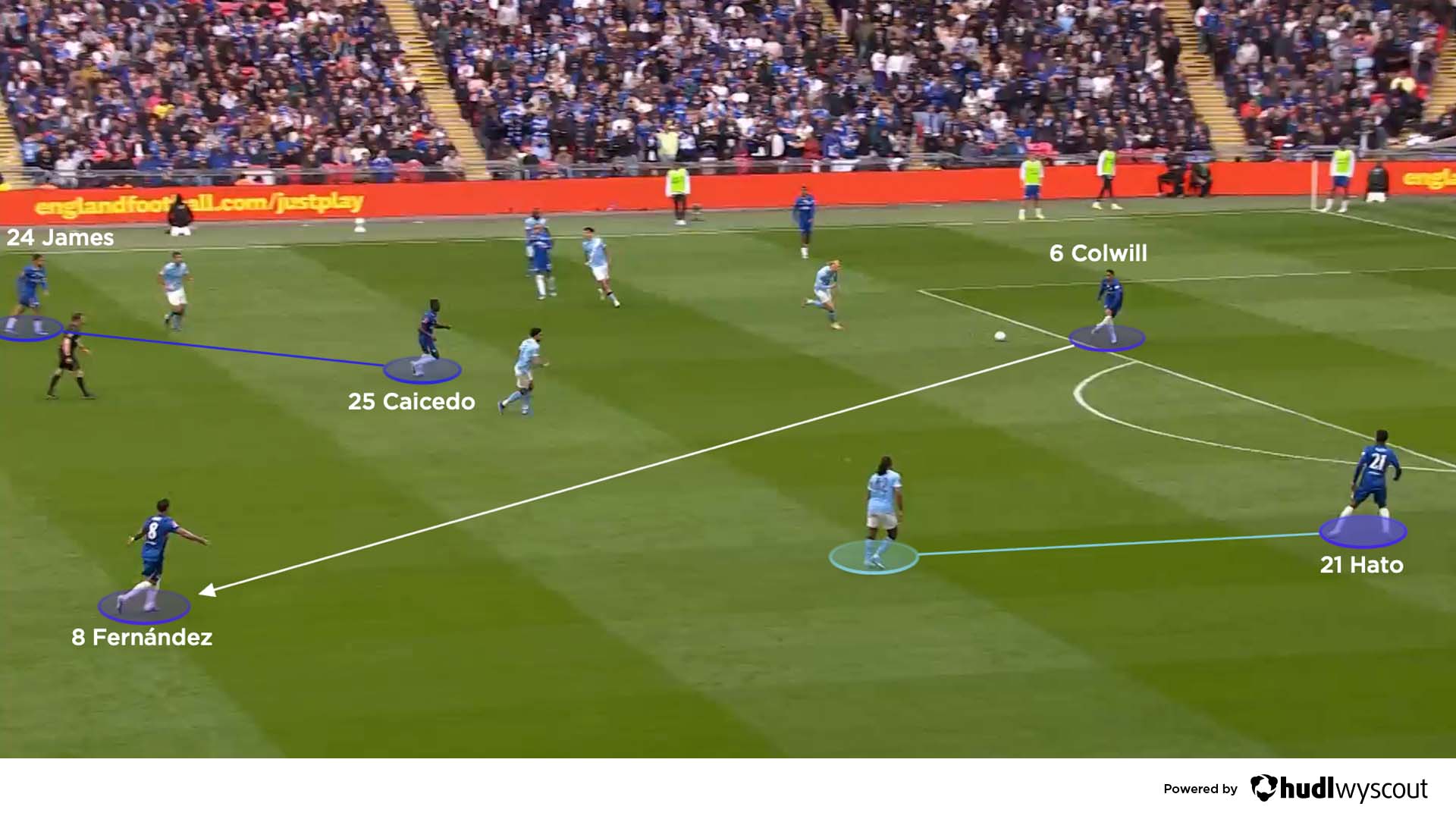
From Chelsea’s 3-4-2-1 in-possession structure, middle centre-back Colwill played forward superbly, regularly breaking the first line of City’s 4-2-4 defensive shape. Passing with his left foot, he mostly broke lines on the inside shoulder of Semenyo, who was often too keen to jump out towards Jorrel Hato (below). Finding the double pivot, or when available Enzo Fernández further up, allowed Chelsea to have spells on the ball after City’s early dominance of possession – all stemming from Colwill’s calm but penetrative forward passing.
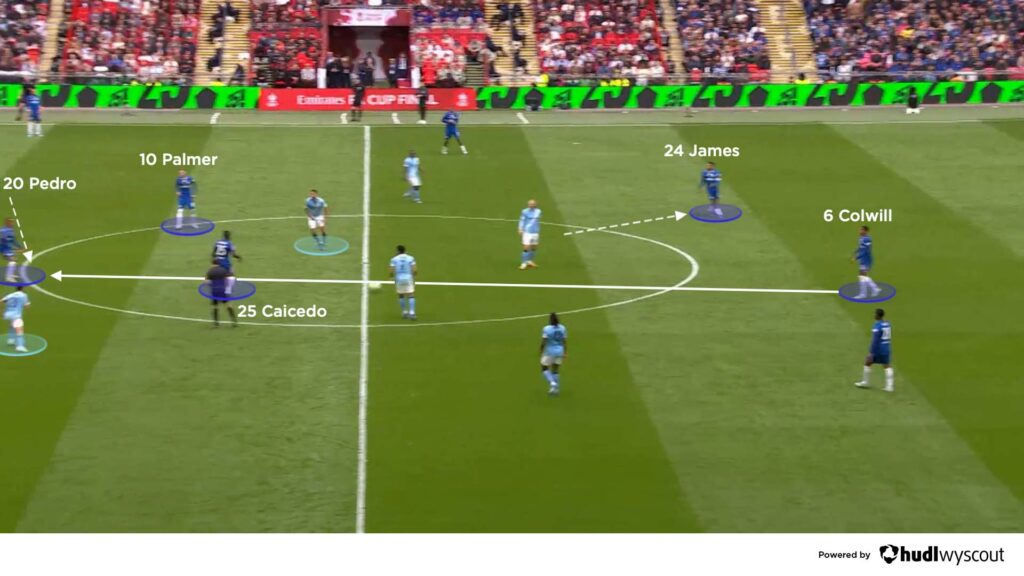
Chelsea’s possession forced City into a more withdrawn block, as they ended the first half looking the stronger side. Colwill’s passing became slightly more advanced and continued to break lines, with those ahead rotating to give more passing options. One of the double pivot, Reece James and Moisés Caicedo, would drop out, giving extra protection and extra passing options to the side of Colwill. This movement also created space for João Pedro to drop and link (below), supporting Chelsea’s midfield, who were able to receive straight through and overload Rodri and Silva.
Chelsea midfielders move wide
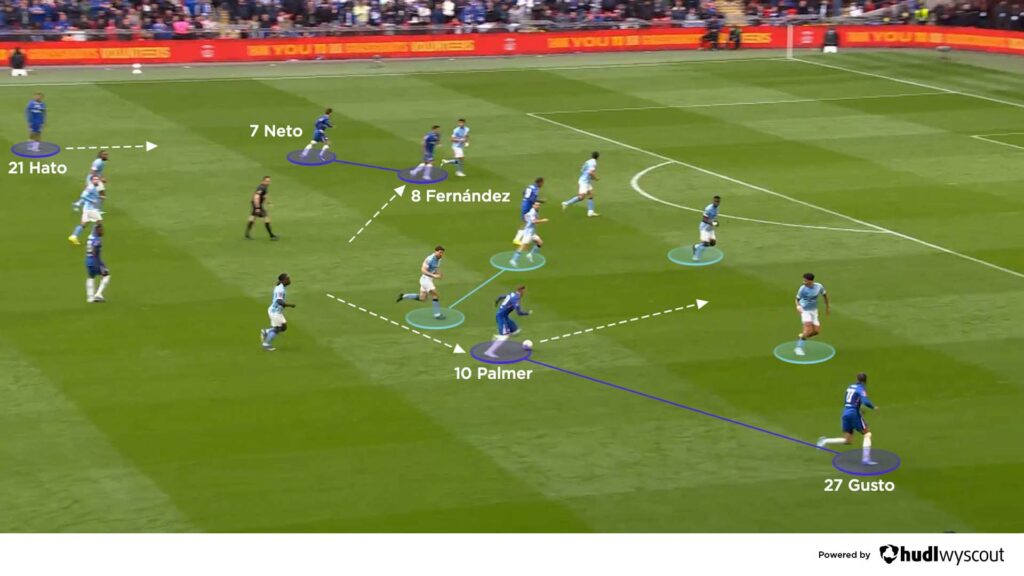
To defend against Colwill’s central passing, Rodri and Silva remained compact and close, centrally, but also slightly deeper to protect ahead of the back line. Cherki as the number 10 defended deeper than Haaland, forming a staggered pair within the central spaces. Chelsea responded with wider movements from Fernández and Palmer, giving them easy access to progress into City’s half, with the wing-backs also advancing to support as attacking pairs on either side (below). But despite these final-third entries, Chelsea lacked numbers to attack crosses or benefit from their wide combinations, with those on the far side not narrowing early enough to test City’s back line.
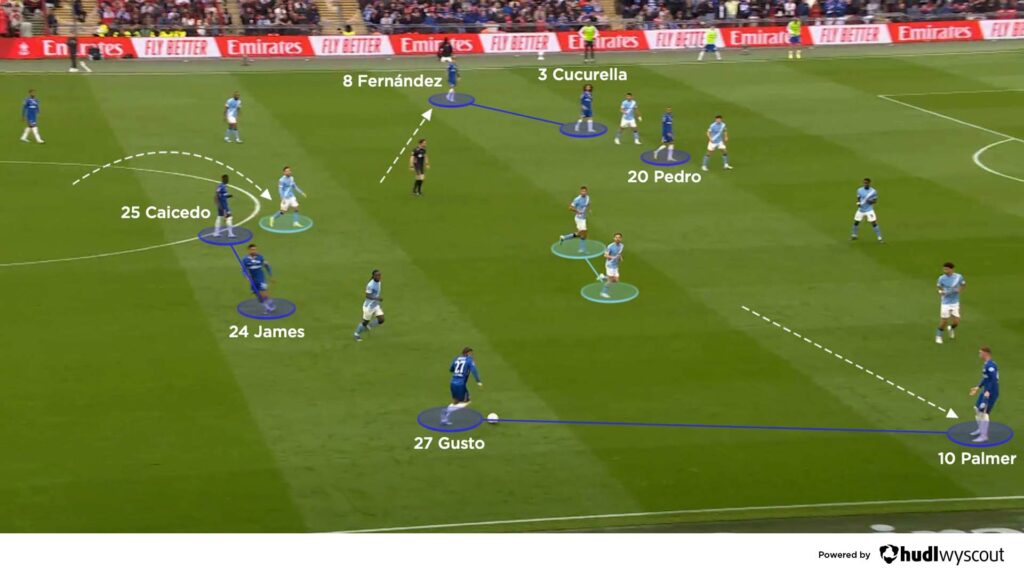
Chelsea’s aggressive duelling in the centre also helped them to find their widening midfielders. Caicedo and James did well to stop City breaking out more often, and quickly served their forward-moving attackers. Palmer and Fernández continued to operate on the outside shoulder of City’s double pivot, with Palmer carrying the ball forward well, targeting the gap between City’s centre-back and full-back on his side. McFarlane added Pedro Neto for Cucurella on the left, while centre-back Hato occasionally advanced on this side. But despite Chelsea’s improved attacking efforts in the second half, working the ball into potentially dangerous positions from their wide advances, they couldn’t break the City defence.
Instead, Semenyo’s clever finish was enough to give Guardiola his 20th piece of silverware in 10 years of managing City. That tally includes the Community Shield, which City will once again contest, regardless of whether they manage to overhaul Arsenal in the last two games of the Premier League season. Chelsea, meanwhile, have confirmed Xabi Alonso as their new manager and the man tasked with making them winners once again.
To learn more about football tactics and gain insights from coaches at the top of the game, visit Coaches’ Voice Academy