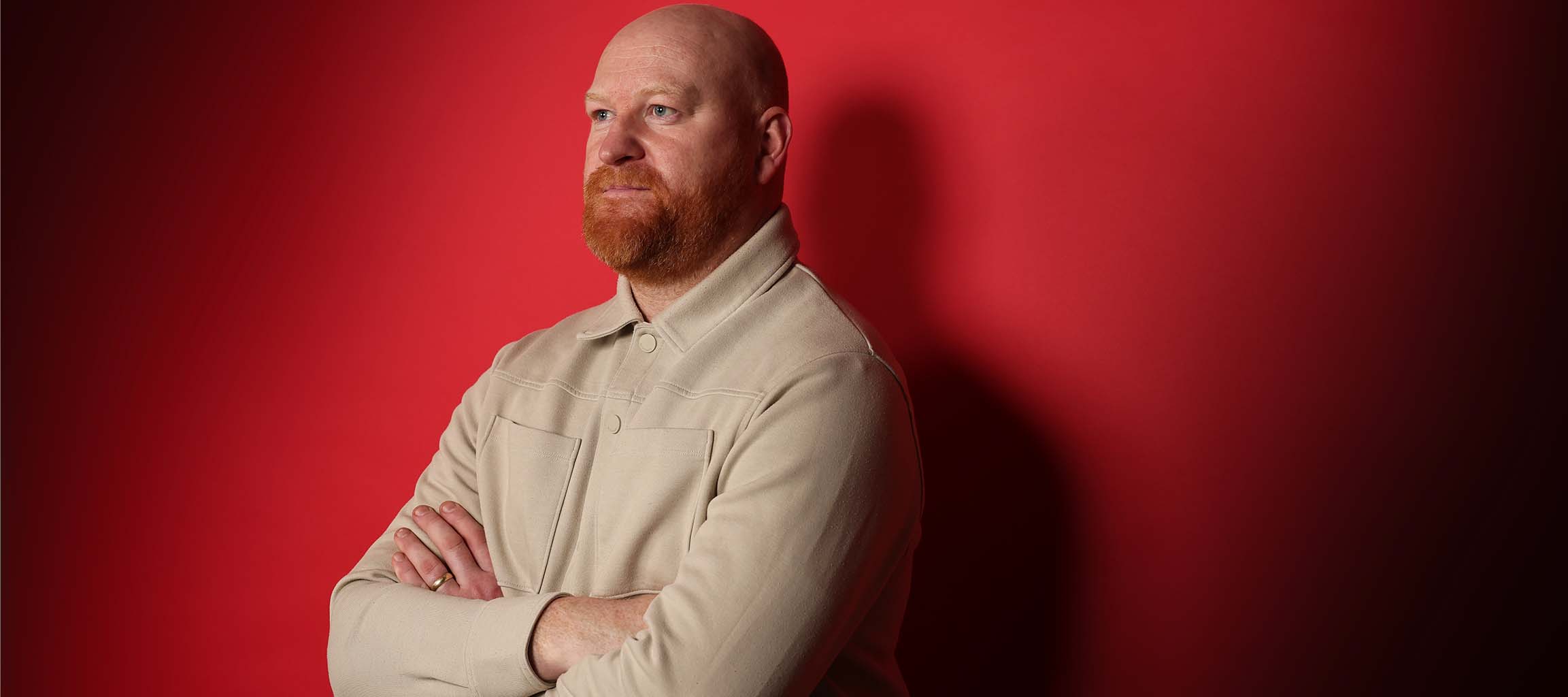
Andy Whing
Brackley Town, 2026
“Andy should stick to school, because he’s not going to make a professional footballer.”
I would love to remember the name of the guy at Notts County who said this to my mum. I was 16 and on trial there, having been released by Coventry City after four years.
At that time, I thought I was nailed on for a scholarship at Coventry, so being released hit me really hard. But I went on exit trials, including at Notts County, where I scored two goals and played really well. I was thinking I’d done enough. Then that bloke told my mum I wasn’t going to make it.
Still, I persevered. A couple of weeks later I was on trial at Colchester when I got a phone call from Coventry: “We’ve made a mistake, would you come back? We’ll offer you a two-year scholarship.” I was determined not to let that second chance go.
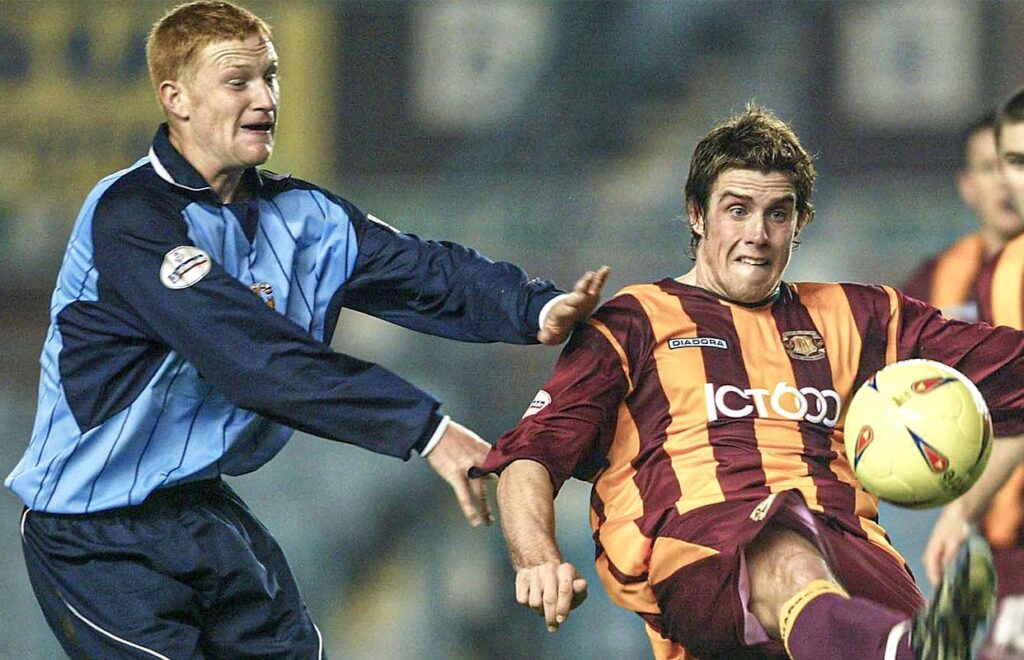
Getting a second chance has stuck with me right up to this day. Like when I lost my job at Barrow at the end of 2025, I had a determination to prove people wrong. That is something I have done a few times so far in my career.
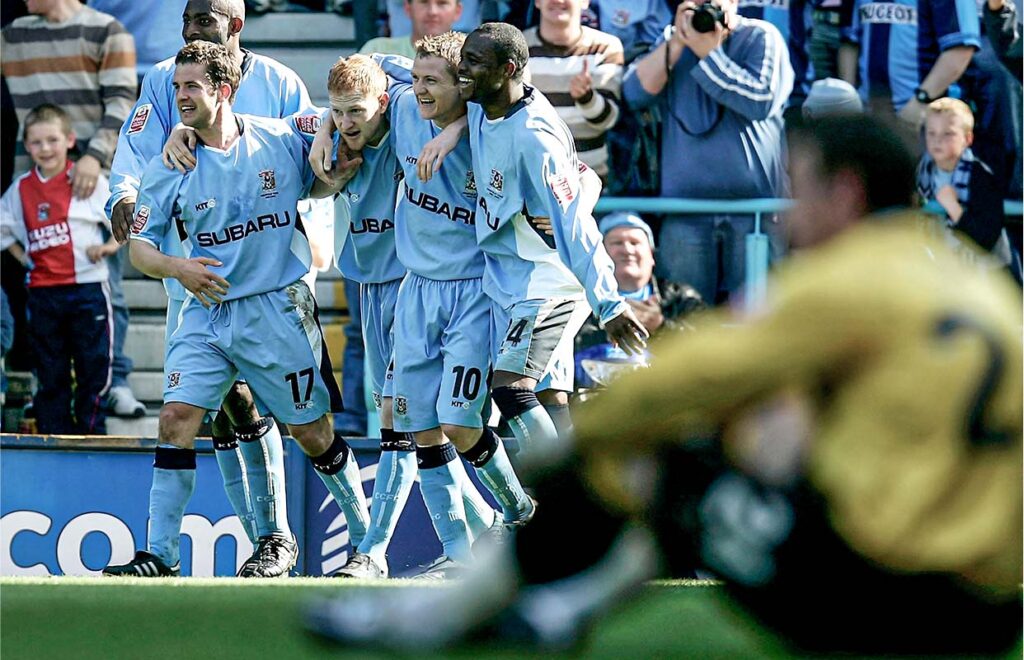
I eventually made it into the first team at Coventry and was lucky to have a piece of history, scoring the last ever goal at Highfield Road. Then I moved on to Brighton and was Player of the Year there. But I was released by Brighton too, so again I had to prove myself.
I wasn’t the best player at any of the clubs I played for, but it was always said that I was determined and worked really hard. I seemed to have a sort of cult status at every club, especially Oxford United. They didn’t really take to me at the start, when I had a few injuries to overcome, but I ended up being named Player of the Season.
“It was costing me a fortune and I was on nowhere near the money I had been earning in my playing days”
Towards the end of my playing days, my body reached a point where I could barely train. I was taking tablets to keep playing. As soon as the whistle went I was absolutely fine, though. Maybe it was a mental thing, maybe it was the tablets. Whatever it was, if it was up to me I would never have quit.
To be fair to Oxford’s manager at the time, Michael Appleton took it out of my hands. “I know you are desperate to carry on,” he said to me. “But your body’s giving up on you.” I knew that, but I didn’t want to admit it to myself.
Michael had retired himself at 26, so I respected him because of what he had gone through. He said: “Because of how you are around the group, how you’ve been at the football club, we really want to keep you around.”
I wasn’t searching for coaching and kind of fell into it, taking the Under-18s job at Oxford. My office was next door to the manager’s, and my mates were the people I had played with the year before. So I enjoyed still being in and around it all.
I was in that role for about two and a half years, but as much as I enjoyed it, it was tough. I had just had a child, was working longer hours and travelling from my home in Birmingham. It was costing me a fortune, and I was on nowhere near the money I had been earning in my playing days.
I also knew that I wanted to get into senior football, so I applied for a few non-league manager roles at step three, two and the National League. Being only 33 and with no management experience, however, clubs wouldn’t even speak to me.
“I was drinking and going out more than I should have been, and was a little bit lost, so I went to the PFA for counselling”
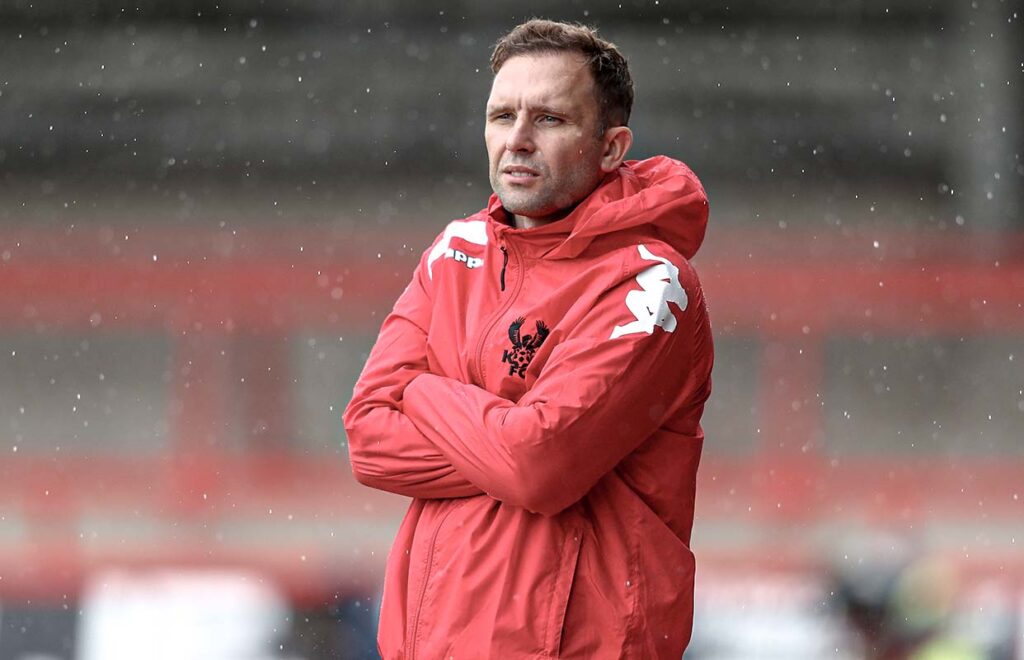
Instead, I went to Kidderminster Harriers with John Eustace (below), who I played with at Coventry. It was an Under-23s/college role, which turned out to be not very good at all. One day I would have one player, the next day I might have 10, but at least I was close to the first-team environment.
I learned a lot from John and his assistant Matt Gardiner, who are now doing really well at Derby County. But I wasn’t settled, so when I got the opportunity to go back to Coventry City with their 18s, I jumped at the chance.
It felt like I was going home, coming full circle. I guess I thought they would roll the red carpet out for me, and I would move through the ranks – maybe even become first-team manager one day.
That proved to be far from the truth. I was there for about 18 months and didn’t really enjoy it. I practically lived at the training ground for a couple of years, but there was no connection between the academy and the first team.
Despite that, I got my head down and thought if I did a great job then I would get opportunities to progress. But it was an environment I didn’t agree with, where you’d have to step on toes to get on. It was my first experience of politics in football, and I didn’t know how to react to it. I found it really difficult.
I was still trying to navigate the end of my playing days and find a new purpose. Financially I was just about keeping my head above water, but it was all getting on top of me and was tough at that moment. I was drinking and going out more than I should have been, and was a little bit lost. So I went to the PFA for counselling.
“There I was, working in a warehouse with my mates, actually feeling pretty happy for the first time in four or five years”
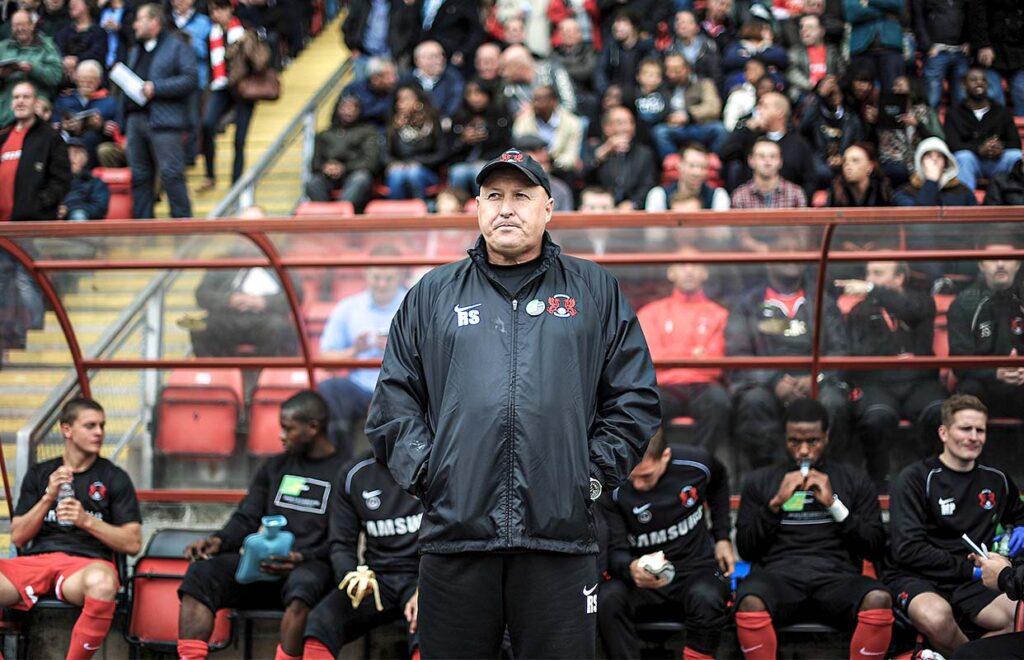
I also made a decision to leave Coventry and go with Russell Slade (below) to Hereford as assistant manager. I had played for Russell at Leyton Orient and really liked him. It was part-time, so I also had an office-based job, co-ordinating coaching visits to schools.
Every day I would park up at the office job, see the building and think: “This isn’t for me.” I handed my notice in after a month, apologising because I felt like I was letting them down. And within a few months Hereford let me go as assistant – before they had even let the manager go, which never happens in football. I was like: “Can you not pay me until the end of the month? I am really struggling.” No, was the answer.
But I got lucky. My mate owned a sofa business in Tamworth. When I had been at Oxford, instead of having a day off, I would go and work at his company, deliver a sofa and get £80 or so. When Hereford fell apart, he said: “Come and work for us.” So there I was, working in a warehouse with my mates, actually feeling pretty happy for the first time in four or five years.
At the same time I was doing some coaching at Birmingham City University in the background, without really knowing what I was going to do longer term. Next, the Covid pandemic hit, when I got a call from a contact: “Do you want the Banbury job?”
I wasn’t thinking about football management at that time, and was just going day to day. Banbury was 45 minutes down the road, part-time, and I decided to give it a go. I was still working in the warehouse, still working for Birmingham City Uni, and was now manager of Banbury. For two and a half years, I kept those three jobs.
At Banbury, our budget was the eighth highest in the league – the Southern Football League Premier Division Central. If we did things the same as everyone else, we were probably going to finish around eighth. So I thought: “Why don’t we do something completely different?”
“I looked for other ways we could be more professional, like nutrition”
We got a head of recruitment in, because I was coaching on Tuesday and Thursday evenings and couldn’t get to games. The idea was to recruit young, dynamic, hungry players. They wouldn’t have jobs, so they could go to the gym during the day and focus on football. They would be ambitious players who wanted to get into the EFL, rather than older, journeyman types, who had been to eight or nine clubs, and had to work a full day before playing in the evening.
I looked for other ways we could be more professional, like nutrition. I took my own slow cooker to training on a Thursday evening, because I know what players can be like – straight to the garage after training, for a Lucozade, packet of crisps and a Boost. Instead, I put beans in the slow cooker, made some toast, and would buy cereals and things like that. Before games, we went to a Premier Inn round the corner from the ground for a meal. It didn’t cost the club much, because we even used to take our own sauce!
We won the league with 102 points, 23 clear of the runners-up, getting promoted to the National League North for the first time in the club’s history. The following season we stayed up, which was the club’s highest-ever finish in the league pyramid.
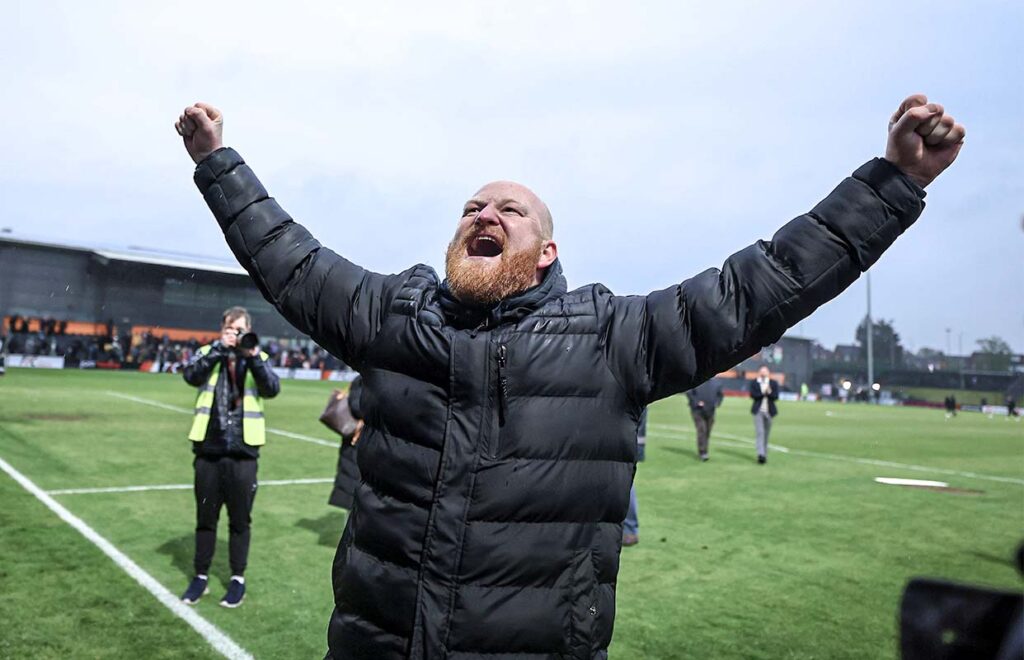
Then the club got a new chairman and it felt like my time there had run its course. The ambition to keep going had stopped, like: ‘We’ve made it, we are here now.’ You can’t do that in football. If you stand still, you are going to get relegated.
So it was the right time for me to go, even if I didn’t actually have anywhere to go next. It was a gamble on my part, but I was still working with the sofa company and Birmingham City Uni, so I had that to fall back on.
It was summer 2023 when I got a call from Darryl Eales, who had been chairman at Oxford when I retired and was now in charge of Solihull Moors in the National League. He asked if I would take on the Solihull job, which as a local lad was a dream.
“When I got home, all my emotions came out again. I shed a few tears”
I was probably the lowest-paid manager in the league, but I didn’t care about the money. I was a full-time manager, settled with my family, doing one job, and had a purpose. Football management had become a career path.
One of my favourite games as Solihull manager was the playoff semi final where we beat Barnet away 4-0. Tactically, we got it spot on. We also got to the FA Trophy final at Wembley in that 2023/24 season.
To prepare for those finals we changed the training ground to the same dimensions as Wembley, doing everything we could to get those one percenters. The playoff final was up first. After a 2-2 draw with Bromley it all came down to penalty kicks, which we lost 4-3.
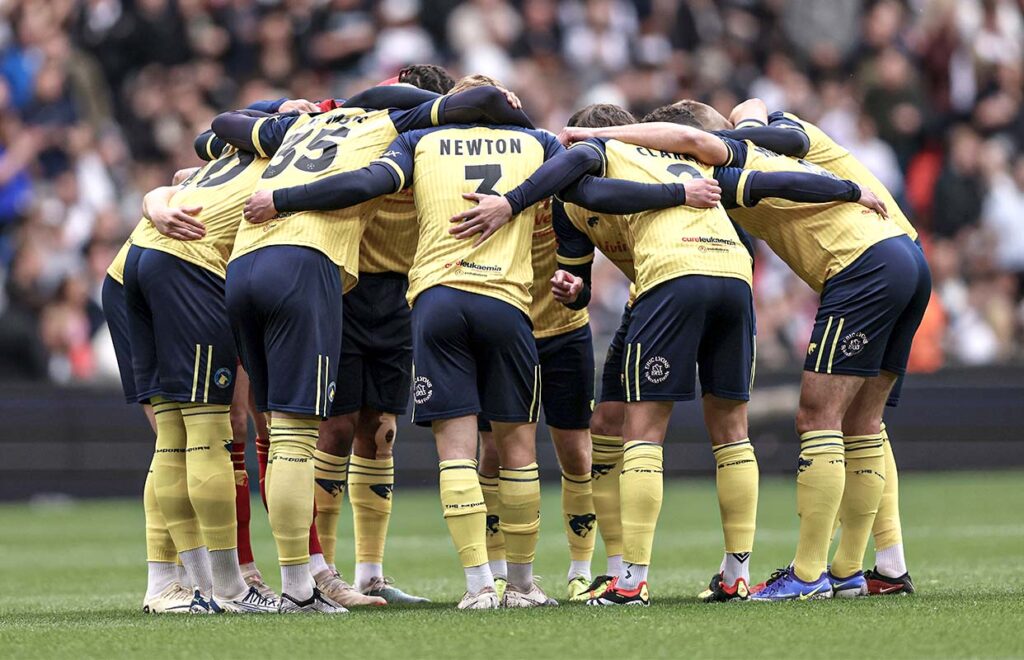
I was devastated for all the people at the club who had worked their socks off, including Darryl, Cheryl Cooper on the board, and the operations director Rich Blackmore. I knew what it would have meant to them to go up.
We had a couple of days off and I went into the countryside with my family to get away from it all. We were crossing a bridge over a river in the middle of nowhere, when a guy went past – a Solihull Moors supporter – and said: “Unlucky, mate.” When I got home, all my emotions came out again. I shed a few tears.
Even when we lose, I want people to come in to work and enjoy every single day, not to linger on defeats. I had managers who, if we lost on a Saturday, still hadn’t got over it by Thursday. That could make it a depressing place to be.
“The pressure was on straight away and I felt it in the early part of the season”
We managed to get the players back up for the Trophy final at Wembley six days later, where we played really well and probably should have won. Gateshead got an equaliser in the 110th minute and we lost on penalties again. We had punched well above our weight, but having got so close it was devastating for the players.
We had meetings with the players after those Wembley losses. There were some tears, and we ended up losing two or three who had loved the club – they didn’t want to leave, but had to in order to further their careers. Then the club got rid of the head of recruitment, which in hindsight was a bad decision.
Because we had done so well, the pressure was on for the next season. People expected us to be in the top three, even though our budget was still something like top 10, despite increasing slightly. The pressure was on straight away and I felt it in the early part of the season, when we were up and down, in and around the playoff spots.
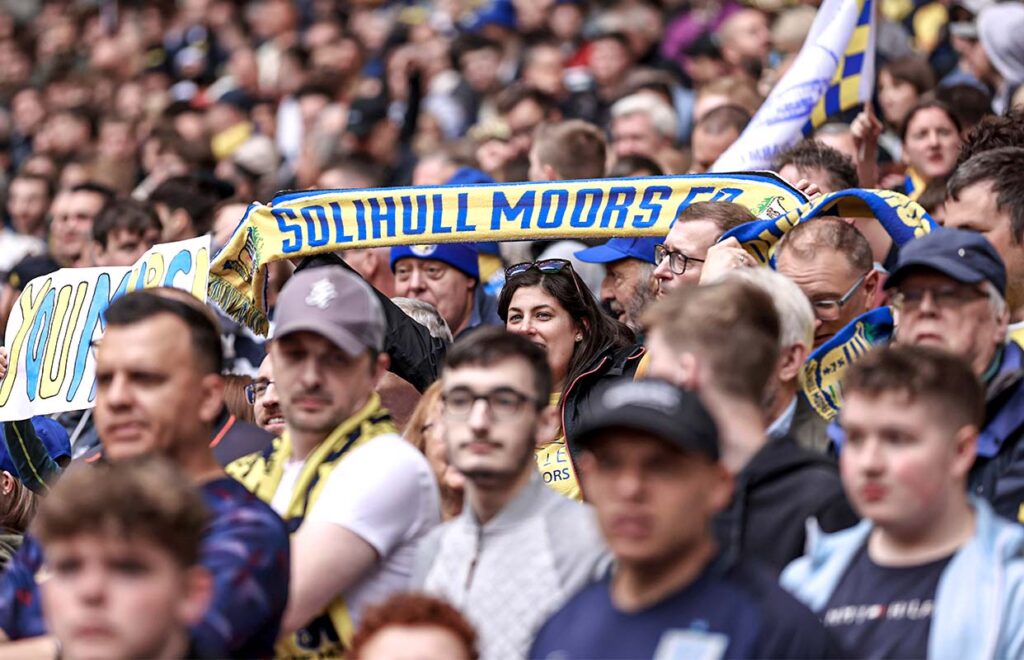
We were still overachieving in my eyes, but the pressure felt claustrophobic. So when the Barrow job came up in January 2025, it was a no-brainer for me. They took a chance on me, and I was honoured to be stepping up to League Two as a young manager.
It was a different pressure at Barrow, because I took over when they were near the bottom of the league. My first thought was to get smiles on faces again, making the environment and culture enjoyable for people to come to work. You can’t control results, but you can control your training ground. You are there every day, so you have to make sure everything – schedules, routine, staff roles and responsibilities – is bang on.
We won our first game 3-0 against a really good Grimsby Town team, and only lost one of our last 13 to end the season on a high. We may have been little old Barrow, but we had a togetherness that served us well.
“Finding a balance is challenging, but nothing worth doing in life is ever easy”
Unfortunately that got ripped out when we lost 17 players that summer, including our three best players, who went to League One. We also had five loan signings who had been brilliant for us. They all left.
Going into the next season, we had a whole new squad. We did our due diligence with signings, but it was more reactive recruitment, whereas in my previous two jobs it had been proactive, signing players who fitted how I wanted to play.
With a whole new team it was a difficult start to the 2025/26 season, and we had a lot of injuries because we were training on a 3G pitch. The ground was either rock hard or too wet. That was nothing to do with the staff, who worked their socks off. I loved the people at the football club, but it was a tough gig and we didn’t get it right.
Still, by December we were only six points off mid-table, which would be overachieving for Barrow. Unfortunately, people didn’t see it that way, and I was looking for a new job. I was, however, 100 per cent a better coach and manager for the experience.
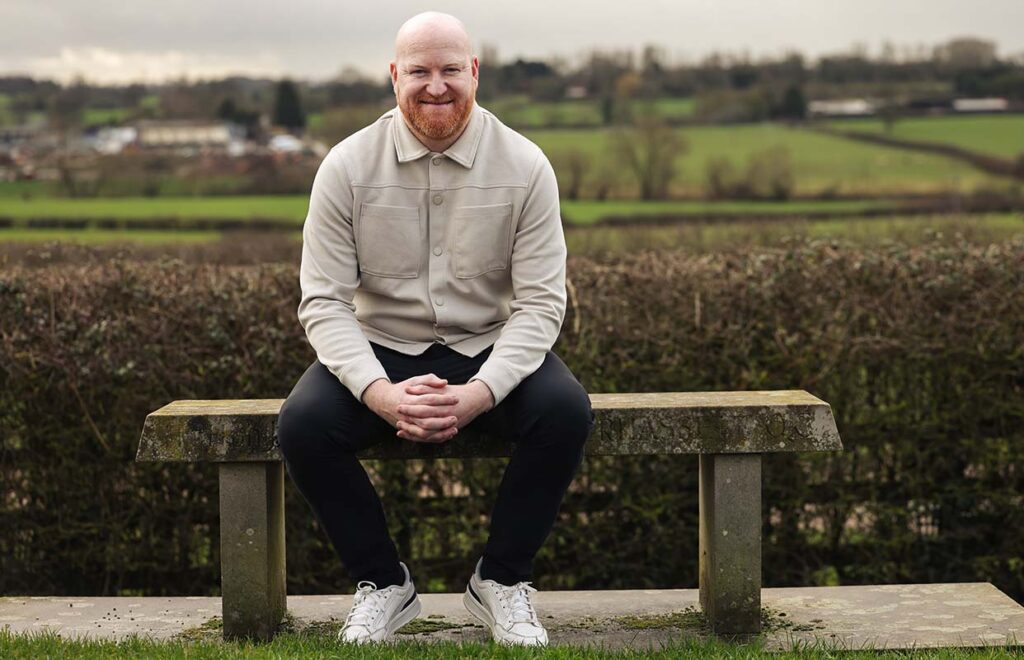
I felt my next move was important for me and my family. Above all, I wanted to join a club that matched my own principles and would give me and my staff support and time. As managers we are expected to look after the medium and long-term objectives of a club, while being thrown in to the short-term of games and results. Finding a balance is challenging, but nothing worth doing in life is ever easy.
I accepted the Brackley Town role and despite our struggles, and not being able to keep the team in the National League, the club have been incredibly supportive. Being a part-time team in a predominantly full-time division was always going to be difficult, but it felt like everything went against us. This summer, we have an opportunity to try and build something, a team in the image of our club, our town, our people. We want to put smiles back on faces, be competitive and win football matches.
I’ve never hidden from adversity. Both myself, Craig Pead and everyone at the club will give everything to build a team we can all be proud of.

Andy Whing