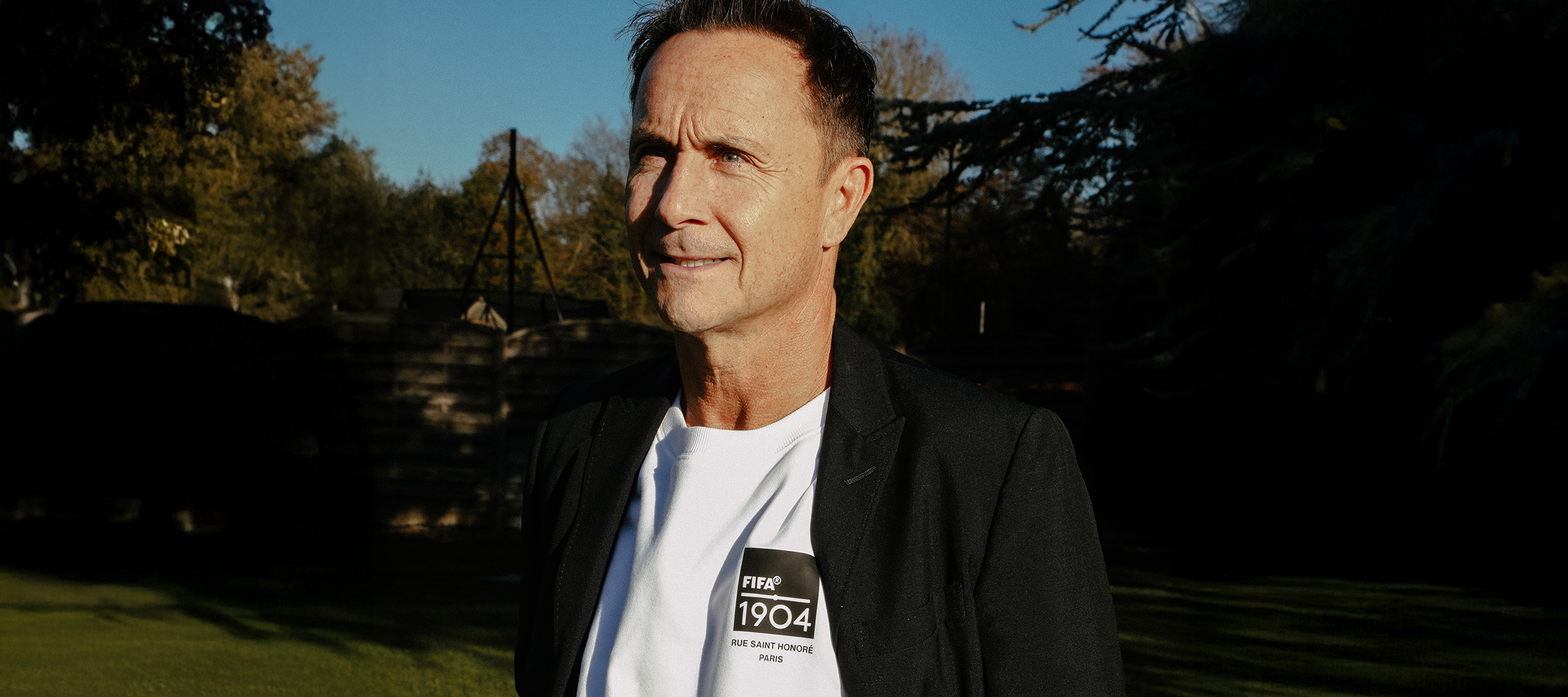
Dennis Wise
Player, manager, football executive; 1985-
As a young player I had been told a few times that I wasn’t quite good enough.
Wimbledon manager Dave Bassett was the one who looked at me in a different way. He was the man who gave me that all-important opportunity.
In terms of structuring a team, he was on the ball in everything he did. He was a long way in front of a lot of others, but because of the way he was, people looked at him in a different way. If he had been well-spoken and had what you might call an intelligent way about him, people would have looked at him differently. They would have said: “Wow, this guy is miles ahead.”
And he was, on regains, percentages, crosses, shots in certain areas, picking balls up in midfield – all sorts. I learned so much from him.
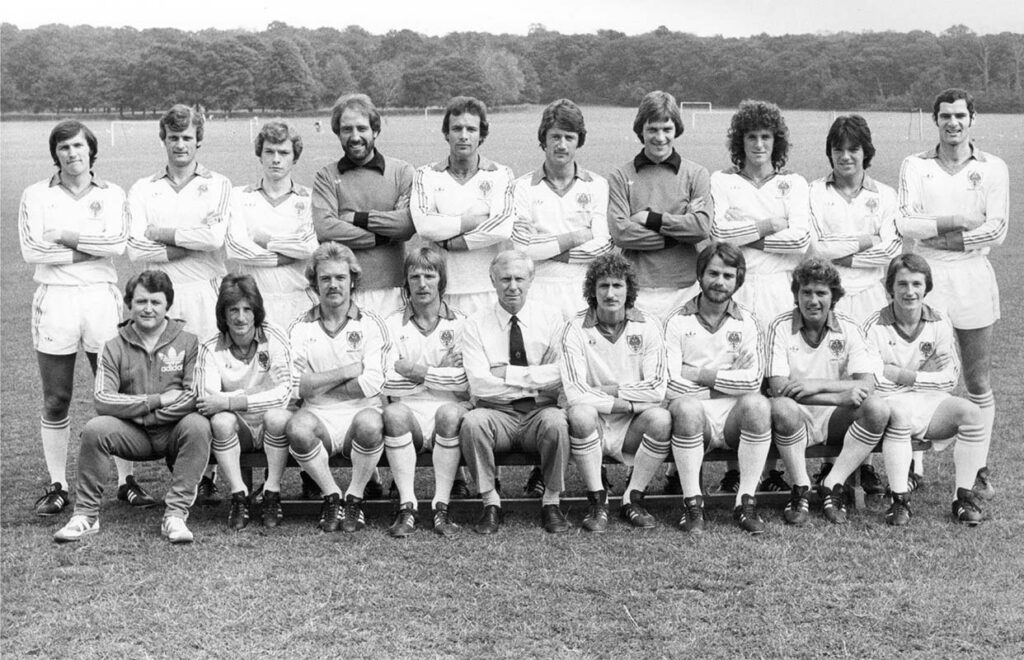
When people talk about throw-in coaching and long-throw experts, it is something that Dave Bassett was doing a long time ago. At Wimbledon we had Vinnie Jones launching them into certain areas that we packed, picking up second balls and scoring a lot of goals. We knew how to pack areas in certain ways so that we would outnumber the opposition.
Under Dave I also learned that you can win games without having the best players on the pitch. As happened with Wimbledon in 1988, when we beat the champions and red-hot favourites, Liverpool, in the FA Cup final. You can get results like that through organisation, desire to win and finding the opposition’s weaknesses. Dave was good at all of that.
“Claire, my wife, said: ‘It’s just come on Sky that you’re the player-manager.’ I said: ‘I know nothing about it!’”
There were other coaches from my playing days who I took things from – coaches who stick in your mind. One was Terry Venables, who picked me for England. He was a very educated coach who played different systems, but explained the reasons behind them.
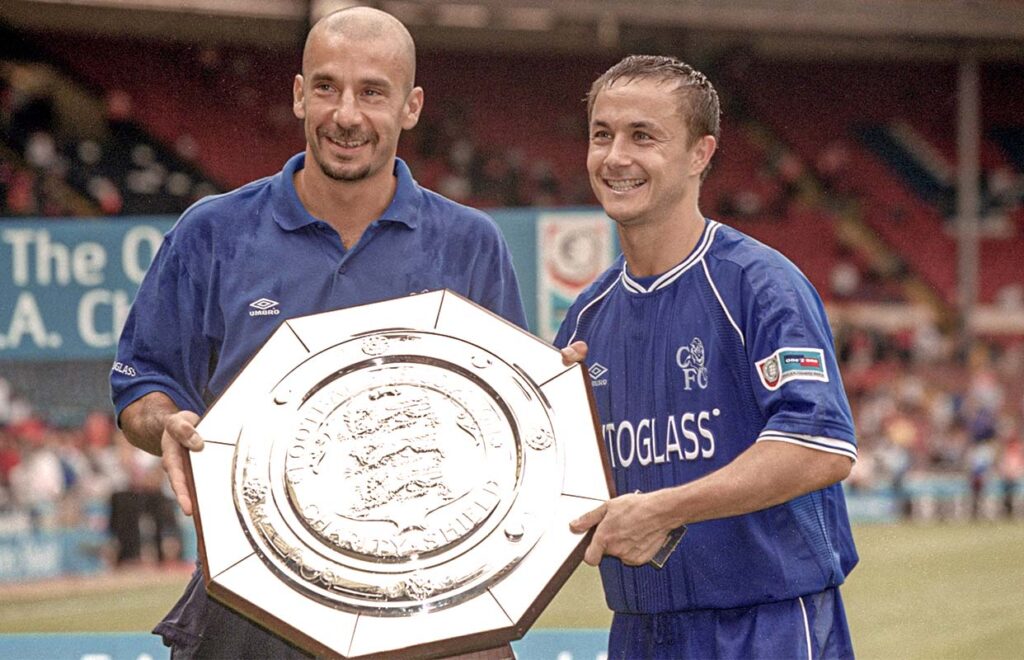
Then there was Luca Vialli (below) at Chelsea. He was wonderful as a person and as a personality, as well as being impressive with the way he thought about the game and his preciseness.
All three had things I took into my own management, but they all had their own way about them. They say that all coaches are thieves. Coaches take things and put them together to create their own coaching identity.
That is a compliment, really. In my case it meant that I listened to coaches like Dave, Terry and Luca, taking on board what they presented and making mental notes along the way. I was then able to create my own identity when I became player-manager of Millwall in 2003.
The day it was announced, I was driving into training when all of a sudden the news came on the radio that I had been appointed. I was thinking: “What?!” Then I got a phone call from Claire, my wife, who said: “It’s just come on Sky that you’re the player-manager.” I said: “I know nothing about it!”
The chairman, Theo Paphitis, hadn’t even spoken to me. When I got to the club, Theo wanted to see me. He said: “It got out quicker than it should have. Someone’s obviously leaked it, but I would like you to take the job.”
“The way you coach on your licences is not the way that you coach when you actually go on the field at your club”
The first thing I asked was about the outgoing manager, Mark McGhee. “He brought me here,” I said. “What are his thoughts on this, please?”
Theo told me: “Mark was the one who recommended you. He said he was impressed with how you were in the dressing room, organising and helping the players, who respect you.” I was pleased that I got Mark’s blessing, because I would never go in to take someone’s job. That is something I have seen happen too many times.
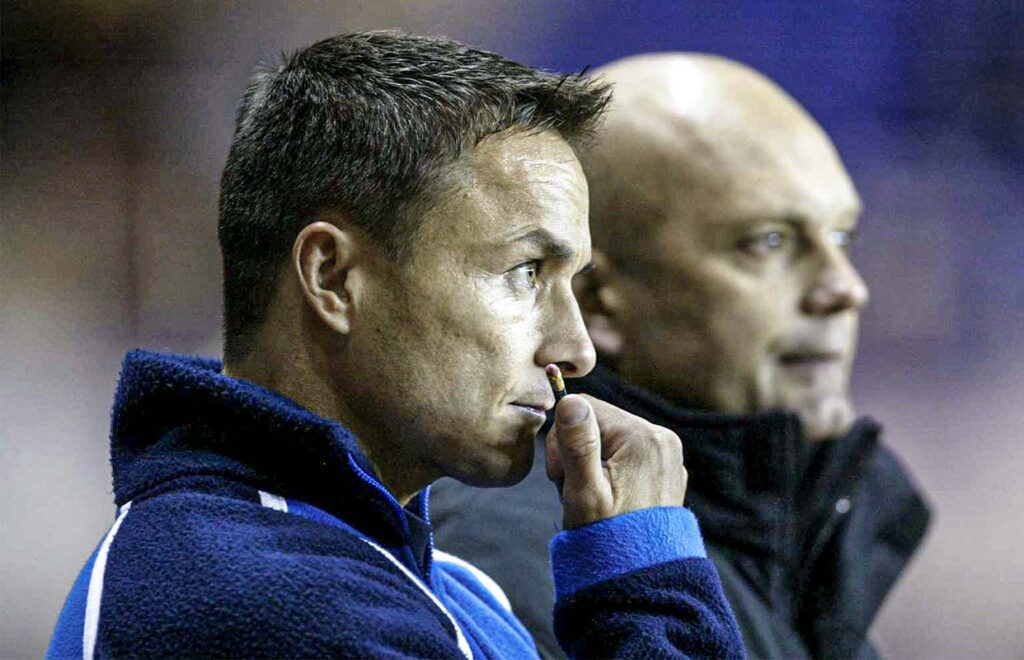
I didn’t have a coaching badge, though, so the first person I brought in was Ray Wilkins to work alongside me. Then I just went out and started taking training sessions. I had to learn very quickly. When I started doing my badges, I realised that the way you coach on your licences is not the way that you coach when you actually go on the field at your club. The licence does give you a base, though, which is important.
As for the details, coaches have different ideas, ways and systems. It is about having the right system for your players. You can’t always say: “This is the system I’m playing, therefore the players have to adapt to it.” In that first job I played with a diamond because it suited the personnel I had at Millwall. If I’d had different players, then I would have played a different system.
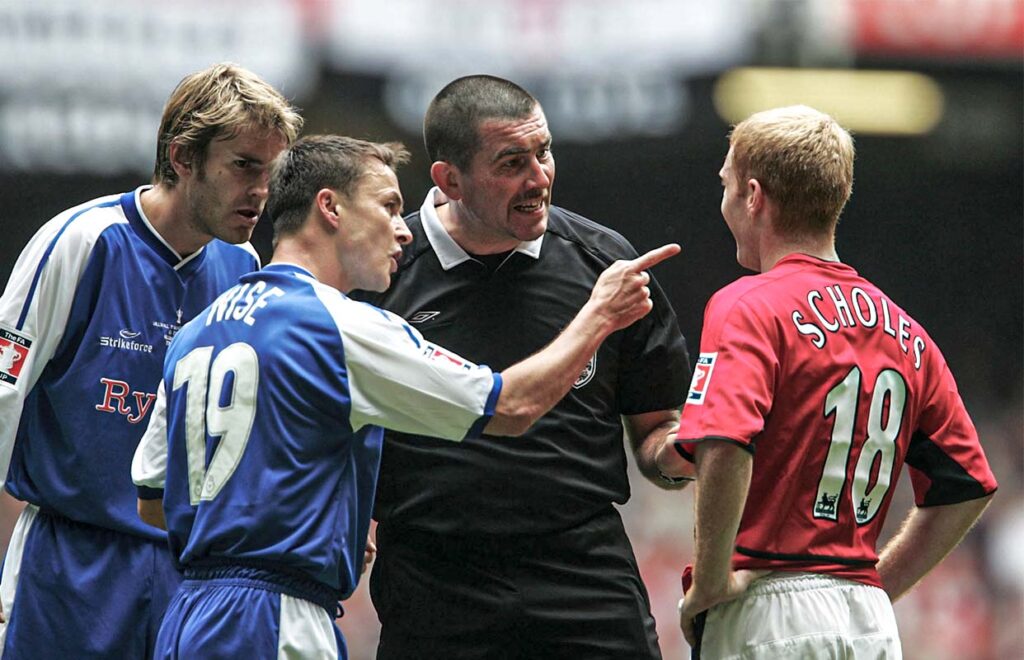
My time as player-manager there came to an end after nearly two years in the role, when Theo decided to move on. I knew the guy who was coming in, Jeff Burnige, but he wasn’t someone I wanted to work with. So we decided to part company at a good time, having got to an FA Cup final and taken the club into Europe for the first time.
Getting to that final, against Sir Alex Ferguson’s Manchester United, cost us, because we just missed out on the Championship playoffs. A cup run can affect you because the focus can switch from the league, and in our case we were also dealing with a small squad. For Millwall fans, though, it remains the only time they have ever been in an FA Cup final and got into Europe.
“Working in the lower divisions was something new. The training ground was a local park”
We had the luck of the draw in that cup run, if I’m honest, but you’ve still got to win the games. In Europe we didn’t get so lucky, drawing Ferencváros, who were the top Hungarian team. We played well at home, drawing 1-1, but didn’t start very well away. We found the hostility of the atmosphere and the whole place a bit difficult. It was a bit too much for the personnel we had at the time, and we lost 4-2 on aggregate. I ended up scoring both goals, which means I’m still Millwall’s top scorer in Europe!
It would have been fantastic for the club to progress, but it wasn’t to be. Nonetheless, we had some fun times. And it is important that you bring a bit of fun into your work.
There has to be a lot of hard work with that, of course. First things first, people must come willing to work as hard as they possibly can, giving as much as they can in the best interests of the team, not themselves. As a manager you have to work out who is good for the group, because the group is so important. The ones who aren’t helping that, you need to move on.
After Millwall I had spells as a player with Southampton and Coventry, who offered me another year going into the 2006/07 season. It was then that Swindon Town offered me the opportunity to get back into management, in League Two, with Gus Poyet as my assistant.
Working in the lower divisions was something new. The training ground was a local park, so we had to bring a lot of things with us. Me and Gus were very close to certain personnel at Chelsea; we had built a great rapport with their fitness coach Antonio Pintus, who is now performance manager at Real Madrid. He gave us some information on what we had to do regarding pre-season.
Armed with Antonio’s stats, plus the experience myself and Gus had as players and coaches, we got started. First, we tested all the players to understand their levels, then got down to the hard work. The players embraced me and Gus, realising that we were trying to be really professional and help them, but also that we would have some fun on the way. We got them on our side, which is always so important.
“It is great to read all the data and info, but it’s also important to see the reaction of a player”
And we had to work within a structure, to a budget. I was heavily involved in the signing of the players and the wages they were being paid, as well as going to watch potential signings.
These days you can have all sorts of data and information presented to you on players. But it can be manipulated in a way, so it is still important to go and see for yourself. It is great to read all the data and info, but it’s also important to see the reaction of a player when they are hit, when they are losing, when they are winning, and when the referee hasn’t given them something.
There are a lot of things you need to understand about their personality, including off-the-field stuff. You need to understand the person in all sorts of ways – and making them feel wanted is really important, too.
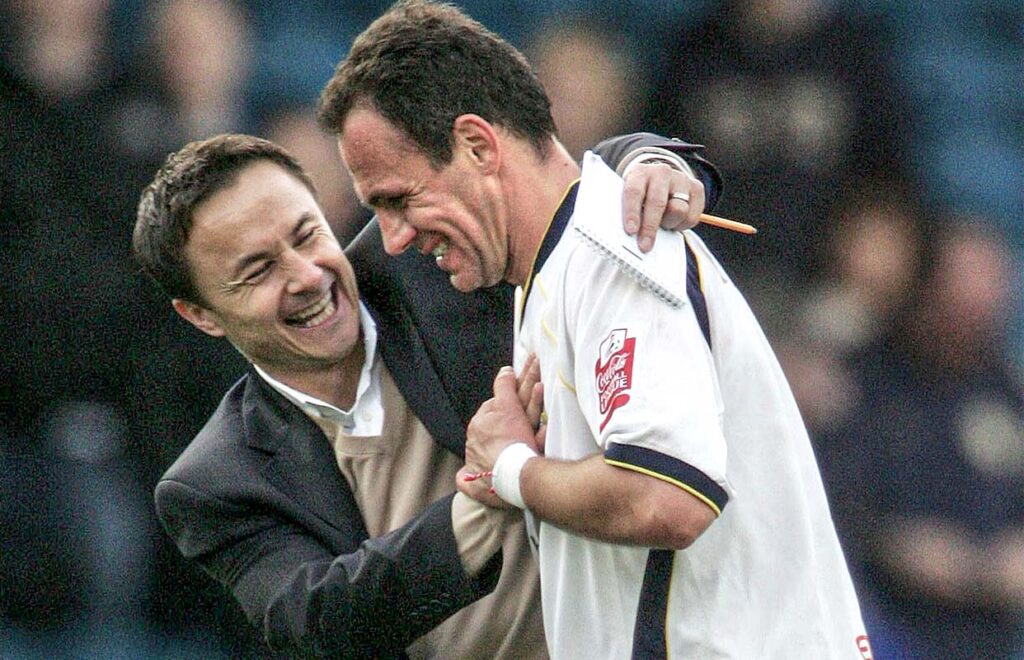
Five months into my time at Swindon we were third in the league, when Ken Bates – then in charge of Leeds – came calling. I love Ken to bits and have always got on with him, ever since our time together at Chelsea. We have fought a lot over things, but he understands I am transparent and honest and he likes that.
He decided to appoint me as Leeds manager – maybe because he needed someone who was more hated than him! The rivalry between Chelsea and Leeds had been fierce ever since the great teams of the 1960s and ’70s had faced each other. With my Chelsea background, it probably took the pressure off Ken a bit – and placed it on me.
I took over with Leeds in the Championship relegation zone, and by the end of the season the club had gone into administration and been deducted 10 points. We didn’t have any money to spend and there was a huge wage bill and debt.
“I don’t have many regrets, but I do have disappointments, and that is one of them”
We were due to kick off the next season in League One, having survived an expulsion vote from the Football League, but we did start with a 15-point deduction. It was really hard to deal with that, but I also had something of a chance to start afresh. I was able to have a clear-out and cut the wage bill – it was £14.4m and I had to get it under £4m, which I did.
We won our first seven games to quickly close the gap, and by the turn of the year we were in the top three, when a fee was paid for me to go to Newcastle in an executive role. That was a big mistake on my part. I should have carried on and finished what I had started at Leeds. I don’t have many regrets, but I do have disappointments. That is one of them.
Newcastle turned out to be a difficult period, although it was a good learning curve. At Swindon and Leeds I had learned to do deals within a financially sustainable structure. At Newcastle I ended up doing a lot, from top to bottom, also within a structure.
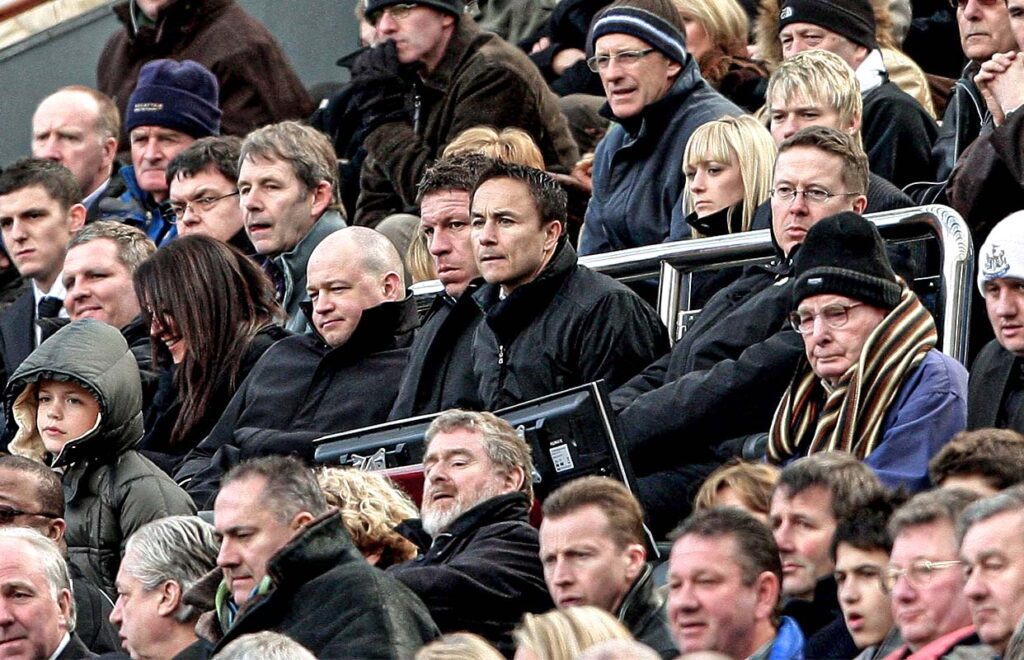
It is good to learn to work within the capabilities of what is coming in to a club. At Newcastle I structured it in a way that was within the club’s means, and I believe Mike Ashley stayed within that structure – or wasn’t far off of it. There were some good decisions, but there were some bad ones as well. The fact that we weren’t collectively together was the main problem. The whole of a football club has to be collectively moving in the right direction, with no leakages.
When I walked into the other clubs, I had been able to take total control of everything. But when you work with bigger personalities who want to have a bigger say in certain things, it doesn’t always work logistically.
“The academy had been outsourced, so we had to bring it back in”
Fast-forward a few years and I was involved with an Indonesian youth football development programme, run by the Djarum Group, helping young players develop and go on to the next stage of their careers. In 2019 Mirwan Suwarso, of the Djarum Group, bought Italian club Como. He asked me to help because he didn’t really understand football.
I watched the last seven weeks of the 2018/19 season, when they got promotion from Serie D, getting an insight into the players I felt would be good enough for the next stage. Then I went in fully with the club the following season – first as a consultant, before taking on the CEO role and becoming president.
I took total control of the football club, from top to bottom, employing every single person in the building. When I went there, the club didn’t even have their own training ground, just a year-by-year lease. In fact, they had gone bankrupt twice and crowds were only around 800. So it was about improving supporter numbers, the community around the club, getting a training ground and creating an academy.
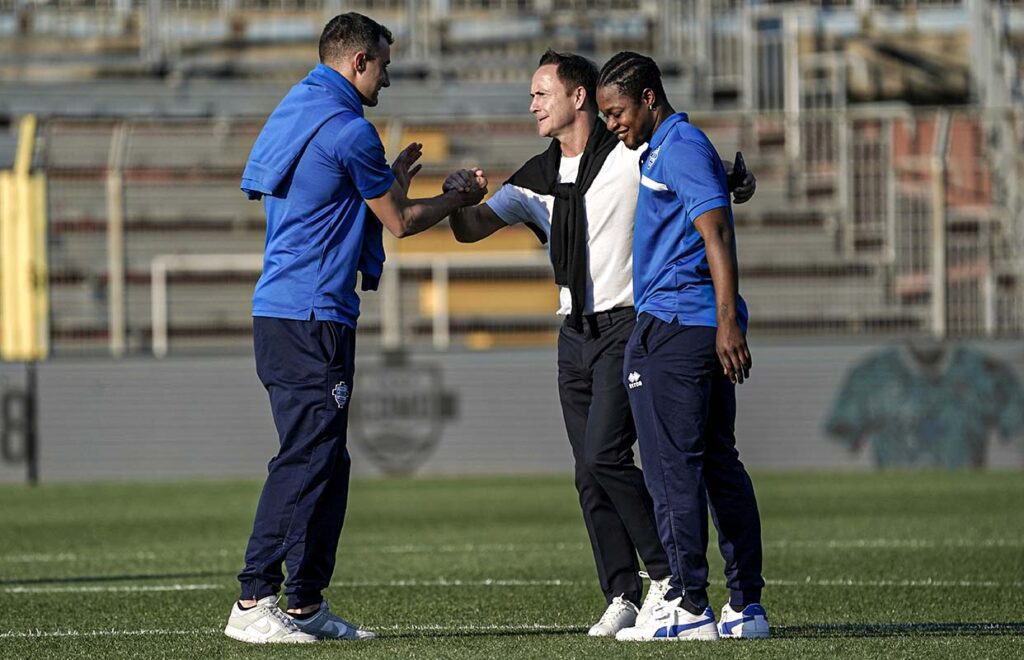
The academy had been outsourced, so we had to bring it back in. When I found a training ground, I had to present it to the owners and the reasons we needed it. It was for sale at €2.7m, so I bid a million. We got it for €1.05m.
There wasn’t too much interest from afar at that stage – and Mirwan left me to my own devices, really. I never had much to spend in the transfer market, so I had to try to do some really good deals. We had 14 loans at one stage – it was about filtering in and out, because there wasn’t money to spend. Then, all of a sudden, it started to grow.
“It has been lovely to be part of something different, exploring a new area for me”
We got promoted to Serie B in 2021, our second season in Serie C. In 2023 I brought Cesc Fàbregas in, and got Thierry Henry to come on board as well. Then we managed to get promoted to Serie A in 2024.
At that point Mirwan wanted to take the club in a different direction, taking more control himself and not within the same financial structure. They have done okay since, I have to say, spending an awful lot of money. Whether that is the right or wrong way, I don’t know. I have always worked within a structure, so to be able to spend a quarter of a billion is a bit different. It was right for me to step away from certain things that I don’t agree with.
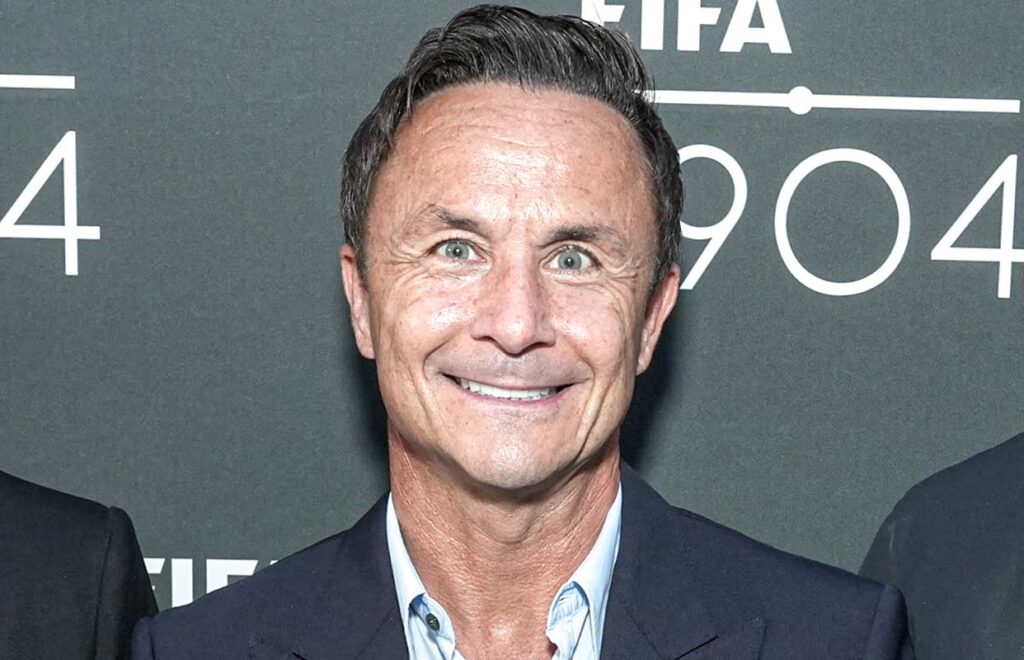
I’m now a member of the academic board for the FIFA Diploma in Club Management and the FIFA Players Executive Programme, sharing my experience as a player, manager and CEO. It involves understanding football clubs and their finances, as well as understanding players and what they are going to do when they finish playing. Those involved learn a lot, including how football works in different countries; they hear from CEOs, sporting directors and world-class football players.
Through this work I met Julie Anne Quay, who is co-owner of Barnsley FC. Julie is brilliant and it has been a pleasure to be involved with her ‘Style in the Arena’ podcast, exploring the principles of leadership. Myself and Roberto Di Matteo appeared on the first episode, reflecting on our shared years at Chelsea, the lessons we learned, and how challenges shaped our values, mindset and vision of leadership.
With Julie we’ve also been working on developing the FIFA 1904 fashion line. It has been lovely to be part of something different, exploring a new area for me. There is a shared set of skills that you need to push anything forward, whether it is a fashion brand or a football club. And you should never stop learning and pushing yourself, so I am excited to see what the future holds.

Dennis Wise
The first episode of the ’Style in the Arena’ podcast, Leading Chelsea FC, features Dennis Wise and Roberto Di Matteo and is available now on Spotify, Apple Podcasts, Amazon Music, YouTube, and FIFA1904.vfiles.com