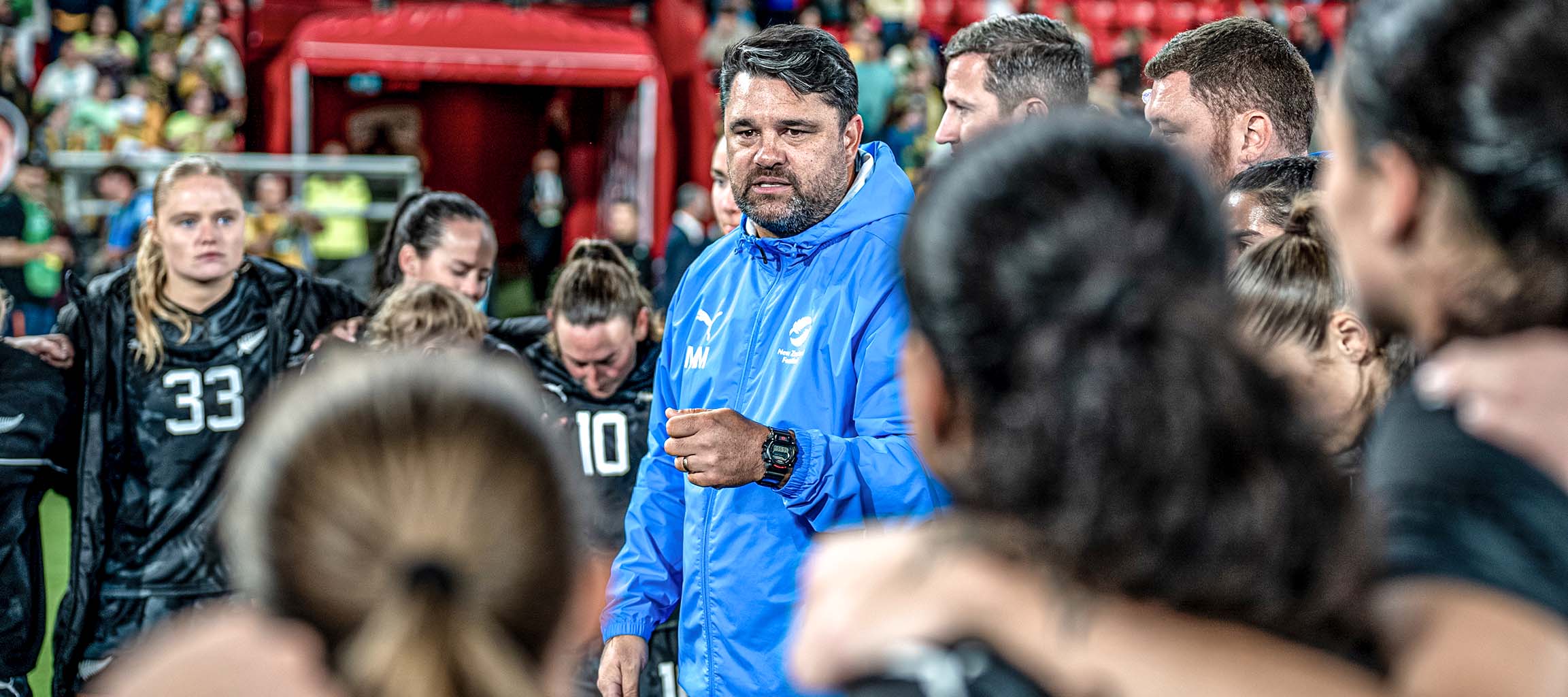
Michael Mayne
New Zealand women’s national team, 2024-
I am deeply proud to be head coach of New Zealand’s national women’s football team, the Football Ferns.
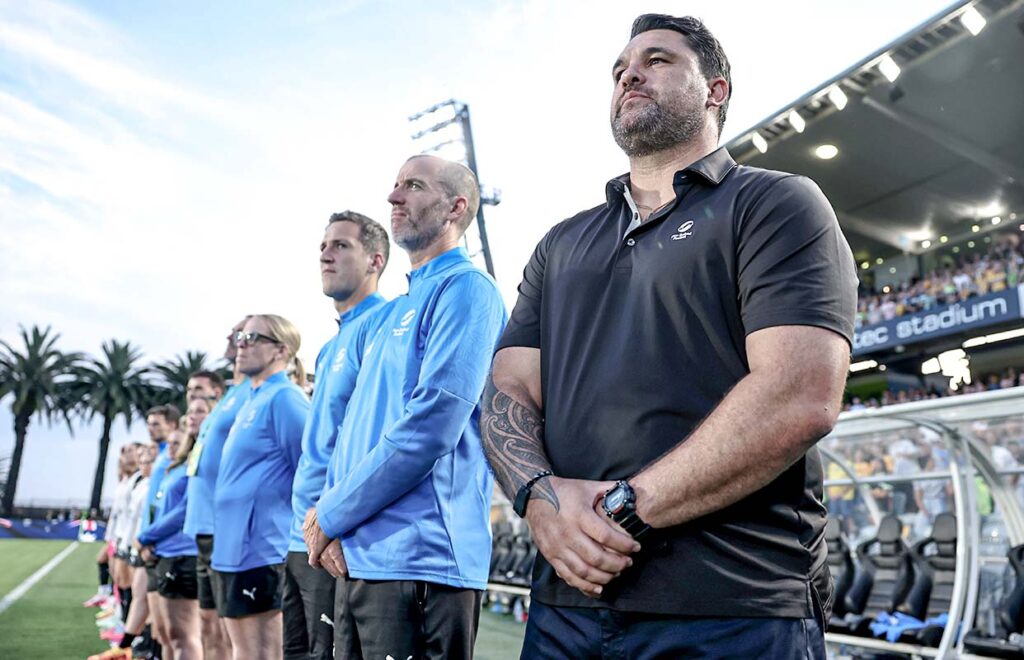
New Zealand’s women have always fought for equality, and making sure it is the best place it can be for women’s football to grow. To play some part in that has been a privilege. It gives me immense pride to lead a programme I have been involved with for years.
To be a Kiwi coach in charge of the national team – and a step further, as a New Zealand Maori coach – means a lot. On a personal level, I am proud to have forged the opportunity to have this duty. That is because I probably don’t fit the traditional model of a football coach. I have had to work differently, while staying true to myself and doing the hard work needed to get the experience that I have.
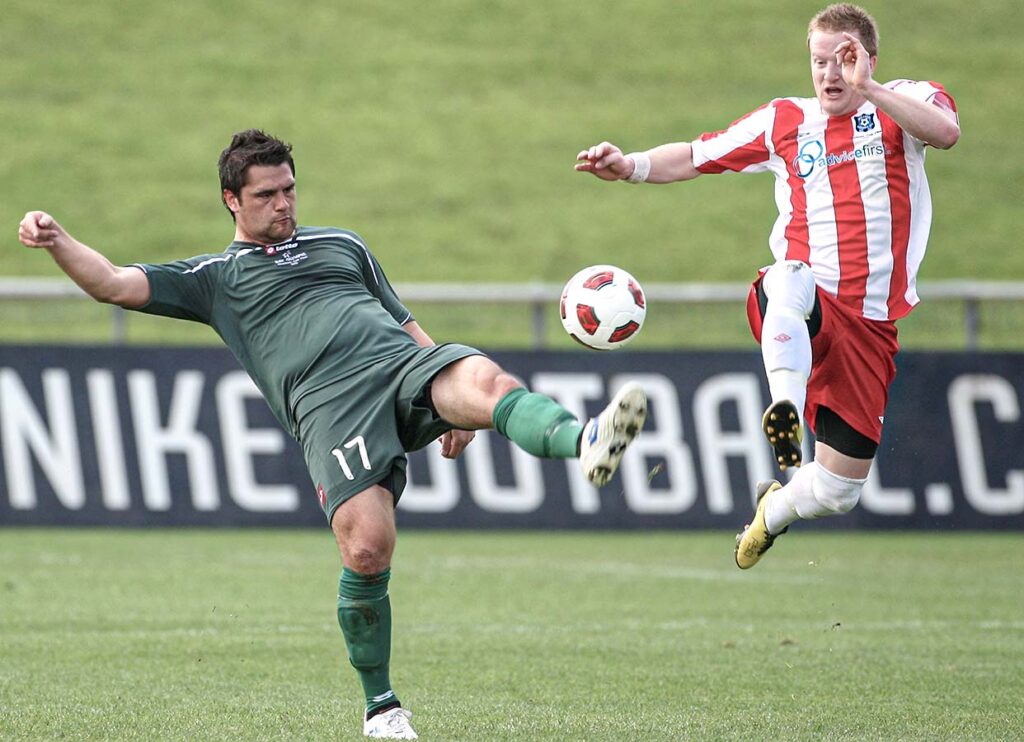
I actually got into football by accident, at the age of 10. Growing up in New Zealand, where rugby dominates, my mother wanted me to play with an oval ball. And so my father was tasked with taking me to a rugby muster – an event that kicks off a club’s season. Except he got the date wrong.
We were heading back home when we drove past a local football club that happened to be holding a trial. My dad asked if I wanted to check it out, so I jumped out of the car, tried it and really enjoyed playing. When we got home, much to my mother’s disapproval at the time, I told her that I had signed up for football. She wasn’t thrilled, because she had visions of me being an All Black!
My mother actually coached me in my second year and, although she knew nothing about football, she was one of the best coaches I ever had. That goes back to the bones of what the game is – just play, right? There was no coaching of technique or tactics, because she didn’t know what she was doing on that side, but she did know how to set games up and get kids moving. That was where I fell in love with the game.
“My time as an analyst involved plenty of what Kiwis call ‘number 8 wire’ – a resourceful mentality”
Like every kid, I had dreams of making it professionally. I was lucky to track quite well through my teenage years, and got brought into the national team’s age-group set-up. I went on to captain New Zealand’s Under-20s, which was really special. But like every sob story in football, the moves I wanted in the club game didn’t quite work out, or injury got in the way. I was still playing domestically at an okay level around my mid-20s, when I started to think more about the coaching pathway. If I really wanted to represent my country and wear the fern again, coaching was probably the only route.
I went back to university to study teaching, majoring in coaching and physical education. It was a transformative period for me. One of my lecturers, Kirsten Spencer, had set up a performance analysis study that I was drawn to. We had a small lab with a couple of old Apple Macs running early versions of SportsCode. I spent a lot of time figuring out analysis and reached out to connections I had in the governing body, New Zealand Football. That led to a role with the Football Ferns’ age groups as an analyst.
Without a big playing background, I knew I would have to work a little bit differently if I wanted to achieve my goals. Being an analyst allowed me to close some gaps in my football knowledge. I learned more about systems, strategies and the global game, which was an invaluable foundation for my coaching career.
My time as an analyst involved plenty of what Kiwis call ‘number 8 wire’ – a resourceful mentality. There were times I filmed games from the top of a campervan because we didn’t have proper equipment – it was all very Kiwi in its improvisation. But it gave me a foot in the door and stood me in good stead for what would follow.
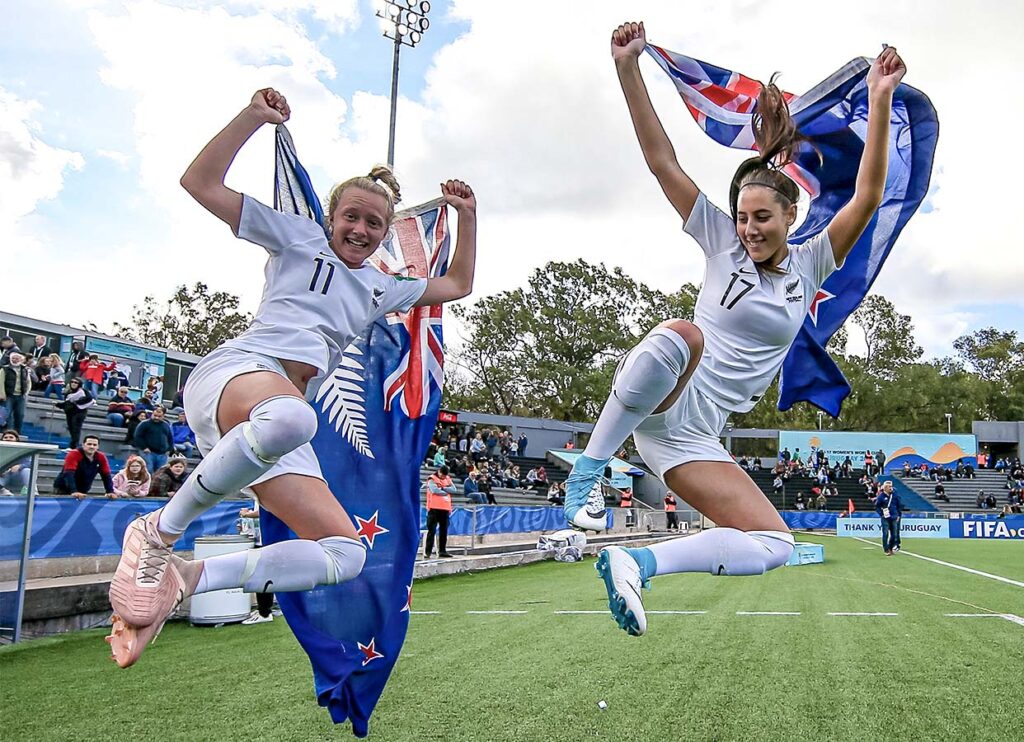
In 2014 I went to my first FIFA World Cup, working as an analyst with the Under-17 women in Costa Rica, followed by the Under-20 Women’s World Cup in Canada that same year. I then moved into assistant coaching roles for multiple age-group cycles. There I learned from coaches including Leon Birnie, who led the Under-17s to a historic bronze medal at the 2018 FIFA World Cup in Uruguay.
I spent about five or six campaigns in the age-groups, all while juggling a full-time teaching career. Balancing teaching and coaching was intense, but it was necessary, given the limited number of full-time, career-type roles in football in New Zealand.
“Our Maori culture, whakapapa, plays a big role in shaping our approach to coaching and performance”
Covid was a turning point. I had been assistant coach for the Under-20 men’s team while also holding a dual role with the Under-17 women, trying to piece together full-time football work. When the pandemic hit, I asked myself: “If I was to go into football full-time, where would I have the most impact?” I’d been involved with the women’s pathway for so long and was really invested in it. Seeing where the women’s game was going, globally, I decided to focus fully there.
With my teaching career, I had been heading down the senior leadership pathway with views on becoming a principal, and was a school dean doing a lot around pastoral care. But then one of very few full-time jobs in football in New Zealand presented itself, with the chance to bring together the two worlds I had been operating in – education and football. So I left teaching to take on the role of coach development manager at New Zealand Football, which oversees the coach education pathway for the country.
In that role I helped to build the first Oceania Football Confederation (OFC) Pro Licence. Working with Football Federation Australia’s Sean Douglas, we adapted lessons from the UEFA Pro Licence and devised something to fit our region. It was important that the OFC Pro Licence aligned with our culture, way of working and coaches, rather than being a copy and paste. We made sure that it matched the detail of the UEFA Pro, but with emphasis on knowing self, leading others and how you connect to bring the story alive.
We looked at different ways of working down here, across different environments. For example, we use the Special Tactics Group at New Zealand Police to come in and see how they train high performance. A lot of the modules and things we do on the Pro Licence, I’ve had to use almost every day since I became a head coach.
Football in New Zealand has unique strengths and challenges. We are a small, isolated country, but deeply connected across sports. That connectivity allows us to learn quickly, leverage expertise and collaborate effectively. Our Maori culture, whakapapa, plays a big role in shaping our approach to coaching and performance. It is a culture that has been tried and tested for hundreds of years, on performance, dealing with conflict, and understanding who you are working with. It is something really special that we try to weave into our work.
We’ve got players I can speak to in the Football Ferns who may have never lived a day in New Zealand, but they whakapapa from here – they come from here. So when we come together, that connection piece back to our country is really important.
Most of our players are based overseas, meaning tracking and maintaining connections is complex. Travel for international windows is long and expensive. We want games here so we can showcase our teams, but getting federations down to New Zealand is tricky.
“The trap you can sometimes fall into as international coaches is putting too much on the players”
I don’t think, at the formative years and age-group level, that the technical gap between our players and others around the world is as big as we sometimes think. But I am seeing that by the time we get to senior football, that gap becomes more prominent. By the time you get to the high-performance end, where you need to see players perform under pressure and execute, our limited number of games through the age groups to develop that high-end technique has a significant impact. By the time they get to senior level, we are backfilling that experience, whereas a lot of the teams we are trying to compete against have a head-start. It is a challenge, but also an opportunity to approach our programmes slightly different, to keep driving our game forward.
Communication is big for me – understanding and staying connected with players and staff to maintain aligned messaging. It is also really important to build good relationships with club coaches and try to stay in touch with them semi-regularly. The reality is that the moment the international window closes and players jump on a plane back to their clubs, everything is club football for them. The trap you can sometimes fall into as international coaches is putting too much on the players, in terms of what they need to progress and how they need to do it, when you don’t have a lot of control over that.
So I try to reduce everything down as much as I can. We offer performance summaries for the players, with two or three things they could progress with us and their club before the next selection window. We link everything back to our way and how we do things, that we think they can progress or keep strengthening. It is two or three things, max, because that is probably all they have the capacity to think about.
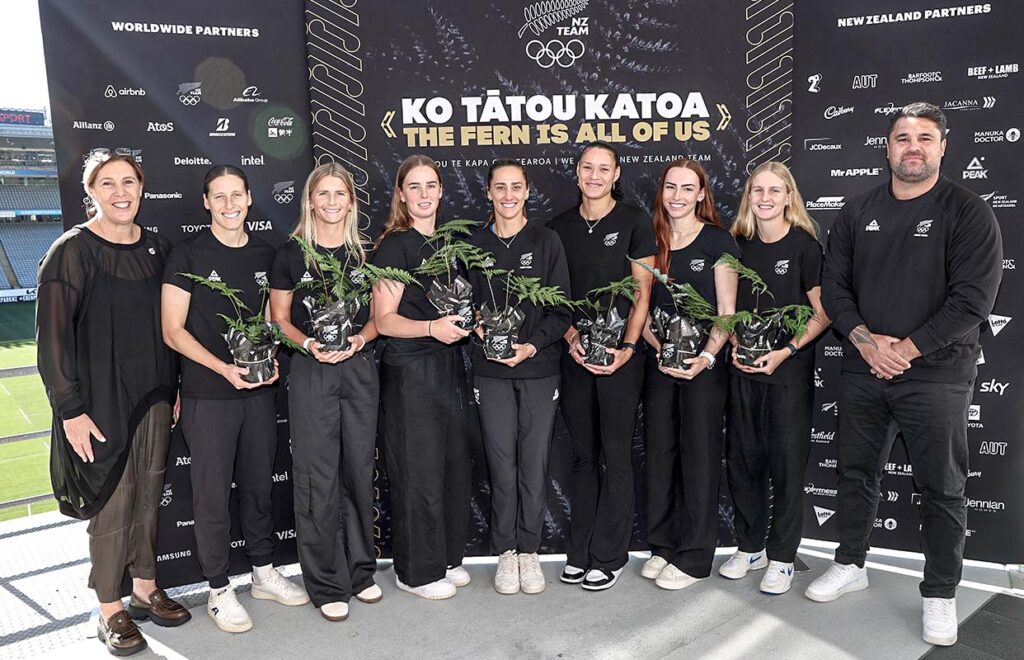
Clarity is key at high-performance levels. I now have a process where there is feedback for the players that comes directly after the selection windows if there is further clarity needed for decisions. This is linked to clips from their club, that talk to the things that have been part of the selection conversation. I try to give as much clarity as possible, so that players know the direction they are heading, or what is needed to get the call-up they want.
We have developed a robust selection process that our analysts, my athletic performance lead and medical team all feed into. I build something of a selection panel, which is a mixture of my coaching group, plus a couple of outsiders who can check and challenge, or play devil’s advocate. It is all based on what we are seeing and observing: the numbers, footage and conversations. Players will know we have covered all bases in order to make good, strong decisions for the team.
What sits behind that is our campaign plan. I had been assistant coach for the 2023 FIFA Women’s World Cup, taking over as interim head coach in May 2024 before the Olympics. I wasn’t sure if I would come through the interview process as the preferred candidate to get the role, but because of my investment in New Zealand Football, I started a campaign plan. My hope was that whoever did become the next permanent head coach would benefit from it – the lessons of the past, understanding where we are at as a group and what we are seeing globally in the women’s game.
“I want to make sure there is a strong sense of leadership across the team and the wider squad”
So we’ve built this really strong piece of work that will take us to Brazil in 2027 and beyond, with a couple of tweaks when we learn what we learn there. It is driving everything. All the decisions, conversations with players, tour meetings, performances on the pitch, match strategy – all of it is in the campaign plan.
It sets the direction I am trying to take, because the trap you can fall into with such limited time is trying to bite off way more than you can chew. You can try to hit everything and lose sight of the important things.
My ambition is to go into the next World Cup and be seen as a team that’s had one of the biggest shifts since the last tournament, in terms of what we are trying to do on and off the pitch. The ultimate goal is to put ourselves in a position to get into knockout football. We’ve never done that, and it is not going to be easy in Brazil. If we can put ourselves in a position to be able to compete and have a crack at it, that will be a huge success.
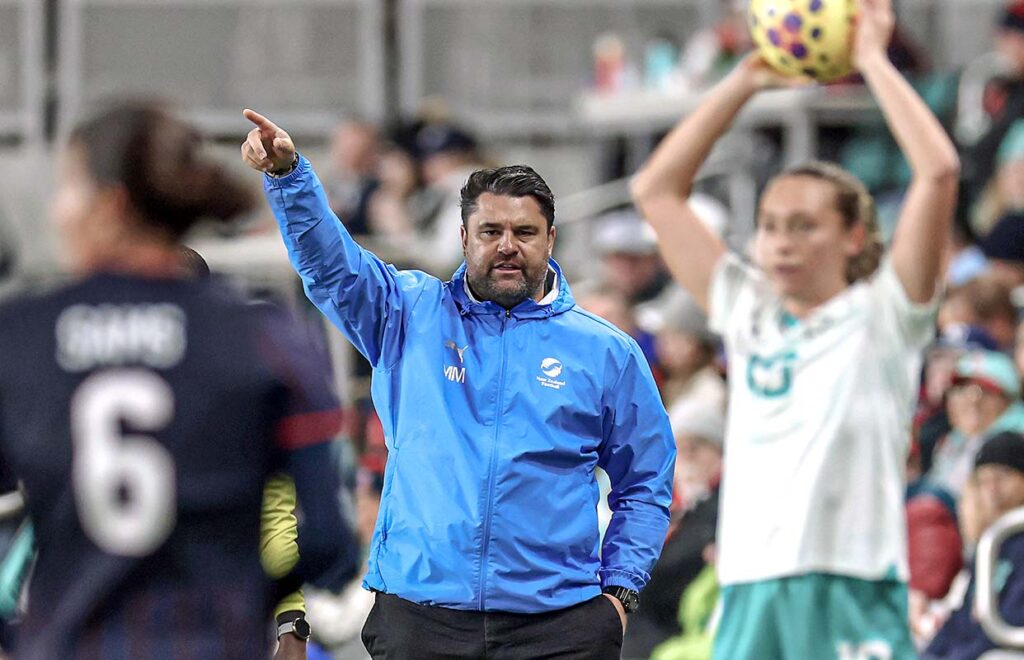
What sits underneath is building belief in what we can do on the international stage and the way we play. Getting tightly connected to what works for us and understanding why, in terms of our playing style and what we believe we bring to the table, would be a big tick.
And I want to make sure that there is a strong sense of leadership across the team and the wider squad, so that regardless of who’s at the helm, the system is consistently evolving. We need to be feeding the next generation as we bring other players into the team, having a long-lasting effect all the way through our pathway.
That is not the kind of thing that everybody gets to see, but it can have a massive impact on the future of the New Zealand national team. And that is vital if we are going to close the gap between us and the nations that we are chasing.

Michael Mayne