


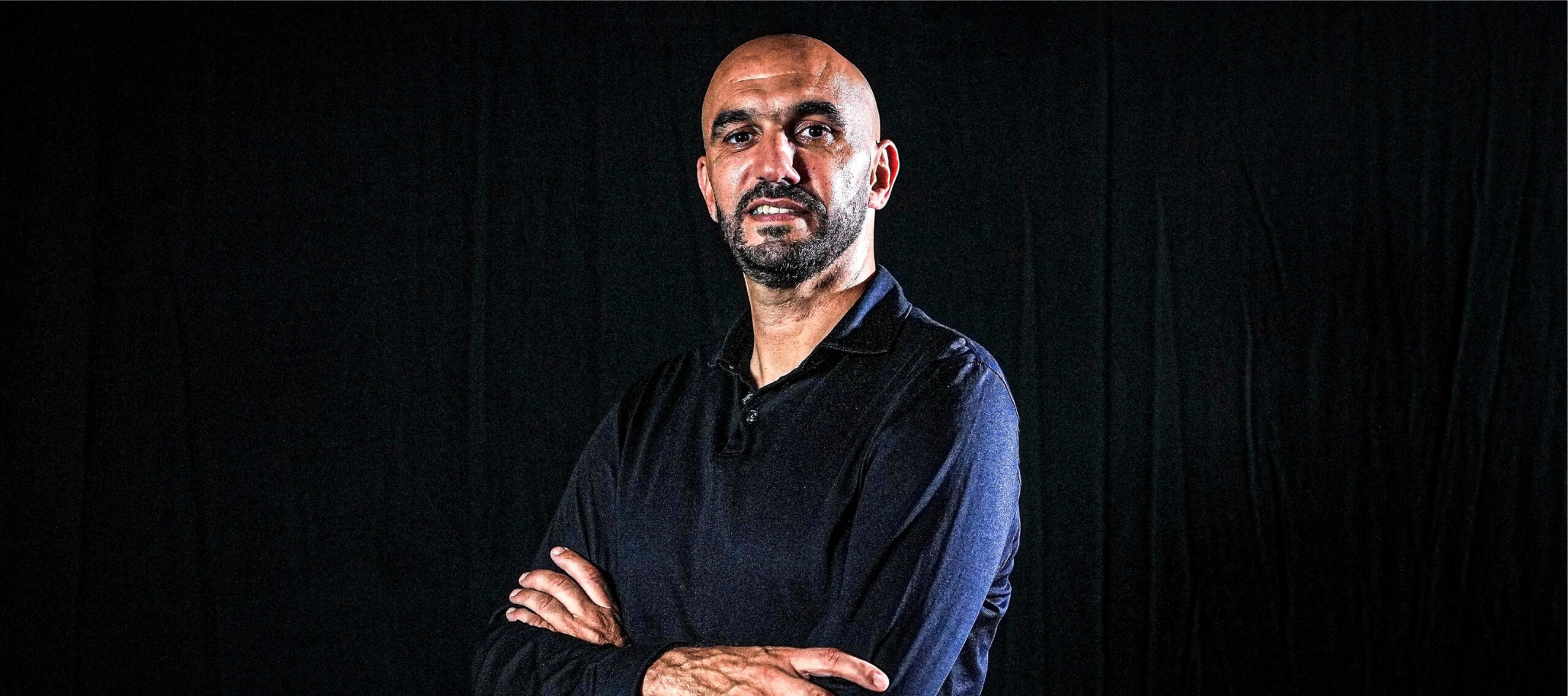
Walid Regragui
Morocco, 2022-2026
My first job in coaching was an assistant role with the Morocco national team.
That would be a dream for any Moroccan, and even more so for someone like me, having previously represented my country on the pitch.
As soon as I retired from playing, I moved to Paris to complete my coaching badges with the French Football Federation. It was the first step on my journey as a coach, although the decision to go into coaching had been made long before then, when I was still playing. I had always been passionate about this sport, loved training and was fascinated by the way coaches think about the game.
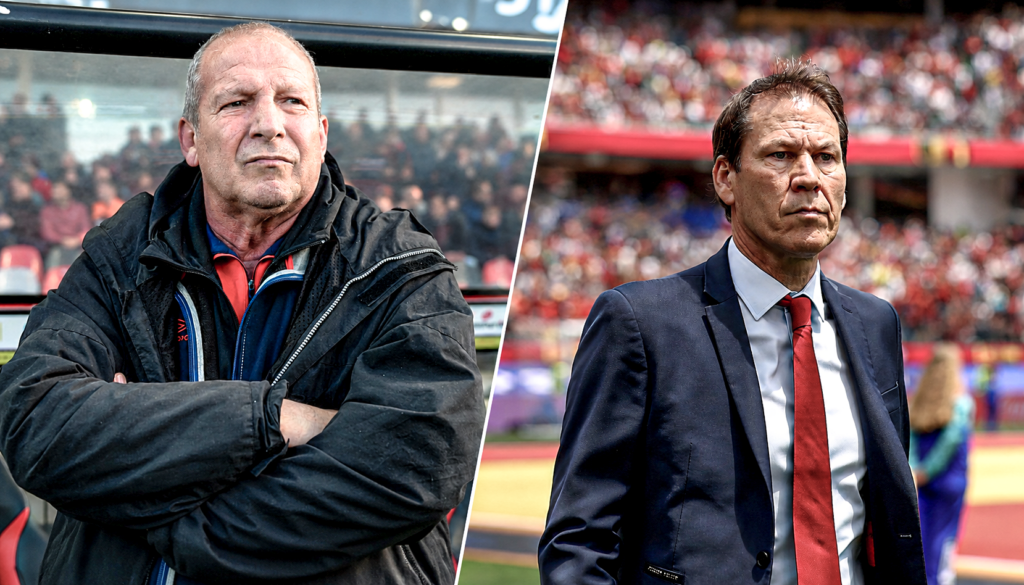
There have been many coaches who have influenced me, but two in particular left a lasting impression. First, Rudi Garcia, who spotted me when I was playing in an amateur league in France. Rudi always believed in me and gave me the confidence to dream of becoming a professional footballer. In the end, he played a defining role in my career as a player. Later, as I watched him succeed as a coach, I followed his career very closely and spoke with him on many occasions.
Another major influence was Rolland Courbis, one of the most respected coaches in French football and a legendary figure at both Olympique de Marseille and Girondins de Bordeaux. During his time there, he helped develop the careers of several outstanding players. He was a mentor to Zinedine Zidane and Christian Dugarry. I learned a great deal from Rolland, particularly about tactics, managing a dressing room and communicating effectively with players.
If I am honest, it was unexpected when the Moroccan Football Federation contacted me about joining the coaching staff to help with qualification for the 2013 Africa Cup of Nations in South Africa. Nobody imagines their first coaching job will be with their country’s national team. But it was a great opportunity for me, and a brilliant experience to begin my journey. As an assistant you can observe how a team works, how a new generation of players develops and how a national team operates, which is very different from a club. All of that helped me grow enormously as a coach.
“I spent a lot of time trying to find that balance between the positional play of Spanish football and the defensive organisation of French football”
People began to see me as an assistant with the potential to become a head coach, which eventually happened when I joined FUS Rabat in July 2014. FUS Rabat was a laboratory for me, because I experimented with a variety of systems – 4-4-2, 4-3-3, a back five – and tried different things. We were selling a lot of players and had to constantly rebuild the squad. They let me get on with my work in peace and develop as a coach, though. That is why I stayed for six years.
In the end, it turned out to be a great success, because FUS Rabat had never won the league in their 80-year history. Winning that title was an incredible achievement for me, the coaching staff and players. It was an amazing feeling because we had written our names into the club’s history. As a coach, that is something you dream of.
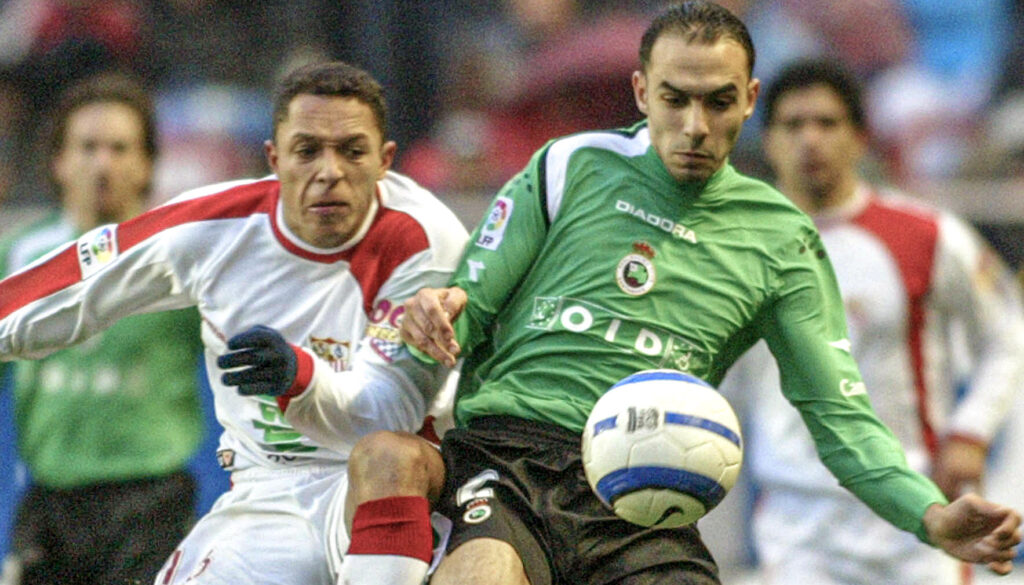
Living in France and playing in Spain with Racing Santander helped me enormously as a coach because they represent two very different styles. During my time at FUS Rabat, I was always convinced that combining elements of Spanish and French football could make my team more competitive. Therefore, I spent a lot of time trying to find that balance between the positional play of Spanish football and the defensive organisation of French football, which is also very tactical.
For the first two or three years, we played incredible positional football – probably the best in Morocco at that time. We won the league with some very good players who later moved abroad. After that, I had to adapt; when you sell talent, everything becomes more difficult. You have less quality available, and you need different tools. That was when tactics and the French school of football helped me a lot, especially in terms of defensive organisation.
My time in Spain was also very important because it allowed me to understand football in a different way. In France, there is a strong focus on the physical side of the game, and on playing without the ball. In Spain, there is much more emphasis on having the ball, possession-based football and positional play. All of that changed the way I saw football.
Every country has its own style and you have to adapt. Morocco is closer to Spanish football than French football, but we also have a football culture influenced by France. So my aim was to adapt to my country without losing the DNA of our football. We never put that aside. I had six incredible years at that club that I will never forget. When you win trophies and become part of a club’s history, that stays with you forever.
“I had to adapt fast to the mentality of a club where winning is the only thing that matters”
After nine months in Qatar in charge of Al-Duhail, I returned to Morocco in 2021 to manage Wydad Casablanca. It is the country’s biggest club, with the best players and more titles than any other. It also has an incredible fanbase – for me, the very best in the world, with 50,000 in the stadium. They are always cheering the team on, and helping them win matches.
The biggest difference between FUS Rabat and Wydad is that, at FUS, you have time to build. At Wydad, you don’t. You have to win and play well every week. The demands are huge, which changed the way I approached coaching. Wherever you go, you have to adapt to the club, their culture and history.
At Wydad, I learned how to win quickly, because after three months I already felt that the situation could become difficult if we didn’t react. I had to adapt fast to the mentality of a club where winning is the only thing that matters.
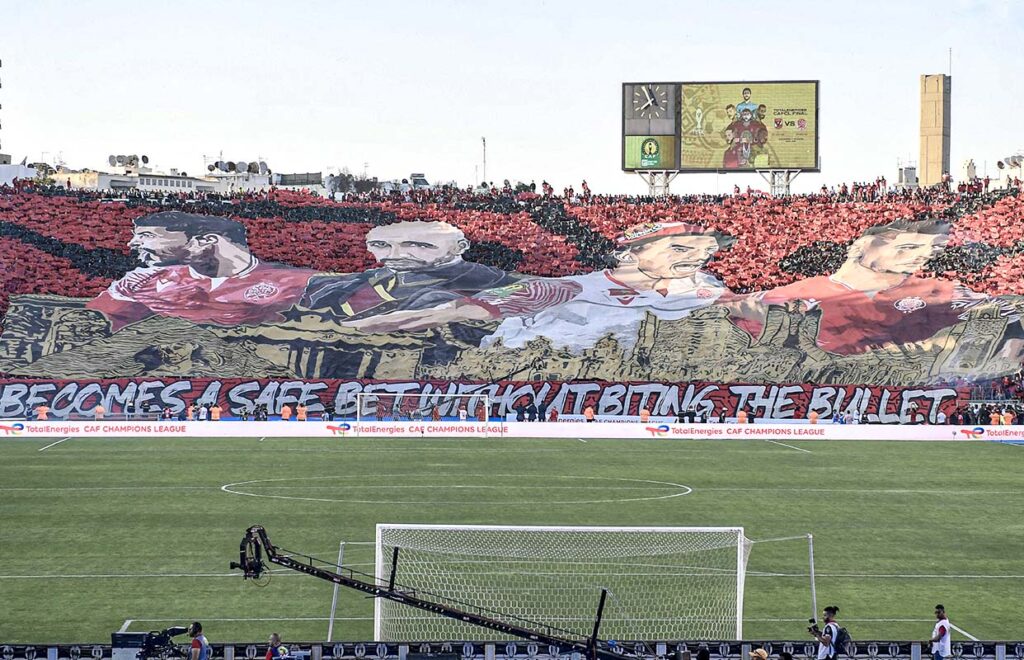
It was an incredible experience because we managed to win the league again. The club had not achieved back-to-back league titles for 30 years, and we did it. On top of that, we won the club’s third African Champions League trophy, writing our names into history. We also reached the Moroccan Cup final, which had not happened for 17 years. It was perhaps the best season in the club’s history. To experience it with those supporters was something I will never forget.
After that incredible year with Wydad, the plan was to take some time off and think about the following season. Then I received a call from the Moroccan Football Federation, just as I had years earlier. This time, however, it involved greater responsibility. The federation had decided to part ways with Vahid Halilhodžic, who had done a great job in World Cup qualifying.
“Would you like to take charge of the national team ahead of the 2022 World Cup?” they asked me.
“Morocco can’t be content with simply taking part”
For me, as a Moroccan, a former national team player and former assistant coach, it was a very special call. I had never imagined myself coaching the national team, because I know it’s a very different job. I prefer coaching at a club, on a day-to-day basis, but at that point it was about my country. Even so, I had a meeting with the president of the federation, during which I told him: “If I sign up as national team manager, it won’t just be to go and play in a World Cup and that’s it. Morocco can’t be content with simply taking part and feeling happy just being there.”
I was not going to go to the World Cup unless I believed we could be competitive. When I saw the squad and the standard of the players, I was convinced we could achieve something great. I’m not going to lie and say I thought we’d reach the semi finals, but I was convinced we could get through the group stage and go down in the country’s history. I discussed it with my family and those closest to me, and we decided to take on that challenge – which was a huge one – and try to make history.
Playing at a World Cup with your country is an incredible dream. I will always thank God for giving me the opportunity to experience something like that. For a coach, there is nothing greater than leading your national team at a World Cup.
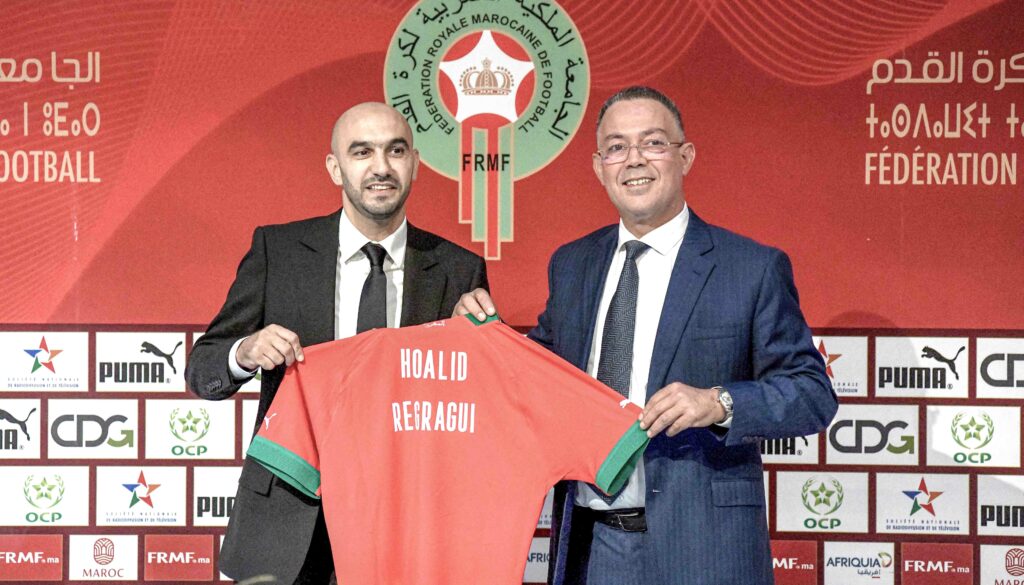
The pressure was there from the very first day. I already knew it as a player, assistant coach and as a supporter, because when I work for the national team I am a fan like everyone else. In Morocco, there is huge pressure to represent the entire country. As the head coach, everything is magnified.
What concerned me most was the lack of time. We were only three months away from the World Cup, with just 10 days of preparation before the tournament, plus two friendly matches in September. Taking everything into account, I had only two months to get to know the players, work on our style of play, build the spirit I wanted to bring to the team, and make important decisions.
Our first friendly was in Barcelona against Chile, and there were around 40,000 Moroccans in a stadium outside Morocco. That showed us the huge support behind the team, and that we could not let them down. You have to bring them joy, make them feel proud and put a team on the pitch that represents them.
“We knew that first match was crucial if we wanted to keep our dream alive”
We also had to bring back players who were not part of the squad at that time, such as Hakim Ziyech and Noussair Mazraoui. We had to think about every detail, study the opponents, build the new staff, and travel constantly. One day I was in Istanbul, the next in London. But, in the end, perhaps that lack of time also helped. It forced us to focus on what was essential and concentrate on the most important details.
The first match of the 2022 World Cup in Qatar was against Croatia, the 2018 runners-up. When you step on to the pitch for your first World Cup match, the feeling is incredible. You remember the little boy who used to dream of a World Cup. You are on your country’s bench, the national anthem is playing, there are 30,000 Moroccans in the stadium singing along. For a moment, you feel like that little boy again.
But very quickly you have to change your mindset, and start thinking about competing. Because, ultimately, we were there to win.
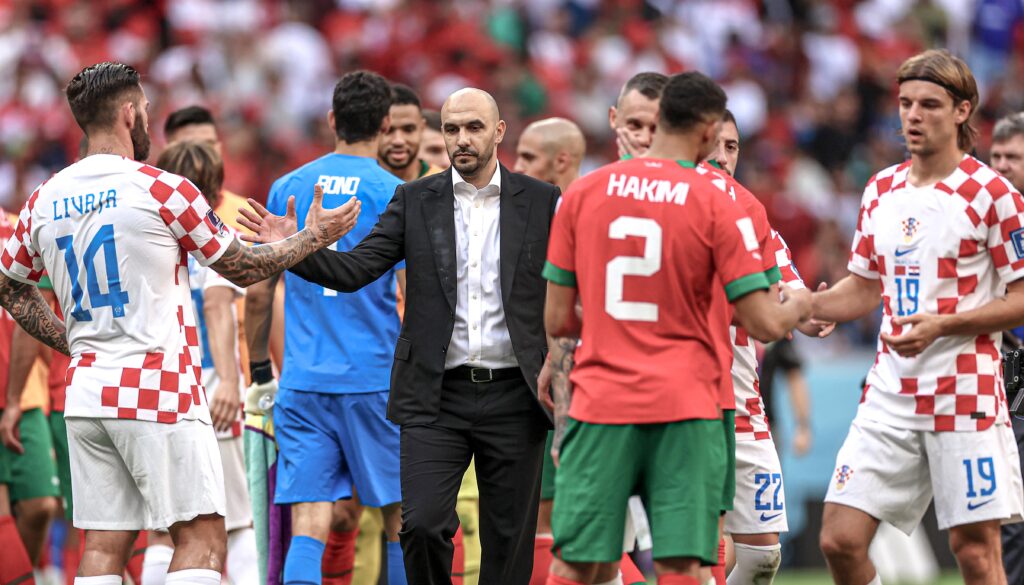
We knew that first match was crucial if we wanted to keep our dream alive. In 2018, Morocco lost their opening game against Iran, and that practically ended their chances from the beginning. This time, we were clear that we could not lose against Croatia. Maybe that is why we did not play with the same freedom that we showed afterwards. We approached that first game with a certain level of caution, with the handbrake on, because the most important thing was not to lose.
Against Belgium, we saw a different Morocco – a team with more character, confidence and courage. The victory gave us even more belief to keep competing. Then we beat Canada. That was when we achieved our first major objective of getting past the group stage. In Morocco’s history, it had only happened once before. That had been in 1986, in Mexico, with a legendary generation that the country still remembers.
Matching that ’86 generation was already a dream. It was like saying: ‘We haven’t finished dreaming yet, but we’ve already taken a huge step.’ Even so, I told the players we had to put it behind us quickly. If we wanted to truly make history, we had to reach the quarter finals, which Morocco had never achieved before. That’s when Spain came along.
“I didn’t know whether I was going to cry or if what I was feeling was a sense of total relief”
“If we want to go down in the history of Moroccan football, we have to knock Spain out,” I told them. And the group understood. They understood that they were facing a unique chance. That gave us enormous strength to compete, run, suffer and give everything in that game.
As a coach, I am always thinking about how to push the team towards a new objective. After Spain, the goal was no longer just to make history with Morocco, it was to make history with Africa.
The previous African team to reach the World Cup quarter finals had been Ghana in 2010. No African nation had ever reached a World Cup semi final, so the game against Portugal was a unique opportunity to write our names into the history of the continent and world football.
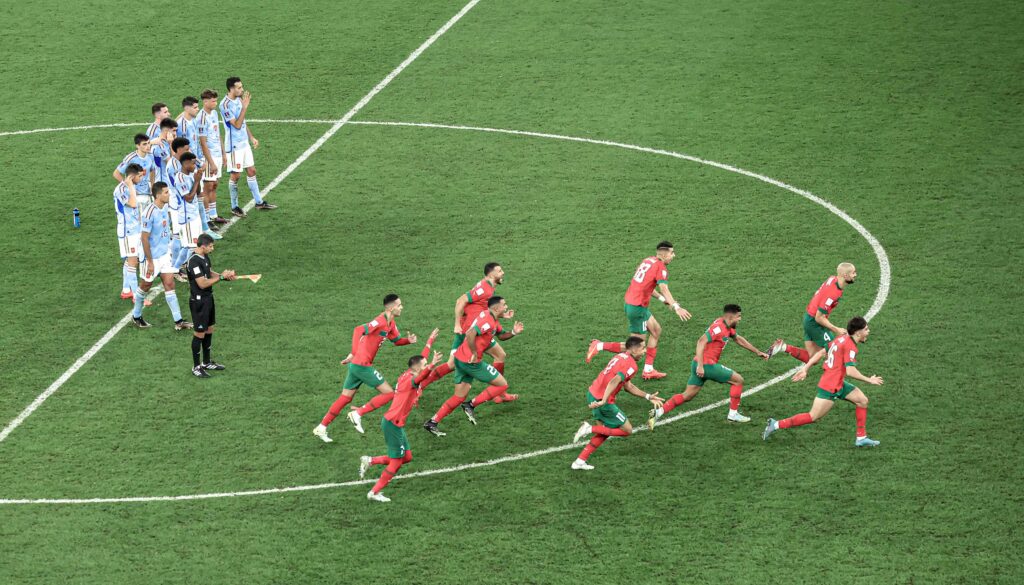
The players understood that it was a defining moment in their careers, but also in the history of Africa. That helped us enormously when it came to finding motivation.
I remember the final minutes of that match against Portugal perfectly. We were down to 10 men following Walid Cheddira’s sending-off, and I was absolutely terrified, because African teams – including Morocco – had always struggled to see out moments like that. It always seemed that, just when they were on the verge of something big, a mistake crept in. Some silly mistake or minor detail that ruined everything.
When the referee blew the final whistle, I didn’t know whether I was going to cry or if what I was feeling was a sense of total relief. I thought of my family, my parents, my siblings, the streets, and all the people of Morocco. At that moment, I knew we’d made history. At the same time, another thought crossed my mind: we can’t stop here. We can win the World Cup. I really believed it. If we’d knocked out Spain and Portugal, why not?
“We weren’t short of top players in the starting 11, but we did need a more competitive squad”
However, we couldn’t beat France in the semi finals, losing 2–0. Where did we go wrong? Why couldn’t we do it? So many questions, but no answers yet.
When we returned to Morocco, 10 days after being knocked out by France, I had a meeting with the president of the football federation. With our heads now clearer, we sat down to consider what we were lacking in order to take the next step forward. And I believe there were several things.
The first was the DNA. You cannot win a World Cup overnight. You have to keep playing in World Cups, keep reaching quarter finals and semi finals, and keep competing at that level. Only then do you develop that competitive DNA that the big national teams have.
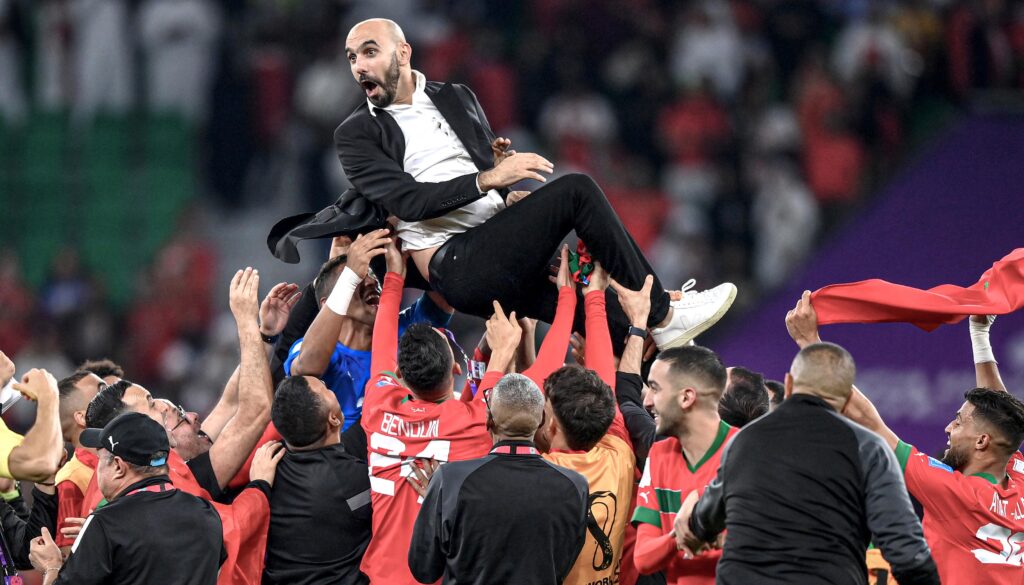
Then there was the issue of the squad. At that time, Morocco didn’t have the depth of quality in the squad as it does now. We’d managed to persuade many players to play for Morocco at the 2022 World Cup, but in a competition like that you need depth. We weren’t short of top players in the starting 11, but we did need a more competitive squad with more options.
In tournaments that last a month or even a month and a half, you need to be able to rely on two or three players in every position, all ready to compete at the highest level. That was precisely what we lacked in that semi final against France in 2022.
To address this, I set out to persuade players to represent Morocco. Eliesse Ben Seghir, Ilias Akhomach, Brahim Díaz, Neil El Aynaoui, Ayyoub Bouaddi, Anass Salah-Eddine, Chemsdine Talbi and Adam Aznou.
“Now, in Morocco, people dream about winning a World Cup”
As well as working with the Moroccan senior national team, I also took on the role of head coach of the Under-23s. I felt it was important to do so because it gives you an inside view of the journey taken by all those players who want to reach the very top with their country. And it went very well, with significant achievements: victory in the 2023 Africa Cup of Nations for that age group, and the bronze medal at the 2024 Paris Olympic Games.
What makes me happiest, beyond football, is that at the 2022 World Cup we changed the mindset of the fans and the players. Now, in Morocco, people dream about winning a World Cup. Four or five years ago, if you’d told a Moroccan that their national team could win the World Cup, they’d have laughed. They’d tell you not to talk about it, not to make a mockery of the country. Today, however, that idea is on everyone’s mind. We feel we’re getting closer.
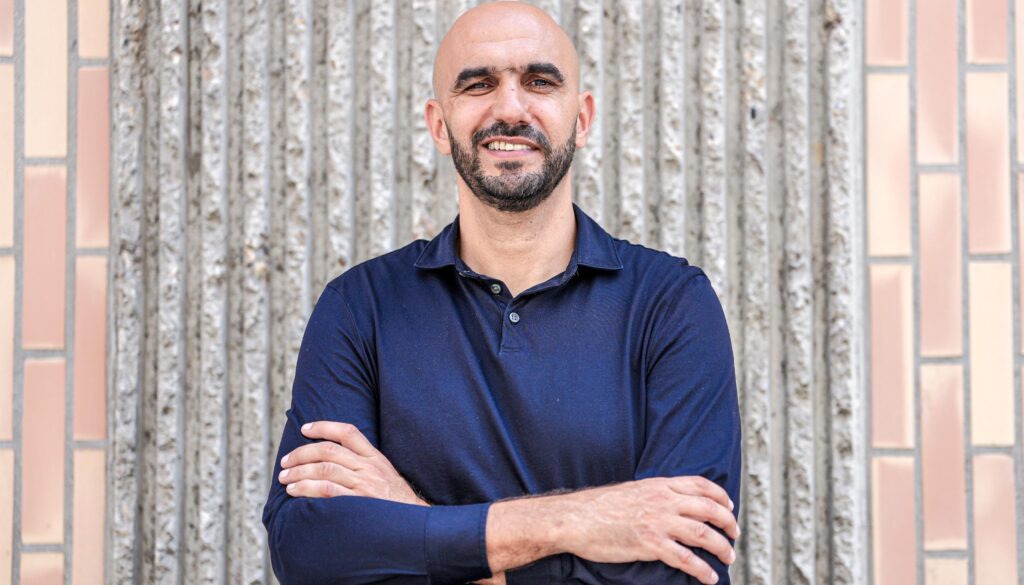
Those four years as Morocco’s national team manager were unforgettable, and I was proud to feel part of something truly great.
Our national team is known as the Atlas Lions. But it’s not just a nickname – it’s an identity. It doesn’t matter whether you’ve been a player or a manager. If you’ve ever represented this team, you’ll be an Atlas Lion for life.

Walid Regragui
